A Gulf creator base of 263,000, a Kuwaiti marketplace heading for a billion dollar listing, and one of the region’s most complete digital trade rulebooks now in force at home.
The Gulf creator economy has grown into a real industry, and Kuwait sits close to the centre of it. The region now hosts roughly 263,000 monetised social media influencers, about 75 percent more than in 2023, with lifestyle and travel creators alone rising from 31,000 to 58,000 in two years. The money behind them is compounding fast: the GCC influencer marketing market was valued at about $315.5 million in 2025 and is projected to reach $771.6 million by 2032.
Kuwait built the region’s most valuable machine for converting that attention into retail. Boutiqaat, founded in Hawalli in 2015, gives creators virtual storefronts stocked with products they endorse and pays them a commission on what sells. It is now working with Goldman Sachs on a potential listing at a valuation above one billion dollars, possibly as early as the first quarter of 2027, which would rank among the largest private sector offerings in Kuwaiti history and put a Kuwaiti company at the front of a category the rest of the region is still building.
That success established the model, and the next stage is visible inside it. A platform of that scale proves creator commerce works at national volume. What it leaves open is how many creators move from earning a commission on someone else’s catalogue to owning a catalogue of their own. A regional industry guide published in May began standardising how campaigns are priced, a sign of a market maturing from follower counts toward measurable performance.
Kuwait Legislated the Category Early
The legal ground has moved in the same direction. Decree Law No. 10 of 2026, regulating work in the digital commerce sector, is one of the region’s more complete frameworks for online trade. It defines a digital store, defines an influencer, and sets out which obligations belong to which party, something many markets are still drafting.
Most of them belong to whoever sells the product. Providers register with the Ministry of Commerce and Industry before trading, publish their trade name and commercial register number, issue an Arabic electronic invoice on every contract, keep complaint records for six months, and follow security measures set by the National Cybersecurity Centre. Consumers get 14 days to withdraw from a purchase and a full refund through the original payment method.
The influencer chapter is the one that changes behaviour, because it does not license the creator. It asks the merchant who hires one to retain every related agreement and record for at least five years, to pay influencer fees through channels compliant with anti money laundering rules and Central Bank of Kuwait instructions, and to keep campaigns clear of anything misleading. It runs alongside advertising rules prepared by the Ministry of Information that would give celebrities and influencers individual licences, and it sits comfortably beside the UAE advertiser permit in force since February. Kuwait now has one of the clearest rulebooks in the Gulf for building a digital brand, and a clear rulebook is what makes a creator business bankable.
The Storefront Becomes the Asset
Put the two tracks together and the paid post becomes a documented, traceable transaction with a five year record held by the brand that commissioned it. Selling your own product puts the creator on the other side of that relationship, as the principal.
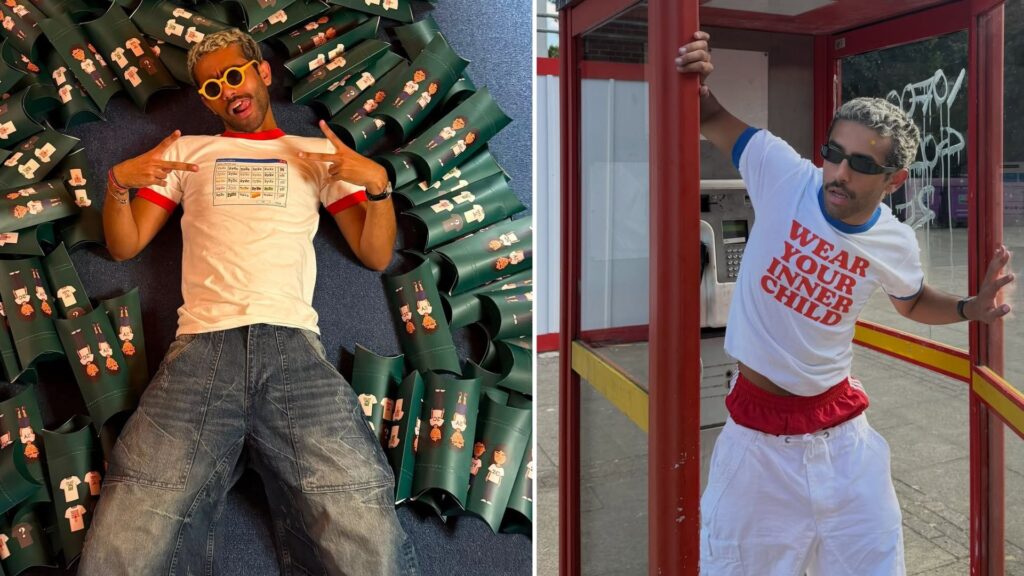
That is the position 2Y2C has taken. The label is the work of wahabooo, the Kuwaiti creator whose accounts carry about 594,000 followers on TikTok and a further 40,000 on Instagram, and it trades through a storefront priced in dinars, with a region selector covering 24 markets and a catalogue of two items: a mystery T-shirt at KD 10 and a film camera at KD 25. Under the decree he is a registered provider rather than a promoter. The audience is the acquisition channel; the store is the balance sheet.
The demand side is unusually strong. Kuwait counts five million internet users at 99 percent penetration, among the highest rates anywhere, and Central Bank data show KD 16.1 billion spent online locally in 2025.
The Operating Bill Arrives With the Margin
One caveat belongs in any serious account of the model. Owning the store is the more demanding path, not the easier one. Registration, Arabic invoicing, refund windows, complaint logs, cybersecurity upkeep and personal responsibility for actual management all attach to the provider. A creator taking a fee for a post has a licensing question to answer. A creator running a shop has an operating function to staff, and it only pays for itself once volume arrives.
Boutiqaat’s listing will be read as a verdict on Kuwaiti e-commerce, and on current evidence a favourable one. What follows it is the more interesting question, and Kuwait has already written the rules for it: who owns the checkout.