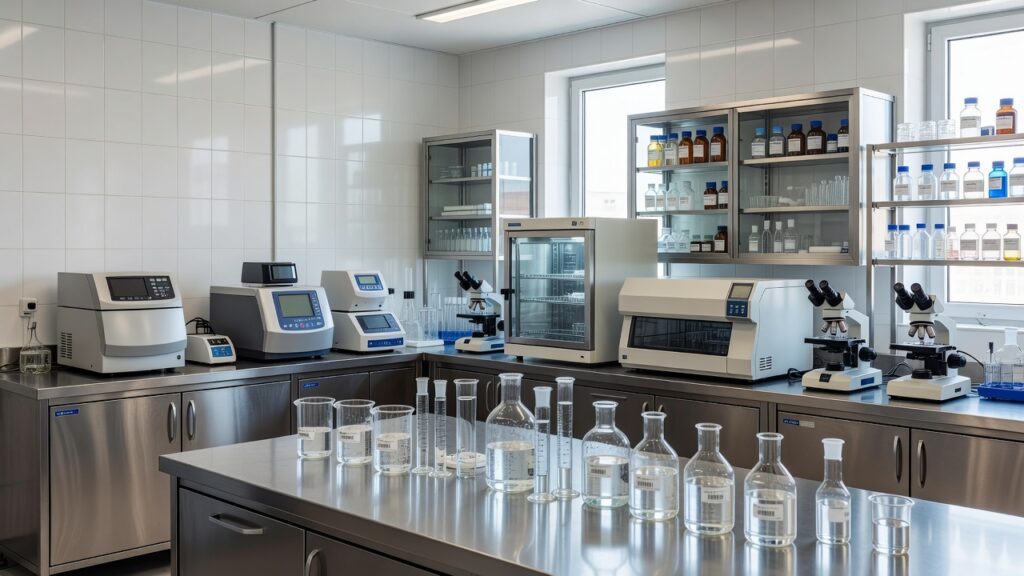
The Ministry of Electricity, Water and Renewable Energy has made notable strides in its project to construct a water analysis laboratory in Shuwaikh. This facility will expand the capabilities of the Water Resources Development Center to track drinking water quality from initial production stages all the way to end consumers with a focus on chemical and bacterial testing. Last week the ministry submitted a request to the Central Agency for Public Tenders to float the construction tender. The agency responded by calling for specific modifications to the tender documents before granting approval. These steps reflect ongoing implementation of the project as detailed by the ministry.
The ministry participated in the Fourth Sustainability Camp, a national program running under the theme “When Technology Meets Sustainability.” Its involvement aimed at promoting the rational use of electricity and water resources across society with special attention to educating children and youth. Teams from the ministry engaged participants with practical conservation techniques and demonstrated how innovation can drive greater energy efficiency. The camp also facilitated partnerships with other governmental entities and civil society groups to amplify messages on responsible consumption. The ministry bases its strategy on the conviction that rationalization of such vital resources begins with the individual.
The ministry reported successfully handling the high demands of the summer season’s first half. It pledged continued measures to secure uninterrupted services for the remaining period despite various operational challenges encountered. Public awareness campaigns form a key element of its approach to resource management. Multiple national events have been staged to spread best practices and the advantages of adopting modern technological solutions. These activities support the country’s path toward sustainable development and improved service delivery standards according to the ministry.
A Fanack Water review indicated that Kuwait produces its drinking supplies by blending desalinated water with brackish groundwater in order to align with World Health Organization standards. Testing conducted in 2015 confirmed that tap water physicochemical parameters fell within accepted limits according to that assessment. The planned laboratory will provide enhanced ongoing verification to maintain these quality levels over time. Deployment of high-tech analytical equipment is anticipated to enable more comprehensive and timely detection of any deviations. This project builds upon existing infrastructure at the Water Resources Development Center to address evolving requirements.
The Water Resources Development Center has historically relied on specialized bacteriological and chemical laboratories to uphold international benchmarks for drinking water an ArcNews report by Esri detailed. Past adoption of geographic information systems aided in mapping and managing quality control processes effectively. Approval of the Shuwaikh laboratory tender following requested changes will mark a significant upgrade to these capabilities. The ministry’s recent action with the Central Agency for Public Tenders highlights the priority assigned to this development amid current summer pressures. Coordination with related authorities ensures the laboratory integrates seamlessly into national water monitoring networks according to available updates.
Kuwait’s Environment Public Authority moved in April to intensify its water resources oversight via improved monitoring frameworks a Technical Review Middle East dispatch stated. The laboratory initiative from the Ministry of Electricity, Water and Renewable Energy complements these regulatory enhancements by focusing on production-to-tap verification protocols. Participation in events such as the sustainability camp forms part of the ministry’s efforts to address consumption loads. The combined approach integrates public education with technical advancements according to the involved bodies. Officials continue advancing the tender process to realize the laboratory’s benefits for consumers across the country.