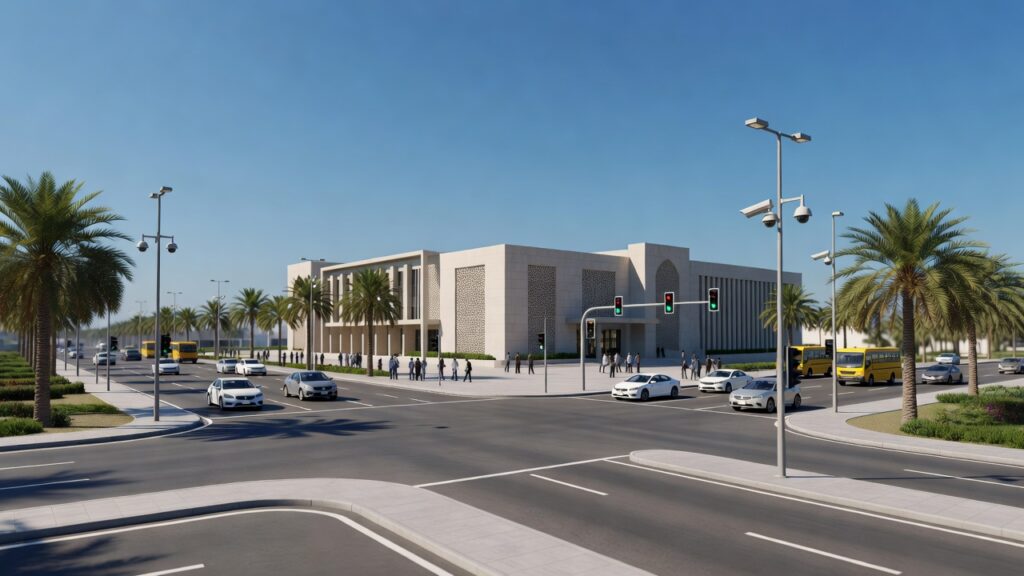
The Ministry of Interior stepped up its presence with 870 security and traffic patrols deployed around schools, access roads and vital locations to ensure student safety and ease congestion as classes resumed this week. According to a ministry statement, the patrols break down into 520 from the Security Directorates Affairs Sector, 200 from the General Traffic Department and 150 from the General Emergency Police Department. Security teams focused on protecting school perimeters while traffic officers monitored key routes from a central control room linked to 338 surveillance cameras. The ministry activated flashing light systems at intersections to improve flow during morning and afternoon peaks.
Road monitoring through the 338 cameras enabled real-time adjustments to signals based on traffic density across 258 connected intersections, a ministry assessment found. Emergency police units remained on standby for rapid response to calls received via the 112 hotline, operating around the clock from the first day of the school year. Colonel Othman Al-Gharib, director of the Public Relations Department at the Ministry of Interior, confirmed in an interview with Kuwait TV that the intensified officer presence forms part of a comprehensive plan continuing throughout the academic year. He noted that traffic congestion is expected at the start of the school year.
The security rollout aligns with the “Prevention and Safety” awareness campaign that the General Department of Security Relations and Media launched on September 1. This year-long effort, according to the ministry, promotes traffic safety, juvenile protection, drug prevention and cybersecurity through media, lectures and community workshops targeting students, parents and educators. Campaign materials emphasize seat-belt use, safe crossing practices and responsible online behavior to build preventive habits from the outset of the academic calendar. Officials described the initiative as running in tandem with the physical deployments to reinforce compliance on the roads.
The Ministry of Education reported that 481,511 students returned across government, private Arabic and religious institutions for the new term. Its data places 391,604 pupils in public schools, with 86,762 enrolled in private Arabic programs and 3,145 in religious education tracks. First-grade classes started on September 13 while other primary, intermediate and secondary students followed on September 14, leaving kindergartens to open on September 16. Minister of Education Sayed Jalal Al-Tabtabaei visited multiple sites in the Capital Educational District on September 14 to verify readiness and learning conditions.
Lieutenant Colonel Abdullah Bu Hassan of the Traffic Awareness Department outlined earlier preparations that included completion of the monitoring network well before the term began. He told Kuwait Radio that the system supports quicker responses to build-up around school zones in areas such as Hawally, Salwa and Al-Manqaf where private institutions add to morning volumes. A security source indicated that while some congestion occurred due to simultaneous departures, movement stayed within normal limits thanks to the coordinated patrols, foot officers, vehicles and aerial oversight. Authorities urged parents and drivers to adhere strictly to designated stopping areas to avoid blocking thoroughfares.
Director Al-Gharib advised students and workers to leave early for destinations to minimize delays under the new traffic arrangements. The ministry statement reiterated that cameras would also detect indirect violations to maintain order beyond the initial reopening days. These combined measures draw on patterns observed in prior years when school traffic contributed notably to peak-hour strains across the capital and suburbs.