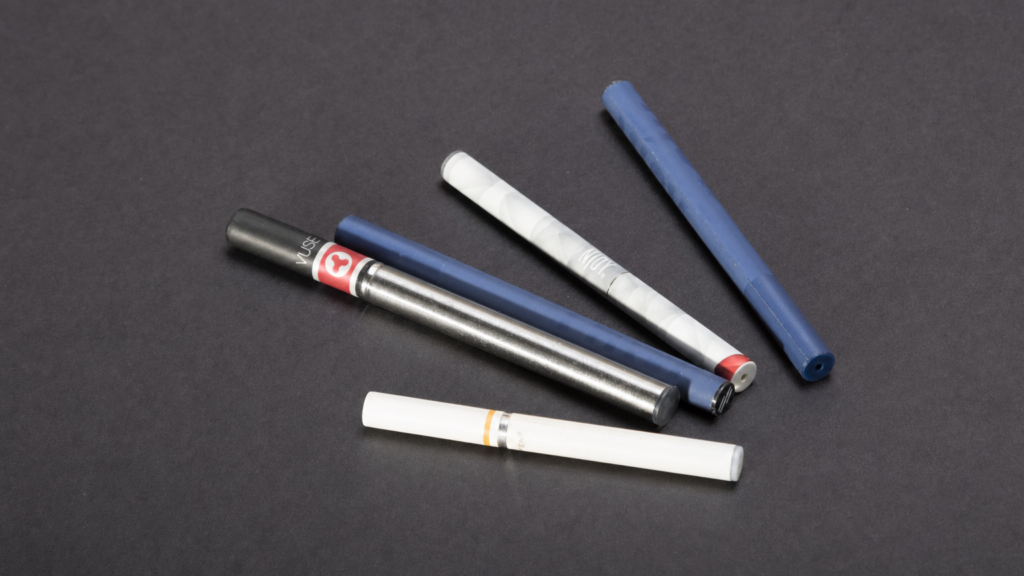
The Ministry of Interior said security forces detained the juvenile following intelligence on trafficking of the narcotic liquid commonly added to electronic cigarettes. Officers seized the substance during the arrest and transferred the case to the Public Prosecution. The ministry described the operation as part of its continuous efforts to counter distribution networks that prey on younger individuals.
The arrest coincides with a recent ministry campaign that led to the detention of three individuals on October 24 for selling e-cigarettes to high school students by concealing them inside food orders. The Criminal Security Sector’s General Department of Criminal Investigation traced the activity to a grocery store used for preparing and packaging the disguised deliveries. The three confessed to their roles with two managing the store and one handling deliveries while aware of the contents according to the ministry.
In May the ministry announced the arrest of six defendants in separate narcotics cases that included 400 milliliters of chemical oil and an electronic shisha device already loaded with the substance. Those operations also recovered 1,700 Captagon capsules, 500 grams of hashish and 50 grams of cocaine along with consumption tools. The ministry highlighted coordination with Emirati authorities that prevented the smuggling of five kilograms of liquid shabu via air cargo in the same period.
A December ministry statement detailed the seizure of five cans of hashish oil formulated for electronic cigarettes during the arrest of nine defendants of different nationalities. That operation yielded additional quantities of shabu, marijuana, heroin and Captagon as well as sensitive scales and cash suspected to be proceeds from sales. The ministry has used such cases to underscore the range of forms in which these substances appear in local markets.
The Directorate General for Drug Control continues to urge public cooperation in reporting suspicious activities related to narcotics. The ministry has noted that liquids designed for e-cigarettes represent an evolving challenge within its enforcement priorities. Operations like the juvenile arrest demonstrate the focus on interrupting supply at early stages before wider distribution occurs.