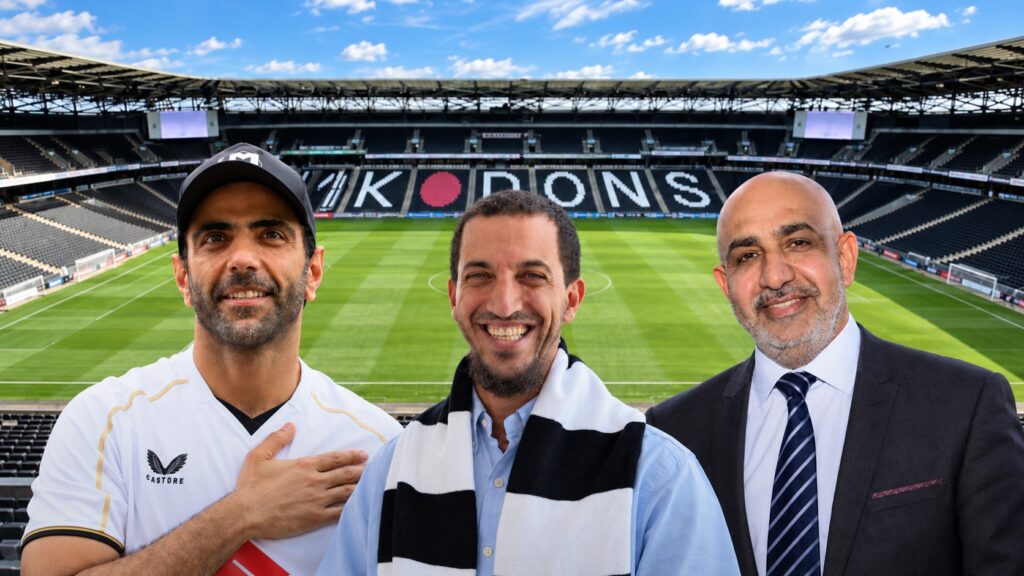
From MK Dons and Bristol Rovers to Salisbury and a new club in Birmingham, Kuwaiti investors are building connections across English football through ownership, sponsorship and player development.
An English football club’s connection to Kuwait might begin in the boardroom, but it can soon appear on a shirt, at a training session or in a fixture thousands of kilometres from its home ground.
Salisbury’s September 30 friendly against Al-Qadsia offered a recent example. The Wiltshire club, owned by Kuwaiti businessman Ali Alhamad, brought its players to Mohammad Al-Hamad Stadium as part of a visit that combined football, community appearances and commercial activity. For Kuwaiti supporters, it was an opportunity to see one of the English teams with a direct connection to their country.
That connection extends well beyond Salisbury. Fahad Al Ghanim leads the ownership consortium behind MK Dons, Hussain AlSaeed became the controlling shareholder at Bristol Rovers, and Kuwaiti founders established Birmingham Albion from scratch. Andover Town has also joined the ownership group behind Salisbury.
The clubs differ considerably in size, history and ambitions. Their stories reveal the range of Kuwaiti involvement in English football, from acquiring established professional teams to creating a new grassroots club and linking youth programmes across borders.
MK Dons: a club and its stadium group
MK Dons changed ownership in August 2024, when a Kuwait-based consortium led by Fahad Al Ghanim acquired the club and the wider Stadium MK Group from Pete Winkelman.
The scope of the acquisition is significant. The consortium took on both the football club and the associated stadium group, bringing sporting and wider business operations into the transaction.
Latham & Watkins, which advised the buyers, confirmed that the EFL had ratified the deal and that Al Ghanim would assume the chairmanship of both organisations. It also noted his family’s ownership of Kuwait SC, giving the acquisition a connection to an established presence in Kuwaiti football.
By May 2026, the relationship had become a subject of discussion in Kuwait itself. A government account of a meeting between sports minister Dr Tariq Al-Jalahma and MK Dons officials highlighted the club’s promotion to League One and discussions about sports management, youth opportunities and knowledge exchange.
For Kuwaiti readers following the club, the ownership story therefore includes both its progress in England and the experience its leadership can bring into conversations about sport at home.
Bristol Rovers: Kuwaiti investment in an established club
At Bristol Rovers, Hussain AlSaeed’s involvement began with the purchase of a controlling 55% stake in the club’s holding company in August 2023.
A further agreement followed in November 2024. AlSaeed agreed to acquire the remaining interests held by Wael and Samer Al Qadi, with the transaction scheduled to be completed over an 18-month period.
According to ITV’s report of the announcement, AlSaeed would provide the funding for the club’s operations and development during that transition.
The sequence illustrates another route into English football: an initial controlling investment followed by an agreement to consolidate ownership. It also places a Kuwaiti businessman at the centre of a club with an existing supporter community, established identity and long sporting history.
Alongside MK Dons, Bristol Rovers demonstrates that Kuwaiti participation reaches into the professional game through different ownership structures and transactions, each shaped by the organisation being acquired.
Salisbury: taking an English club to Kuwait
Salisbury’s Kuwaiti connection has become visible through travel, sponsorship and training exchanges.
Under Ali Alhamad, who acquired the club in 2025, the team visited Kuwait from late September into early October 2026. Its programme included the friendly against Al-Qadsia, school visits and time with local supporters.
In its announcement before the trip, Salisbury said all commercial profits and ticket-sale proceeds would go to the club. The visit consequently had a direct financial purpose alongside the opportunity to play and coach in another football environment.
Kuwait Times subsequently reported that Kuwaiti coaches had spent time observing Salisbury’s coaching staff and young Kuwaiti players had trained with the English club. Alhamad also discussed plans for an academy in Kuwait connected to its youth development work.
The club’s commercial relationships provide another link. In July, Salisbury identified Tam Digital Bank as its front-of-shirt sponsor, Sakan.com on the back of the shirt, Say Suco on training kit and UniApprove on travel wear.
Those partnerships place Kuwaiti businesses within the club’s everyday appearance. The connection travels with the players through matches, training and journeys, while the Kuwait visit brought the team itself to the audience behind those relationships.
Birmingham Albion: building a club from scratch
Birmingham Albion adds a different chapter. Kuwaiti founders Faisal Al-Serbel and Fahad Obaid established the club in 2025, choosing to create a new organisation rather than acquire an existing team.
By September 2026, Arab News reported that the club had entered the West Midlands Regional League Division One and secured a ground-sharing arrangement with Coton Green at the Dave Henderson Memorial Ground for the 2026/27 season.
Kuwaiti marketplace app Approach had also become its shirt sponsor.
The founders’ work has involved assembling the foundations of a football club: a squad, staff, volunteers, a playing venue and commercial support. Its launch announcement outlined intentions to develop relationships with schools and community groups.
Al-Serbel’s stated five-year sporting ambition was promotion through one or two divisions. He also outlined a target of securing the club’s own stadium by 2027, an ambition distinct from the ground-sharing arrangement already in place.
Andover Town: connecting two clubs through development
Andover Town’s place in the story became clearer in August 2026, when Salisbury announced that its ownership group, Proleague Limited, had completed the club’s acquisition.
The official statement confirmed a 25-year lease of Portway Stadium from Test Valley Borough Council. Andover would retain its name, identity and home ground, with Mohammad Alkandari running the club day to day as chief executive.
The plan connects ownership to player development. Salisbury academy players would have a route into senior football, while the two clubs would share scouting and coaching resources. Proleague also outlined potential improvements at Portway, including examining an all-weather 3G pitch.
Taken together, these clubs give Kuwait several distinct footholds in English football. There are established professional organisations, a newly founded grassroots side, overseas sponsorships and a developing relationship between two clubs under one ownership group. For supporters in Kuwait, the next chapters will be played out through league seasons, academy programmes and visits that bring those English connections closer to home.