The Premier Padel upgrade and a separate World Cup qualifying event give Kuwait two distinct roles in the sport’s October calendar.
Kuwait’s late-October padel schedule has acquired greater sporting significance after its Premier Padel tournament was upgraded from P1 to Major status for the 2026 season. The competition is listed for 26–31 October, placing Kuwait in a higher category on the professional tour than originally announced.
The change sits alongside a separate international assignment. Kuwait will also stage the Asia-Africa qualifying competition for the FIP World Cup from 26–30 October, with places in the men’s and women’s national-team finals at stake. The two events overlap in the calendar but belong to different competitions.
Together, they give the country a dual role: hosting a leading professional pairs tournament and deciding the final regional qualifiers for a national-team championship. For spectators following the sport, that distinction is essential to understanding what is being contested and where.
A higher category for the professional tour
Premier Padel and the International Padel Federation announced the Kuwait upgrade on 7 May. The adjustment followed the postponement of the Qatar Major and formed part of a wider effort to rebalance the season’s ranking points and prize money.
The announcement specifies that Kuwait’s Major classification applies exclusively to the 2026 season. It should therefore be read as a confirmed change to this year’s tournament, rather than a permanent designation for every future edition. Pretoria was also upgraded, from P2 to P1, under the same calendar revision.
For Kuwait, the immediate consequence is a different position in the tour’s competitive structure. The governing bodies said the upgrades would make additional ranking points and prize money available. That gives the tournament a clear news significance beyond the fact that another international sporting event is coming to the country.
It also makes older references to the Kuwait P1 incomplete for this edition. A calendar published before the May revision can show the original classification accurately for its publication date while no longer describing the tournament that is now scheduled to take place.
A separate route to the World Cup
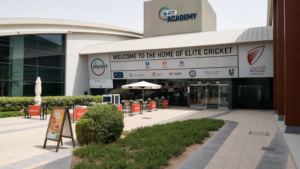
The FIP’s September announcement identifies Padel In Club as the venue for the Asia-Africa qualifiers. Organised in collaboration with BNK, the competition will award one remaining place in the men’s draw and one in the women’s draw for the World Cup finals in Qatar on 2–7 November.
This is a national-team competition. Its result determines which countries progress, whereas the Premier Padel tournament concerns pairs competing on the professional circuit. Similar dates and the involvement of the same sport do not make the two events interchangeable.
FIP says the finals will feature 16 men’s and 16 women’s national teams. Qualification combines places allocated through previous championship results and the host-country position with places earned through regional qualifying tournaments. Kuwait’s event completes that regional route for Asia and Africa.
The overlapping schedule consequently offers two different sporting narratives. One concerns the professional tour and its ranking structure. The other concerns national representation and the final step towards a World Cup place. Neither requires a prediction about who will win to establish why the matches matter.
The local partnership behind the tournament
The Kuwait tournament’s partner page identifies BNK Holding as its official partner. The company describes itself as a Kuwait-headquartered private shareholding business founded by Bader Nasser Al-Kharafi, with domestic and international interests. FIP’s separate confirmation of BNK’s role in the qualifiers provides a second, specific link to this month’s programme.
Those disclosures establish involvement, but they do not quantify the financial value of the events or their wider economic impact. Ticket revenue, hotel stays and spending by visiting teams are different measures, and none should be inferred simply from a tournament’s classification.
The stronger conclusion is organisational: Kuwait is being used for more than one level of international competition during the same period. The professional tournament and the qualifying stage involve different entry systems and outcomes, bringing distinct responsibilities for organisers, venues and the sport’s governing bodies.
That makes accurate event information particularly useful. A person attending the Major needs the professional tournament’s ticket and session details. Someone following a national team needs the World Cup qualifier’s draw, match times and progression rules. Combining the two into a single event listing would obscure rather than explain the programme.
What spectators can confirm now
The Arena Kuwait’s current calendar lists the Premier Padel Kuwait Major for 26–31 October. The local tournament homepage also carries a wider 23–31 October promotional window, while the FIP announcement gives 26–31 October for the tournament. The main competition dates are the clearest basis for reporting the sporting schedule.
The wider promotional window should not be treated as confirmation that every day has the same competition programme. Draws, session times and the ticket selected determine what a spectator will actually see. Named players likewise need confirmation through the entry list or draw, rather than an assumption based on previous appearances.
The distinction also affects how results will be reported. A successful pair at the Major earns an individual tournament result within the professional circuit. A national team progressing from the qualifiers earns a place in a separate championship. Success in one competition should not be presented as qualification through the other.
For now, the established development is substantial enough: Kuwait’s tour event has Major status for 2026, and the country will host the decisive Asia-Africa World Cup qualifying stage in the same week. By the end of October, the professional tournament will have its champions and the qualifying competition will have settled the region’s remaining places in Doha.