Basil Ebrahim’s unanimous-decision victory in Phuket puts a Kuwaiti fighter inside the sport’s home-country circuit, and turns years of local Muay Thai development into a result that can be measured.
Kuwait’s Muay Thai scene has been building the infrastructure for nights like 13 August for some time. The International Federation of Muaythai Associations lists a Kuwait Muaythai Committee within its Asian structure, while Thailand’s embassy in Kuwait was already describing the sport in 2023 as increasingly popular among men, women and children in the country. More significantly, when the Thai ambassador visited 8 Limbs Muay Thai Gym that year, the embassy noted that fighters from the Kuwaiti gym had travelled to Thailand and won across different categories.
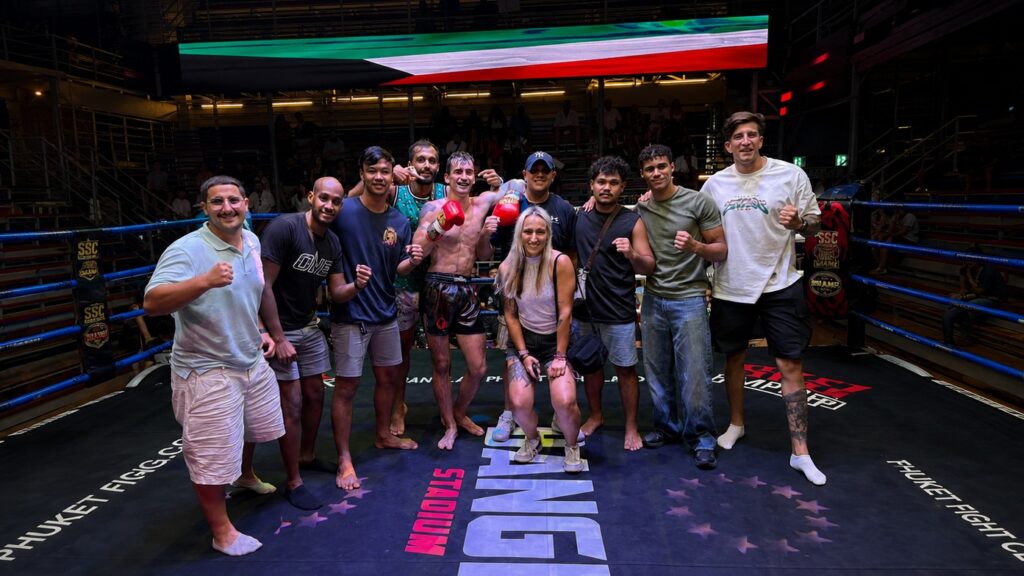
That background makes Basil Ebrahim’s latest result more useful than an isolated victory. Competing under the Kuwaiti flag at Bangla Boxing Stadium in Patong, Phuket, Ebrahim faced a Russian opponent billed as Kurban on the 13 August card and took the contest by unanimous decision. Bangla’s own schedule confirms an eight-fight Muay Thai programme that evening, beginning at 9pm, part of the dense competitive calendar that makes Phuket a working fight market rather than simply a training destination.
From classes to competitive rounds
Ebrahim’s home team sits inside a broader grassroots structure. 8 Limbs operates in Kuwait and describes its focus as authentic Muay Thai training across ages and ability levels. In late 2025, the Public Authority for Sport also worked with 8 Limbs on a free month-long Muay Thai programme for boys and girls aged 6 to 14 in Jabriya and Mahboula. That matters because the pathway in combat sport is unusually unforgiving: participation numbers mean little unless gyms can turn recreational interest into athletes capable of travelling, making weight and performing under unfamiliar conditions.
The Phuket result is evidence of that transition. In its Instagram post on 13 August, 8 Limbs described the result as the “third win in row” and told Ebrahim, “You did great champ,” while thanking the coaching team around him. The language is celebratory, as gym accounts are expected to be, but the underlying point is competitive continuity. One victory can come from a favourable match-up. Three successive wins, if sustained, begin to describe development.
Why unanimous matters
A unanimous decision is also a particularly useful result for a developing fighter. It means the win was not dependent on one decisive moment ending the contest early. Ebrahim had to produce enough work across the fight for all judges to arrive at the same winner. For a Kuwaiti athlete competing in Thailand against an international opponent, that is the sort of performance that can be taken back into the gym and built upon.
There is one qualification worth keeping beside the celebration: the three-fight streak is a gym-reported figure, and the Bangla bout was a regular fight-night contest rather than a publicly documented world-title or major international ranking fight. It should not be inflated into something it was not.
A flag inside the right ring
That restraint actually makes the result more interesting. Kuwait does not need every overseas victory to be a championship to show progress. It needs repetition: more fighters travelling, more competitive rounds, more coaches developing athletes who can operate outside their home environment, and more results against opponents drawn from the international circuit.
On 13 August, the Kuwaiti flag on the Bangla card was attached to a unanimous decision. For Basil Ebrahim, it was another win. For the local Muay Thai system behind him, it was evidence that the route from a Kuwait gym to a Thai ring is becoming a pathway rather than an exception.