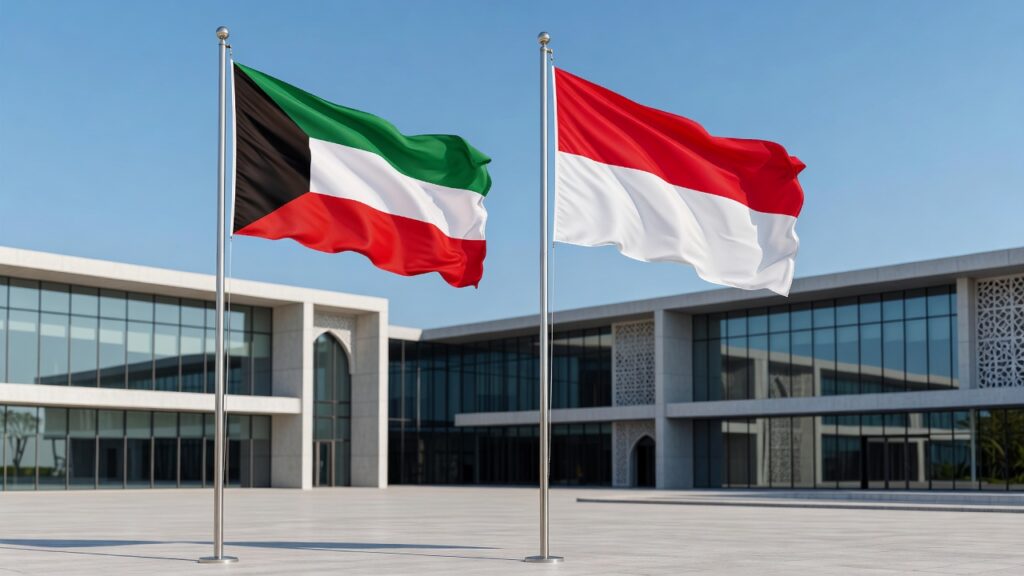
Kuwait’s ambassador to Indonesia Khaled Al-Yaseen told the Kuwait News Agency on September 21 that the country welcomes recruitment of more qualified Indonesian workers in line with labor market requirements. The statement followed Al-Yaseen’s meeting with Indonesian Minister of Migrant Worker Protection Mukhtarudin to examine avenues for bilateral cooperation in employment and means to bolster it. Al-Yaseen pointed to Kuwaiti legislation that safeguards worker rights and organises the work environment while urging discussion of structured recruitment mechanisms that protect all involved parties.
The Kuwait News Agency dispatch quoted Al-Yaseen as emphasising the importance of aligning worker qualifications with Kuwaiti market demands during the Jakarta talks. Mukhtarudin responded that relations between the two countries are marked by depth and amity. The Indonesian minister expressed readiness to collaborate on supplying professional cadres and trained labour for both public and private sectors.
Public Authority for Manpower data places the current number of Indonesian workers in Kuwait at around 6,200, a figure viewed as modest relative to expansion opportunities. Central Statistical Bureau figures show the overall Kuwaiti workforce reached 3.04 million at the end of 2025, with Indian nationals accounting for 29.2 percent and Egyptians for 15.4 percent of that total. Indonesian employees contribute across healthcare including nursing, hospitality, sales and oil and gas activities.
Al-Yaseen commended the diligence, discipline and compliance of Indonesian workers, noting these qualities have led Kuwait to formally seek higher numbers. The ambassador’s comments align with ongoing engagement between Kuwait’s Public Authority for Manpower and Indonesian authorities on streamlining skilled labour flows. Earlier meetings, including those with PAM officials in 2025, have similarly focused on matching Indonesian expertise to Kuwaiti sectoral gaps.
Discussions have highlighted potential in government-to-government arrangements particularly for nurses while private sector openings exist in modern agriculture and energy. Kuwaiti authorities continue to enforce labour laws that apply uniformly to expatriates across all nationalities. The latest overture forms part of sustained diplomatic efforts to diversify skilled inflows while maintaining regulatory oversight of the labour market.