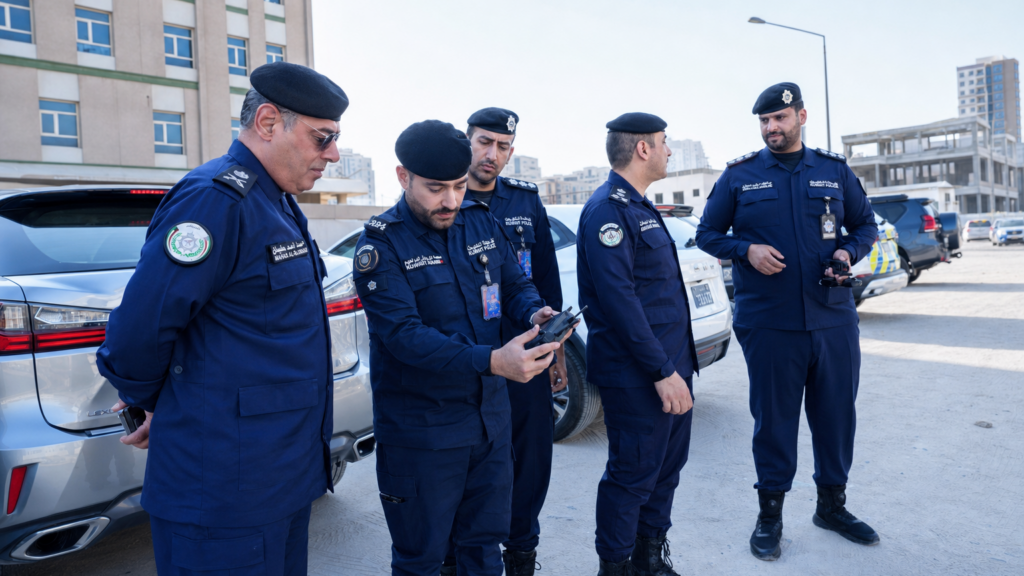
The Ministry of Interior has mobilized resources to safeguard students with the opening of the 2026-2027 academic year in mid-September, deploying patrols around schools and activating surveillance systems to manage traffic and prevent incidents. According to a ministry statement, the operation integrates immediate security measures with a broader awareness drive that will extend through the full school term. Officials described the dual approach as essential for both short-term order during peak commuting hours and long-term education on personal safety. The plan reflects ongoing efforts to address congestion and risks that arise when large numbers of families converge on educational facilities each morning and afternoon.
A ministry assessment placed the total number of patrols at 870, broken down into 520 from Security Directorates to guard school perimeters and key sites, 200 from the Traffic sector to regulate roads and signals, and 150 from Emergency Police for swift responses to calls made to the 112 hotline. The General Directorate of Traffic will oversee operations from its control room using 338 surveillance cameras while turning on flashing light systems at intersections to improve visibility and flow. This configuration allows for real-time adjustments that the ministry said have proven effective in prior academic cycles when similar resources were concentrated near schools.
The accompanying Prevention and Safety campaign, launched by the ministry’s General Department of Security Relations and Media, targets six interconnected areas chosen to meet the most pressing vulnerabilities facing young people today. These encompass traffic safety, juvenile protection, drug prevention, cybersecurity, resistance to intellectual extremism and environmental awareness, with tailored programs for elementary, middle and high school students as well as their families and teachers. The ministry reported that the initiative will employ workshops, media materials and direct community engagements to encourage cooperation among parents, schools and law enforcement throughout the academic year.
Colonel Othman Gharib, Director of the Public Relations Department at the Ministry of Interior, explained that the campaign was timed with the school reopening to capitalize on heightened attention to youth issues. He noted that expanding use of smart devices has amplified certain risks, making proactive education alongside physical security presence a necessary combination. “Protecting young people is a shared responsibility,” Gharib said, adding that families, educational institutions, security bodies and society at large each play a part in shielding children from harmful influences while instilling respect for the law and national values.
Separate figures from the Ministry of Education indicate that 481,511 students enrolled in government, private Arabic and religious schools resumed studies this month, creating substantial daily movement that the security plan is designed to accommodate safely. In parallel, the education ministry is advancing plans to introduce 2,300 new school buses equipped with cameras and tracking devices, supplementing the 1,416 buses already in service that undergo regular safety inspections. These transportation upgrades form part of the wider push to minimize risks during the commute that accounts for a significant share of school-related traffic volume.
Traffic enforcement statistics compiled by the ministry in the week following the school start recorded 28,890 violations along with 25 arrests of reckless drivers, underscoring the continued need for both enforcement and awareness components. The ministry has called on motorists to adhere strictly to regulations, particularly around pedestrian crossings, and has asked parents to monitor their children’s online interactions and maintain open family discussions on safety topics. Such data-driven campaigns have become a fixture of the annual back-to-school period as authorities seek to translate heightened vigilance into sustained reductions in avoidable incidents.