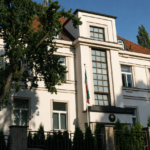
Germany has reaffirmed its solidarity with Kuwait and committed to deeper bilateral cooperation across multiple sectors, the country’s ambassador-designate said at an embassy reception on October 6, 2026. Dr Dirk Rotenberg delivered the remarks while the German Embassy in Kuwait marked the 36th anniversary of German reunification in the presence of Kuwaiti officials, diplomats and members of the German community. Rotenberg, who addressed the gathering, noted that relations established in 1964 have endured and both sides continue working toward closer ties, according to accounts of the event published by Kuwaiti outlets including Kuwait Times.
The ambassador-designate expressed satisfaction with the existing friendship but underlined an ambition to further develop relations with the people of Kuwait. He pointed to the ongoing strategic dialogue between the two countries, which includes a recent visit by Kuwait’s foreign minister to Berlin for talks with German Foreign Minister Johann Wadephul. That dialogue addresses economic and investment links, particularly in energy, technology, infrastructure, connectivity and artificial intelligence, as well as security, defense, education and academic cooperation.
Rotenberg highlighted plans to broaden collaboration between the European Union and the Gulf Cooperation Council amid conflicts and security challenges affecting Europe and the Middle East. A Federal Foreign Office overview of bilateral relations places the volume of trade at approximately 1.6 billion euros in 2024, with German exports making up about 1.2 billion euros, mainly motor vehicles and parts, machinery, electrical equipment and pharmaceutical products. Kuwaiti state investment in Germany totals roughly 17.4 billion euros, with additional private investment of around 14.6 billion euros, including stakes in companies such as Daimler AG and GEA.
The Federal Foreign Office assessment also notes a bilateral cultural agreement in force since 1989 that underpins educational partnerships with institutions including Goethe University in Frankfurt and the University of Göttingen. An American-German school opened in Kuwait in 2016, offering instruction in English, German and Arabic under a U.S. curriculum. Rotenberg thanked Kuwait’s leadership for messages of congratulations sent to German counterparts on the reunification anniversary, describing them as evidence of the mutual respect that sustains the partnership.
Earlier steps to formalize cooperation include the 2025 signing of a memorandum of understanding that established a strategic dialogue between the two foreign ministries, as confirmed in statements from the Kuwaiti side. Rotenberg’s address built on that foundation by stressing the shared interest in addressing regional issues such as maritime security in the Strait of Hormuz. The Federal Foreign Office has separately documented high-level visits in both directions that have reinforced political, economic and people-to-people links over recent years.
Kuwait’s chairmanship of the Gulf Cooperation Council at the time of the reception provided additional context for discussions on EU-GCC coordination, according to the ambassador. Rotenberg described Kuwait as a reliable partner committed to international rules and stability. The embassy event served to underscore Germany’s view that unity and external engagement remain essential for progress in a challenging global environment.