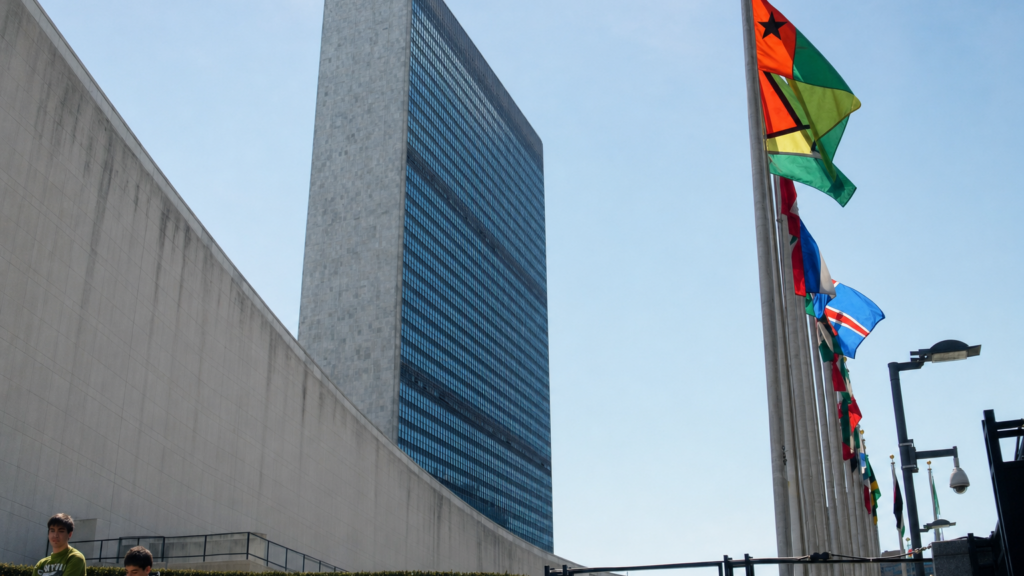
Second Secretary Wafiqah Al-Mulla of Kuwait’s Permanent Mission to the United Nations delivered the statement early Thursday to the UN General Assembly’s third committee, which addresses humanitarian, cultural and social matters. According to the Kuwait News Agency, Al-Mulla rooted the policy in the country’s steadfast adherence to the UN Charter along with principles of good-neighborliness, non-interference in domestic affairs and respect for state sovereignty. She detailed a sequence of Iranian attacks on Kuwait since February 28, 2026, that struck civilian sites, vital installations and core infrastructure while endangering residents and breaching national airspace.
These strikes have represented direct threats to civilian lives and a clear violation of Kuwaiti sovereignty, territorial integrity and international legal standards, Al-Mulla told the committee. Kuwait rejects any invocation of UN Charter Article 51 on self-defense to justify targeting civilian objects or essential facilities, the diplomat added while referencing UN Security Council Resolution 2817 adopted earlier in 2026. The resolution and related diplomatic exchanges underscore Kuwait’s insistence that such actions cannot be reconciled with established international norms.
The address continues a pattern of identical affirmations issued by senior Kuwaiti officials throughout 2026. In April the Cabinet declared after its regular meeting that the state would not allow its land to serve as a launch point for strikes on any nation, a stance the Kuwait News Agency reported at the time as consistent with balanced foreign policy and peaceful coexistence. Foreign Minister Abdullah Al-Yahya echoed the position in September during a ministerial gathering at UN headquarters, where he condemned the repeated Iranian assaults and demanded their immediate and unconditional halt.
Kuwait’s posture aligns with its longstanding approach to regional diplomacy that prioritizes mediation and restraint even amid successive crises. The country has faced hundreds of missile and drone incidents since early 2026 yet has maintained that it remains outside any military alignment, according to multiple statements compiled by the state news agency. Officials have stressed that national armed forces and air defenses have limited damage while protecting citizens, residents and strategic assets as an overriding priority.
Al-Mulla connected the security concerns to broader human rights considerations before the third committee. Attacks on civilian infrastructure undermine not only sovereignty but also basic rights to life, security, health, housing and essential services, she argued in remarks distributed by the Kuwait News Agency. Promotion and protection of human rights cannot occur in isolation from respect for state boundaries and full compliance with international law, the diplomat concluded in that portion of the presentation.
Regional tensions have prompted repeated Kuwaiti calls for de-escalation through diplomatic channels rather than force. The latest UN intervention reflects ongoing efforts to reinforce Gulf security as an indivisible concern, a theme Kuwait has raised in prior Security Council sessions. Authorities continue to monitor developments while advocating dialogue that upholds the sovereignty of all involved states.