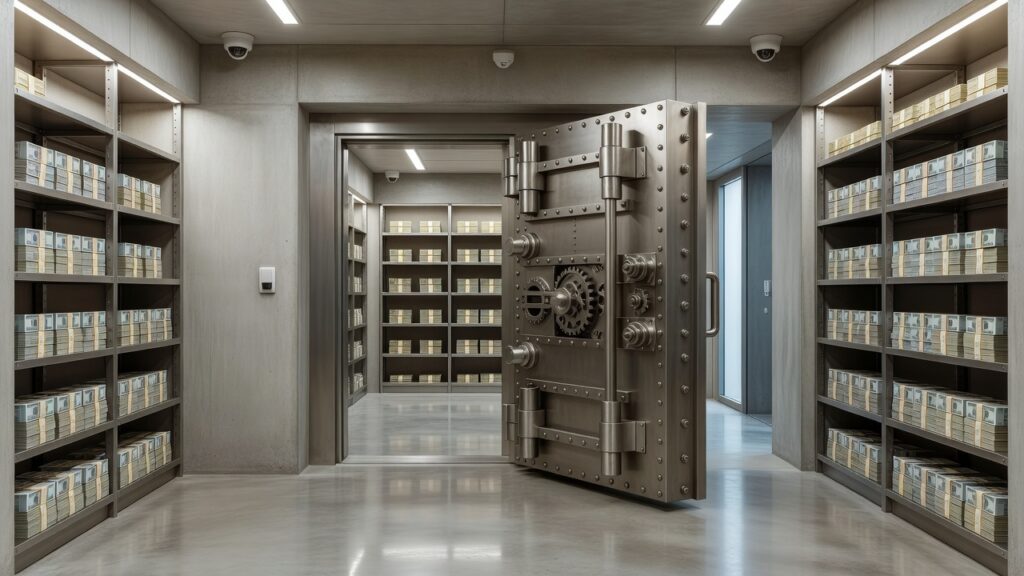
The Central Bank of Kuwait published new rules last month that bar lenders from storing cash with any third parties and mandate full responsibility for all holdings at approved bank premises under strict security protocols, according to details released by the authority. This directive follows the discovery of substantial cash amounts belonging to money-transfer firms at unlicensed and inadequately protected sites, a Central Bank of Kuwait review determined. The instructions require banks to meet all regulatory, operational and supervisory standards before the December 2026 deadline to eliminate overlaps in responsibility and reduce associated risks.
Kuwait has accelerated its anti-money laundering measures over the past two years while seeking removal from the Financial Action Task Force grey list that flags jurisdictions with deficiencies in addressing illicit finance, FATF assessments show. The Paris-based body noted in 2024 that although Kuwait maintained a solid legal framework, shortcomings persisted in investigations, prosecutions and understanding of money laundering typologies. Central Bank of Kuwait data has highlighted how cash stored outside formal vaults created vulnerabilities that cash-out schemes could exploit to integrate illicit proceeds into the legitimate economy.
Separate actions have reinforced the cash management push, with the Ministry of Commerce and Industry banning cash payments for vehicle sales effective October 2024 under a ministerial decision that routes all such deals through approved banking channels, ministry statements confirm. Similar prohibitions extended to gold, jewellery and precious metals transactions in November 2025, requiring non-cash methods approved by the Central Bank of Kuwait to enhance traceability. Violators in these sectors face business closure and referral for legal action, according to the ministry’s published warnings.
A decree-law issued in 2025 amended the primary anti-money laundering statute to impose fines ranging from 10,000 to 500,000 Kuwaiti dinars for violations while empowering the Council of Ministers to issue immediate binding decisions on asset freezes and transaction prohibitions, government records show. The National Committee for Combating Money Laundering and Terrorism Financing has coordinated these reforms ahead of Kuwait’s forthcoming mutual evaluation under FATF standards. Public Authority for Civil Information figures place the expatriate population at more than two-thirds of total residents, amplifying the scale of financial oversight required across residency and commercial activities.
The Central Bank of Kuwait guidance on suspicious transaction reporting emphasises monitoring for structured cash withdrawals, abrupt depletions of new accounts and patterns that suggest conversion of traceable funds into anonymous physical currency. Such techniques form part of broader placement and integration stages in laundering operations that the authority has tracked through its financial intelligence unit. Recent enforcement has already uncovered cases tied to transfers involving high-risk jurisdictions, Central Bank of Kuwait filings indicate.
Industry compliance guides issued by the Ministry of Commerce and Industry for sectors including precious metals trading now list large or unusual cash dealings as key red flags requiring enhanced due diligence and internal controls. These documents, updated in 2025, align with risk-based approaches that the FATF has recommended across Gulf Cooperation Council members to address supply-chain infiltration and underground banking channels. The cumulative effect of the vault storage rules, sectoral cash bans and stricter reporting aims to close loopholes that previously allowed rapid conversion of illicit value into untraceable forms.