From luxury accessories and perfume to digital services and creative entrepreneurship, four Kuwaitis are joining a regional discussion about how businesses grow, choose their leaders and prepare for change.
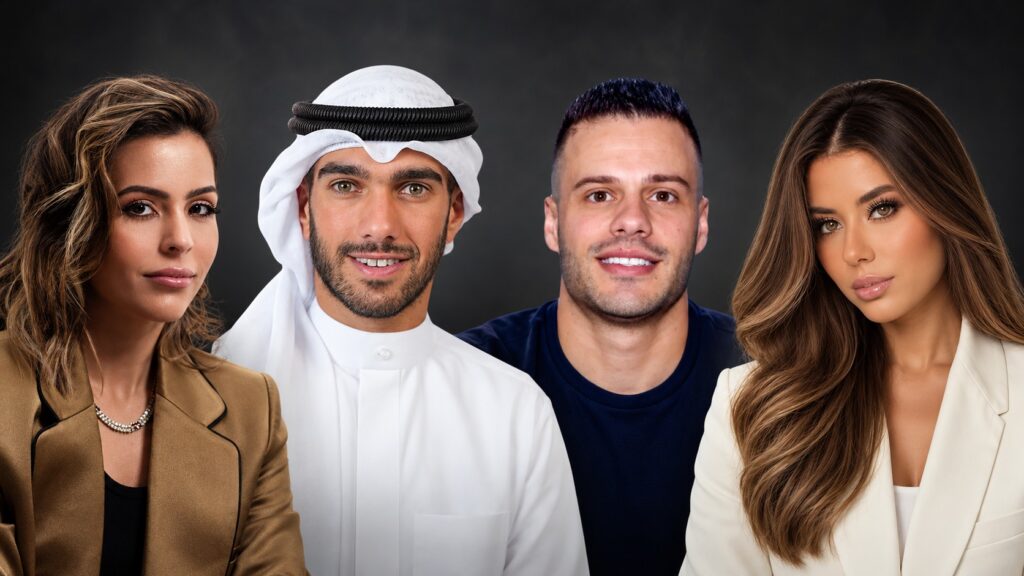
Shouq AlMarzook, Marshoud Almarshoud, Athbi Alenezi and Dalal Alabdulrazzaq are on the programme for Forbes Middle East’s inaugural Family Business Summit in Abu Dhabi on 28–29 October.
Their participation brings several different experiences of building and running businesses into the same conversation. MARZOOK grew from a sibling partnership in luxury accessories. Atyab Almarshoud operates in fragrance retail. Justclean began by connecting customers with laundries, while Alabdulrazzaq’s background spans creative businesses and consultancy.
The official summit programme places those experiences alongside questions about succession, expansion and the responsibilities of leadership. For a Kuwaiti audience, the interest extends beyond seeing familiar names on an international stage. The discussions concern decisions that shape whether businesses remain closely tied to their founders or develop structures capable of supporting their next phase.
Confidence in successors does not always mean readiness
The regional backdrop gives those questions particular weight. In its 2025 GCC Succession Planning Survey, Lombard Odier reported that only 18% of family businesses represented in the research had a comprehensive succession plan.
That contrasted with strong confidence in younger leaders. Some 96% of older respondents and 93% of younger respondents expressed confidence in the next generation’s ability to lead. The gap was between believing someone could take over and establishing how that transition would work.
The study surveyed 300 high-net-worth individuals across the UAE, Saudi Arabia, Qatar, Kuwait and Bahrain in February and March 2025. Its sample included people with and without family-business ties, so its findings should not be read as a census of Kuwaiti companies.
Even within that scope, the distinction is useful. Agreement about a successor’s potential does not automatically settle questions about authority, ownership or the pace of change. Those are separate decisions, often involving people whose relationships extend well beyond the workplace.
Shouq AlMarzook brings a sibling-built business perspective
Shouq AlMarzook, CEO and co-founder of MARZOOK, is scheduled to take part in a discussion about choosing between building, buying and partnering as routes to growth.
Her business offers a different starting point from the familiar image of a long-established conglomerate passing between generations. Shouq and her brother Fahad established MARZOOK in 2012, developing a luxury accessories label around their shared creative work.
A Forbes Middle East profile published in 2023 documented the brand’s distribution through retailers including Harvey Nichols and Saks Fifth Avenue. It also reported company figures of 6,000 units sold in 2022 and an 11.5% increase in revenue that year.
Those are historical figures rather than a measure of the business today. They nevertheless show that the company’s growth discussion has involved tangible questions of production, distribution and reaching customers outside Kuwait.
For a business built around a recognisable creative identity, expansion also raises a practical question: which activities should remain under the founders’ control, and which can be entrusted to retailers, manufacturers or other partners?
That makes a sibling-founded accessories company relevant to a wider family-business conversation. Its experience concerns the relationship between personal creative decisions and the commercial arrangements needed to bring products to market.
Marshoud Almarshoud and Athbi Alenezi tackle leadership
Marshoud Almarshoud, CEO of Atyab Almarshoud, is listed for a discussion about choosing who should lead next. Athbi Alenezi, CEO and co-founder of Justclean, is scheduled to explore mistakes that successors make.
The two subjects address different stages of the same process. Selecting a leader establishes who carries responsibility. The subsequent challenge is how that person makes decisions, works with existing colleagues and earns confidence.
Alenezi’s own route into business began outside an established executive position. According to Justclean’s account of its founding, he was working as a bank HR officer in Kuwait when he and his brother Nouri decided to develop a digital service connecting customers with laundries.
The company dates its founding to 2016. Its original laundry proposition later broadened into other services, including home cleaning, mobile car washing and beauty bookings.
That history introduces a useful distinction into discussions about the next generation. Some entrepreneurs take responsibility for an existing operation; others create a business with relatives and then encounter the organisational challenges that growth brings.
The questions are related without being identical. In a newly built company, founders may have to move from personally managing most decisions to distributing responsibility across a wider team. In an established family enterprise, a new leader may have to negotiate responsibilities and expectations that existed before their appointment.
Neither transition can be understood solely through a job title. The operating history of the business matters, as do the relationships around the person taking charge.
Dalal Alabdulrazzaq connects the discussion across sectors
Dalal Alabdulrazzaq will moderate the growth-strategy discussion involving AlMarzook. Forbes identifies her as the founder of Faux Frame Co. and a board member of its Middle East Youth Council.
Her published biography also identifies her as the founder of ATELIERDOLZI and describes experience spanning fashion, luxury, hospitality, event management and business strategy.
That combination gives the session a perspective extending beyond one industry. A decision to build a new venture, acquire an existing operation or work with a partner can look very different depending on whether a company sells physical products, provides services or depends heavily on a founder’s personal expertise.
Taken together, the four Kuwaitis offer several entry points into the summit’s central questions. Their businesses and professional backgrounds are different, but the programme connects them through decisions about growth and responsibility.
The next step will come in the discussions themselves: how participants explain the choices they have faced, what they would approach differently and which lessons can travel beyond their own companies.