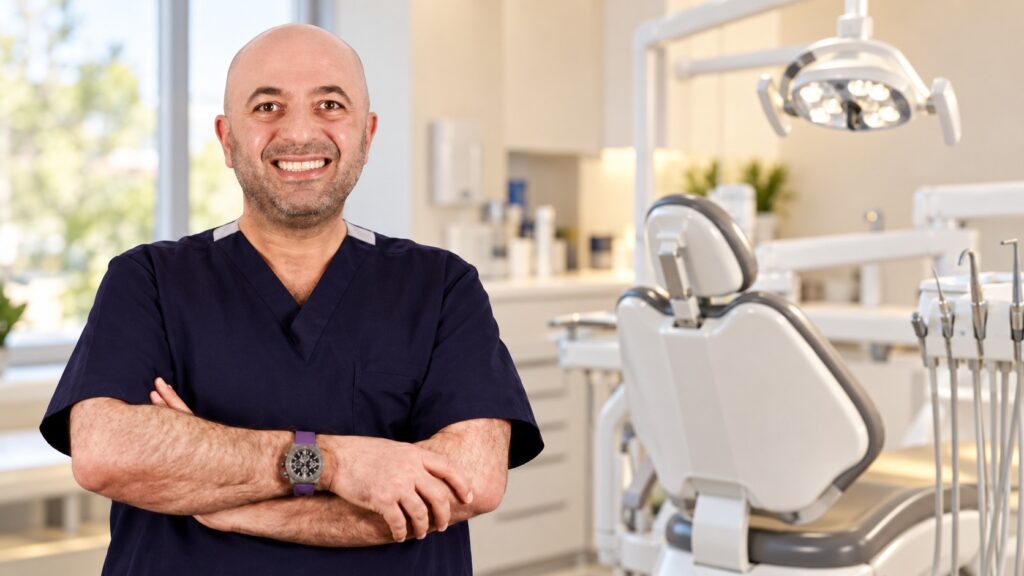
A dental transformation is easier to understand when the discussion includes natural teeth, gum health and the long-term implications of treatment.
The visible result of dental treatment is easy to photograph. The decisions that produced it are harder to see: whether a tooth needed restoration, how the gums were assessed and what the patient will need to maintain over the years that follow.
Kuwaiti dentist Dr Osama Behbehani, whose professional profile lists Sky Dental Centre, has a public presence built around dentistry and patient-facing communication. That provides a local setting for a question that extends beyond any one clinic: how should the public understand a new smile as a health decision as well as an aesthetic one?
The answer begins by separating procedures that can look similar in a finished photograph. Whitening changes the appearance of natural teeth. Veneers cover part of a tooth’s surface. Implants replace missing teeth through a different process. A result image cannot tell the viewer which of those decisions was appropriate or why.
Preserving the tooth changes the conversation
The American Dental Association’s patient guidance on veneers describes them as coverings used to change the appearance of teeth. It distinguishes veneers from crowns and explains that treatment involving removal of enamel is not reversible. It also states that existing problems such as decay or gum disease should be addressed first.
That makes the consultation about more than choosing a shade or shape. The starting condition of the teeth, the amount of intervention and the possibility of later repair or replacement all affect what the treatment means for the patient. A decision can have a long life even when the appointment at which it is made is brief.
The same guidance notes that veneers can chip, loosen or wear over time. That is not an argument against treatment where it is suitable. It is part of understanding a restoration as something that remains within a living mouth, subject to use, care and future clinical review.
Whitening and restoration do different jobs
The association’s information on whitening explains that bleaching does not change the colour of crowns, veneers or fillings in the same way it changes suitable natural tooth stains. Different causes of discolouration can also respond differently. The distinction matters when a person is considering several kinds of treatment together.
It gives a practical reason for planning rather than treating each visible concern in isolation. A mouth may contain natural teeth and existing restorations, while the patient is seeking a consistent appearance. Understanding what can change, and what cannot, is part of establishing a realistic plan before treatment begins.
Public education can make that reasoning accessible without prescribing a procedure. It can explain why two people asking for a brighter smile might need different discussions, or why an apparent cosmetic issue first requires an examination. Those explanations are more durable than a promise that one product or technique produces the same result for everyone.
A missing tooth raises questions beyond appearance
The ADA’s implant overview describes a process involving placement in the jaw, healing and the restoration that replaces the visible tooth. The timing can vary, and suitability depends on health and other clinical factors. A final photograph therefore represents one point in a treatment sequence, rather than a complete account of the work.
The association also explains that missing teeth can affect chewing and speaking, and that replacement options can include bridges, dentures or implants. These are different approaches to a functional problem. Choosing among them involves more than selecting the option that sounds most technologically advanced.
For patients, this broader frame helps connect appearance with the everyday purposes of teeth. A restoration has to be considered in relation to eating, speaking and the rest of the mouth. Its cosmetic effect is important to many people, but it is one aspect of the clinical decision rather than the only outcome that matters.
This is why a treatment plan is more informative than a package name. It identifies the teeth involved, the intended change and the sequence of care. That level of specificity allows the patient to understand what is being proposed instead of comparing different clinical interventions as if they were identical products.
The mouth is part of the wider health picture
The US Centers for Disease Control and Prevention describes an association between diabetes and gum disease and highlights oral-health problems among people with diabetes. Its population statistics concern the United States and should not be transferred to Kuwait. The clinical connection, however, illustrates why a dentist needs a medical history as well as an account of the patient’s cosmetic concern.
That is another part of treatment that a result photograph cannot communicate. Medicines, existing conditions and previous care may influence the assessment. Sharing the relevant history allows the dental decision to be made within the person’s broader health context, rather than as an isolated change to appearance.
Behbehani’s public-facing role makes these distinctions a relevant subject for a Kuwait feature. The clinical explanations here come from published professional guidance, not from an interview with him or an assessment of his patients. That leaves the article focused on the subject without assigning him claims or results that have not been documented.
The most useful conversation about a new smile therefore begins with what is being preserved, treated or replaced. It continues through the choice of procedure and the care required afterwards. When those decisions are explained, the image becomes the visible end of a process the patient can understand, rather than the whole story of the treatment.