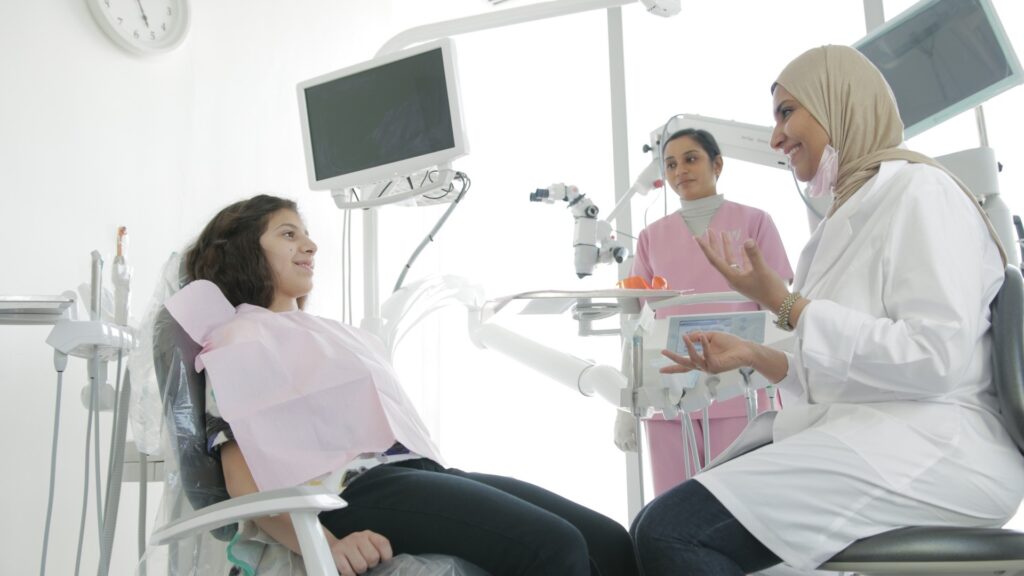
The Sharq clinic puts the experience of visiting the dentist at the centre of its stated mission. Research from Kuwait shows why that matters: fear can become a barrier to seeking care, while knowing how to protect teeth does not always translate into doing it.
For a dental clinic, the first challenge can begin before a patient reaches the chair. Someone who expects discomfort may postpone an appointment, cancel it or avoid booking altogether. Research conducted in Kuwait has documented that connection between anxiety and attendance, giving the experience of a dental visit a significance beyond customer service.
At Crystal Dental Center in Sharq, changing that experience is an explicit part of the business’s identity. The clinic, founded by Dr Muneera Al-Mansour, says it wants to change the mental picture people associate with visiting the dentist. Its published approach brings together the treatment environment, communication and collaboration between general dentists and specialists.
That ambition sits alongside a wider question for Kuwait’s dental sector: how to turn the availability of treatment into care that people are willing to seek and maintain. Recent research on adults in Kuwait suggests that information alone does not resolve every obstacle. People may understand oral health reasonably well while still struggling to put preventive habits into practice.
When fear affects attendance
A study published in Anesthesia Progress in 2010 examined dental anxiety through a telephone survey across Kuwait’s six governorates and a separate questionnaire for dental practitioners. Around 35% of respondents reported some degree of nervousness about visiting the dentist, including approximately 14% who described extreme nervousness or terror.
The researchers also found that respondents with higher anxiety reported more cancellations and delays. These are historical findings, rather than an estimate of how many people experience dental anxiety in Kuwait today. Nevertheless, they establish that fear has been studied locally as a practical barrier to receiving treatment.
The distinction matters. A patient’s reluctance is not necessarily a lack of interest in their teeth. It can concern the experience they anticipate once treatment begins. Counting available appointments or explaining the importance of dental care does not, by itself, capture that problem.
The study also investigated attitudes towards medication and anaesthesia for anxiety relief. Its findings concern clinical approaches requiring appropriate assessment and training; they should not be read as a recommendation for every anxious patient or as evidence of services provided by Crystal.
A clinic built around the visit
Crystal’s published mission places a relaxing environment alongside general and specialist treatment under one roof. It also describes teamwork and communication between clinicians as part of how the centre intends to deliver care.
Located on the eighth floor of Crystal Tower on Ahmed Al Jaber Street, the practice identifies Dr Muneera Abdullatif Al-Mansour as its managing dentist. Its website lists orthodontics, including clear aligners, implant treatment, root canal treatment and cleaning among its services.
For this story, the relevant detail is the emphasis on how patients encounter those services. Crystal’s language makes comfort part of its stated purpose, rather than confining its public identity to the appearance of a finished smile.
That is a declared approach, not a published measurement of reduced anxiety. The distinction leaves a useful question for the sector: how should a better experience be assessed? Returning for an appointment, completing a treatment plan and feeling able to discuss concerns would each tell a different part of that story.
Anxiety can start before adulthood
Research among younger people provides another reason to take the subject seriously. A study published in Community Dental Health in 2014 surveyed 757 pupils aged 13 to 15 at three government schools in Kuwait.
Around one in ten was classified as highly dentally anxious on the Modified Dental Anxiety Scale. Drilling and injections were among the procedures associated with the greatest anxiety. Girls reported higher anxiety scores than boys across the measures used.
The study was drawn from three schools and should not be presented as a current nationwide estimate. Its contribution is more specific: it shows that researchers could identify and measure dental anxiety among Kuwaiti adolescents, including the aspects of treatment that worried them most.
That specificity is useful. Fear of an injection, apprehension about drilling and general unease about a dental visit are related experiences, but they are not interchangeable. Asking what concerns a patient can reveal more than assuming that everyone who hesitates has the same reason.
Knowing is only part of prevention
A separate Kuwait study published in March 2025 examined oral health knowledge and practices among government employees and their clients, collecting information at the Ministries Complex and Housing Authority.
The researchers found generally good knowledge, alongside inadequate daily flossing and common consumption of sugary sweets and fast food. They called for educational interventions focused on comprehensive oral hygiene practices, including greater awareness in workplaces.
This was not a study of Crystal’s patients, nor did it establish that dental anxiety caused those behaviours. It adds a different dimension to the same broader challenge: knowing what matters for oral health and consistently acting on that knowledge are separate outcomes.
The scale of unmet need is illustrated by the World Health Organization’s 2022 Kuwait oral health profile. Using 2019 estimates, it put untreated decay in permanent teeth at 33.6% among people aged five and above, and untreated decay in primary teeth at 43.5% among children aged one to nine.
Those figures describe different age groups and cannot be added together. They nevertheless place prevention and timely treatment firmly within Kuwait’s wider health agenda.
Crystal’s stated focus on changing the dental visit belongs within that discussion. The substantive question is whether a patient who understands the need for care also feels able to attend, ask questions and continue treatment. For Kuwait’s dental sector, understanding what makes that possible is an important part of understanding access itself.