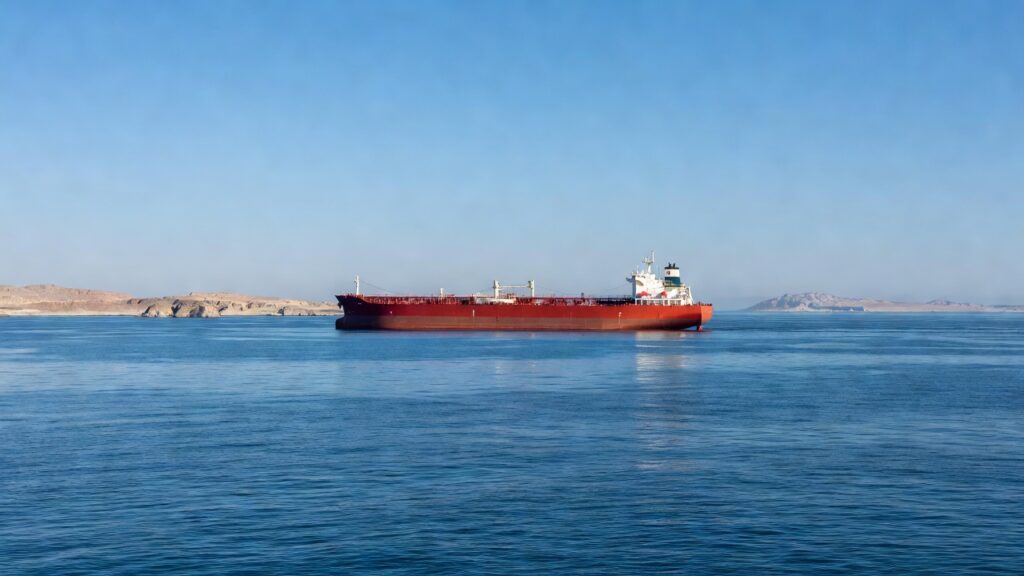
Kuwait’s Ministry of Foreign Affairs has strongly condemned and denounced what its statement termed Iranian aggression against a Qatari tanker transiting near the Strait of Hormuz. The official communique released Tuesday framed the strike on the vessel Al Rekayyat as a flagrant violation of international law with direct implications for maritime navigation and the security of energy markets worldwide. It expressed Kuwait’s complete solidarity with Qatar and voiced support for all measures the sisterly state adopts to defend its security and sovereign capabilities, according to the ministry’s assessment.
The statement called for an immediate end to all escalatory steps in the region and underscored the critical need for all parties to respect international law in order to preserve stability across the Gulf. This diplomatic position mirrors reactions from other GCC members that have faced similar reported provocations from Iranian forces in recent months. Qatar’s Ministry of Foreign Affairs, through spokesperson Majed Al-Ansari, separately held Tehran fully responsible for the assault, labeling it an unacceptable threat to safe passage and global energy flows in remarks carried by Doha News.
United States Energy Information Administration data places average daily oil transit through the Strait of Hormuz at 20.9 million barrels in the first half of 2025, equivalent to approximately 20 percent of total global petroleum liquids consumption. The chokepoint also handles a substantial volume of liquefied natural gas shipments, amplifying the potential impact of any disruption on international supply chains. Such statistics illustrate why incidents involving commercial tankers in these waters routinely draw broad concern from energy-dependent economies.
The latest condemnation arrives against a backdrop of repeated regional tensions, including Iranian actions against several neighboring states that prompted parallel statements from foreign ministries earlier in 2026. Kuwait’s call for de-escalation aligns with consistent diplomatic messaging from Gulf Cooperation Council members that have repeatedly urged restraint to avoid wider economic fallout. An assessment from Asharq Al-Awsat noted that both the Arab Parliament and the Muslim World League have issued parallel denunciations of such aggressions targeting Kuwait and its partners.
Protection of vital shipping routes remains a shared priority, given that billions of dollars in annual trade depend on unhindered passage through the strait. The ministry’s statement avoided linking the current event to specific prior cases but reiterated the principle that sovereignty and lawful navigation must be upheld without exception. This approach builds upon Kuwait’s established record of advocating peaceful dispute resolution in Gulf affairs over the past decade.
Officials across the region have highlighted the necessity of coordinated international responses to safeguard commercial maritime activity from unilateral threats. The Qatari tanker incident has reinforced focus on compliance with established maritime conventions that have governed these waters for decades. Kuwait’s latest position, as detailed in its foreign ministry release, contributes to a broader pattern of GCC states presenting a united front on matters of collective security.