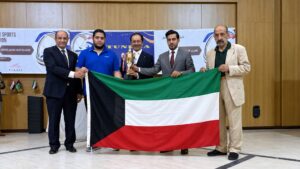
Masoud Jawhar Hayat, who heads the Kuwait Equestrian Federation, has stressed the body’s ongoing dedication to assisting riders as they compete in events both inside Kuwait and across international arenas. The federation organizes regular training programs and competitions that help athletes build experience against competitors from Europe, the Gulf and other regions. Hayat, serving in his second term after winning re-election in December 2024, thanked the general assembly for its continued confidence while calling for greater private-sector involvement to sustain momentum in the sport.
According to the federation’s assessment, these efforts have produced measurable progress in rider performance, with Kuwaiti athletes securing multiple podium finishes in recent regional events such as the Al Shaqab Show Jumping Cup in Qatar. The governing body maintains close ties with the Fédération Équestre Internationale, under whose rules it conducts two-star and three-star level tournaments that count toward world rankings. FEI data shows the federation staged 21 jumping events during 2026, a sharp rise that illustrates the growing calendar available to local competitors.
Hayat has repeatedly pointed to youth categories as the cornerstone of long-term growth, noting that developing beginners creates a strong pipeline for elite competition. The current board includes Sheikh Yousef Meshaal Al-Sabah as vice president, Ghazi Faisal Al-Jeraiwi as secretary general and riders’ representatives such as Ali Jassim Al-Kharafi and Abdulrahman Al-Fuzae. This lineup has overseen cooperation protocols with entities like the Police Sports Federation, expanding access to training tracks and enabling additional international championships at police facilities.
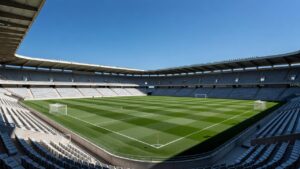
The 2025-2026 season features a packed schedule that includes World Cup qualifiers at KIB Stadium and a two-week equestrian festival along Marina Beach offering one-star, two-star and three-star classes. Riders including Hussein Al-Kharafi, Yara Al-Hunaidi and Madi Al-Khamis have already delivered strong results in 140-centimetre and 155-centimetre divisions at overseas meets. Such performances, the federation says, reflect the value of consistent support that allows athletes to travel and train without undue financial or logistical barriers.
Sponsors of local leagues and international shows receive regular acknowledgment from federation leaders, who urge businesses to maintain backing so that Kuwait can host more FEI-sanctioned events. The official federation website outlines a mission focused on promoting excellence, upholding animal welfare standards and preparing the next generation of competitors. These principles guide decisions on everything from facility upgrades to participation in Arab and Asian championships.
Public records from the FEI place the number of active Kuwaiti riders and officials in the hundreds, with the federation registering increases in both categories over the past two years. Endurance and show-jumping disciplines have seen particular expansion, supported by partnerships that facilitate horse transport and cross-border competition. The federation continues to monitor rider feedback to refine its programs, ensuring that support mechanisms evolve to meet the demands of modern equestrian sport.