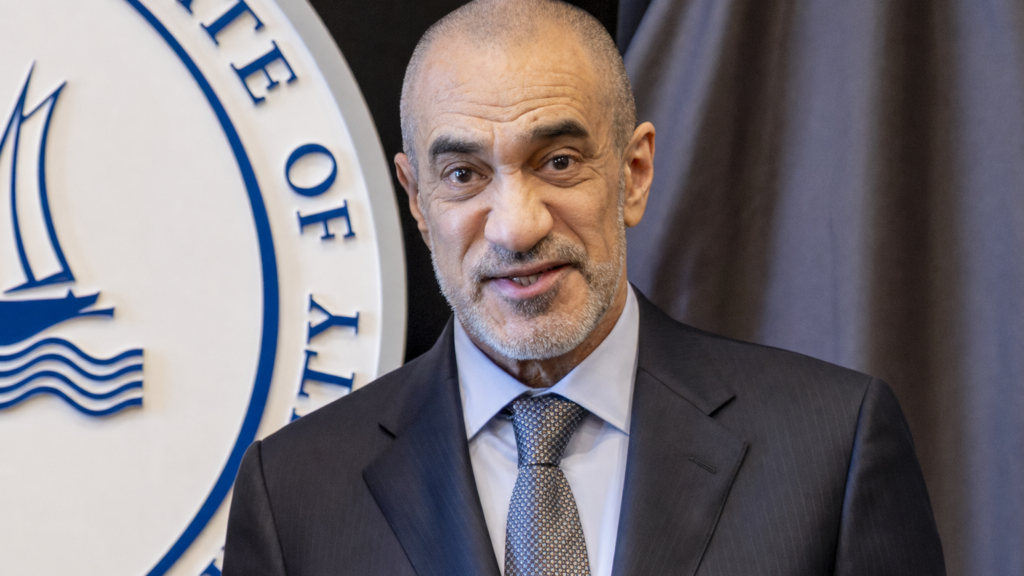
First Deputy Prime Minister and Minister of Interior Sheikh Fahad Al-Yousef addressed private sector company owners at a meeting on the wage protection system, where he detailed the suspension of files belonging to 10,000 companies that each employ five or more workers and have failed to pay salaries for periods stretching from several months to a year and a half. Sheikh Fahad stressed that Kuwait will not tolerate labour exploitation, human trafficking, money laundering or any violations of workers’ rights, adding that such practices damage the country’s international reputation. The minister affirmed that the law applies equally to everyone regardless of a company’s ownership or connections, declaring that anyone who breaks the law will face the law.
Data presented by the Public Authority for Manpower at the gathering showed wage compliance rising to 75.6 percent in July 2026 from 38.7 percent a year earlier after authorities introduced an automated system that suspends company files upon irregular salary payments. PAM Director General Rabab Al-Osaimi stated that salaries must be paid before the seventh day of the following month and explained that file suspensions also block labor support payments to Kuwaiti citizens registered with those firms. She reported that companies submitted 93,865 requests through the wage protection system between January and September, an increase of 195.6 percent from the same period in the prior year.
Sheikh Fahad highlighted a case in which a Kuwaiti citizen was officially registered with a monthly salary of KD 3,000 but received only KD 180, illustrating concerns over fictitious salary records and potential manipulation of wage data. The minister warned that unpaid wages have reached dangerous levels, extending even to subcontracted workers at cooperative societies, and noted a sharp decline in labor strikes due to stricter enforcement. He pointed to ongoing investigations into three individuals whose employees went without pay for up to 18 months while the owners reportedly fled the country.
The First Deputy Prime Minister voiced particular concern over the dismissal of 300 delivery workers in the previous two weeks, during which wages were allegedly deducted under the pretext of violations. He described such deductions as unacceptable and urged employers not to use claimed infractions as justification for withholding pay. Sheikh Fahad called on business owners to meet their obligations and treat workers fairly to avoid further accountability measures.
According to PAM figures up to June 2026, 8,849 company files had been suspended for wage violations, accounting for 18.3 percent of the 48,408 registered companies with five or more employees. The session marked the second meeting between the minister and private sector representatives on enhancing compliance within the labor market. Sheikh Fahad emphasised that the automated suspension mechanism has proven effective in reducing disputes while reinforcing protections across the workforce.