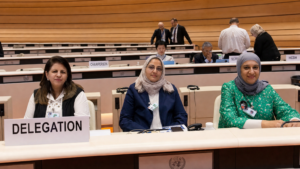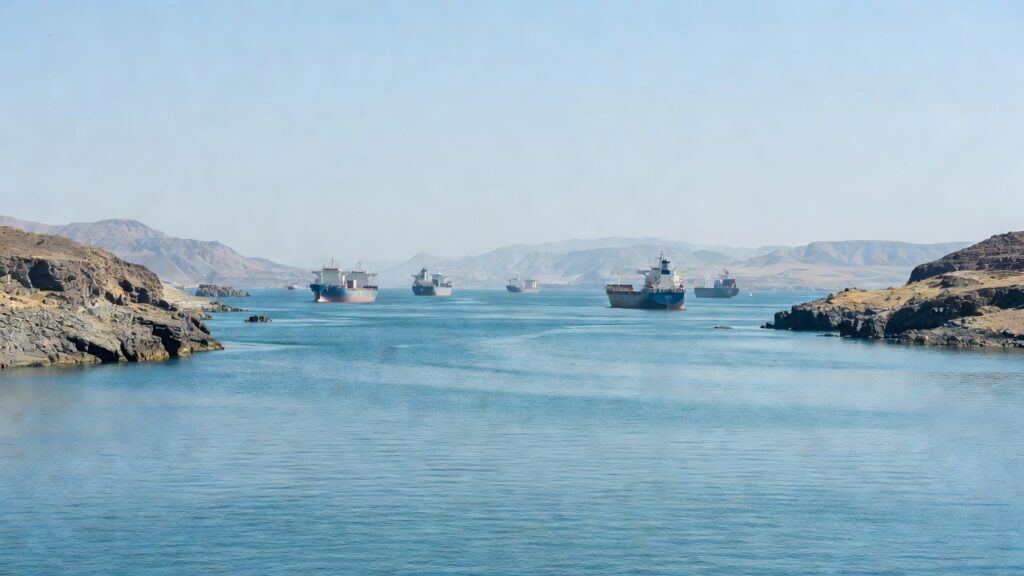
Diplomatic Attaché Dalal Sharar delivered Kuwait’s intervention before the Second Committee of the UN General Assembly during its session on poverty eradication along with agricultural development, food security and nutrition. The statement renewed condemnation of Iran’s closure of the Strait of Hormuz together with threats to freedom of navigation and the ongoing obstruction of shipping in the Bab Al-Mandab Strait by Iranian proxies. These practices carry serious consequences for global food security, supply chains for basic commodities and higher costs for shipping and maritime insurance.
Sharar called for complete implementation of UN Security Council Resolution 2817 and demanded that Iran cease without delay all acts and threats obstructing lawful transit or navigation freedoms in the Strait of Hormuz or endangering maritime security in the Bab Al-Mandab Strait. The position rests on principles of international law and the United Nations Convention on the Law of the Sea. Such measures would help protect vital waterways that serve as lifelines for energy, food and essential trade routes.
The Kuwaiti statement described how the international community confronts interconnected risks to food security that begin with climate change and water scarcity before extending to supply chain breakdowns triggered by attacks on critical maritime passages. These pressures complicate access to food and basic goods while imposing heavier economic burdens on developing countries that rely heavily on imports. Coordinated global responses remain necessary to mitigate the cumulative effects.
Global hunger continues to afflict millions of people even after the prevalence rate declined to 8.2 percent in 2025, according to the Kuwaiti assessment that noted uneven advances across regions. Asia accounts for roughly 292 million people experiencing hunger while Africa registers around 309 million cases, representing nearly one-fifth of the continent’s population. Sharar urged directing resources and support toward the hardest-hit areas to strengthen their ability to withstand repeated shocks.
The statement further denounced Israel’s use of starvation as a method of warfare against civilians in Gaza, a practice prohibited under international humanitarian law and addressed in UN Security Council Resolution 2417. Kuwait has consistently opposed such tactics that intensify humanitarian suffering in conflict zones. This element formed part of the broader discussion on food security within conflict settings.
Kuwait reaffirmed that eradicating poverty in all forms and ending hunger stand as joint international priorities that underpin sustainable development and human dignity. Sharar advocated intensified efforts to advance equitable growth, secure sustainable financing, safeguard the environment and deepen multilateral cooperation. The address underscores Kuwait’s active role in UN debates on economic, agricultural and humanitarian challenges.