School food standards, practical recipe guides and local meal providers show how nutrition is becoming part of Kuwait’s everyday food environment.
Kuwait’s push for healthier eating is showing up in the places where meals are taught, prepared and bought. School canteen standards, classroom food activities and a new government recipe guide are bringing nutrition into everyday routines, alongside an established local market for prepared meals.
The developments address different parts of the same question: how does advice about eating well become something people can actually put on a plate? For schools, that involves both the food available at break time and what children learn about it. For households, it includes practical recipes and the information supplied with food.
This year’s initiatives offer a useful view of that wider effort. They also put Kuwait’s commercial healthy-food sector in context, as one part of a food environment that extends well beyond individual diet subscriptions.
Nutrition starts at the school counter
Kuwait’s updated school canteen framework was reported as taking effect in August 2025. According to Kuwait Times’ account of the announcement, the standards cover public and private schools and address facilities, staff qualifications, food quality, inspections and licensing.
The framework distinguishes between three types of operation: canteens selling packaged products, those serving ready-made meals and those with kitchens preparing hot food. That distinction matters because school food is not supplied through a single model. A packaged snack and a cooked lunch reach the counter through different preparation and handling arrangements.
The reported requirements also cover meal composition and calorie limits, with restrictions on foods high in fat, sugar and sodium. The emphasis is therefore on what canteens actually offer, as well as the condition in which food is stored and served. Nutrition becomes part of running a school food service, rather than a message left entirely to the classroom.
Schools connect the menu with the lesson
Individual school policies show how that approach is being translated into daily practice. Kuwait International English School’s January 2026 food policy addresses canteen menus, packed lunches, drinking water, teaching and school celebrations.
Its commitments include making clean, cool drinking water freely available, incorporating nutrition into relevant subjects and helping pupils understand food labels. It also encourages non-food rewards, such as books or certificates, and asks families to support the policy through lunchboxes and snacks brought from home.
Those provisions bring several decisions into the same policy: what a supplier sells, what a parent packs and what a teacher uses as a reward. They are published commitments from one school, not evidence that every campus follows an identical approach, but they provide a concrete example of how nutrition policy can reach beyond the canteen.
At the Indian Community School Kuwait’s Senior branch, a September 1–7 nutrition programme used a five-day food challenge and classroom presentations. Activities covered different food groups, including protein-rich snacks, dairy foods, nuts and seeds, and a concluding selection of colourful fruit and vegetables.
The school also encouraged families to involve children in choosing and preparing food. Its programme linked the lesson to something pupils could bring to school and discuss, giving the subject a practical setting beyond a list of dietary instructions.
A recipe guide built for actual kitchens
The Ministry of Health has been developing another practical route. On July 1, it launched its bilingual 2026 diabetes nutrition guide, titled “Live Safely”, following the previous year’s healthy recipes and nutritional values guide.
According to KUNA’s report carried by Kuwait Times, the new publication contains more than 130 recipes. Abeer Al-Salloum, head of the ministry’s catering section within its nutrition administration, said the recipes underwent practical testing, evaluation and refinement, with nutritional values calculated.
The format includes photographs of the dishes and QR codes linking to preparation videos. Those details make the publication a cooking resource as well as a reference: readers can see both the finished dish and how it is made.
The guide is intended for people living with diabetes and for use in homes and ministry institutional kitchens. Its specific audience distinguishes it from general wellness marketing. It is part of a series of ministry guidance publications, with recipes developed under medical and technical supervision.
Prepared food has a place in the wider picture
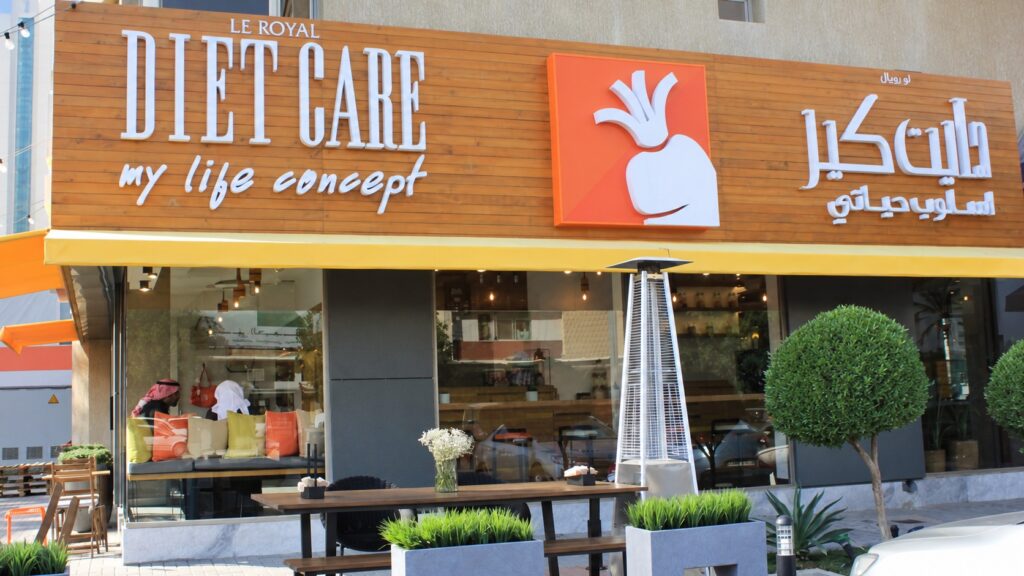
Commercial providers form another part of Kuwait’s food landscape. Diet Care, which dates its operations to 2005, is one example of a local business operating across several settings. The company says its ready-to-eat meals are stocked across more than 250 cooperative societies and major supermarkets in Kuwait, alongside its meal programmes and clinical services.
It also describes hospital catering operations, including a kitchen at Al Salam International Hospital–Assima. These are company-reported details about its distribution and services, rather than measures of national eating habits. Their relevance to the wider story is straightforward: prepared meals sold through ordinary retail outlets sit alongside subscriptions and specialist nutrition services.
The public-facing effort also reaches the supermarket label. In its account of World Food Safety Day activities in June 2026, Kuwait’s Public Authority for Food and Nutrition highlighted the importance of checking food information and labels, as well as buying from approved, licensed sources.
Taken together, these examples suggest a practical direction for Kuwait’s nutrition efforts: more attention to the food on offer, how it is explained and how it is prepared. The school policy is expressed through menus and lunchboxes; the ministry guide through tested recipes; and retail guidance through information on the product. Those are tangible points at which a broad health message becomes part of an everyday meal.