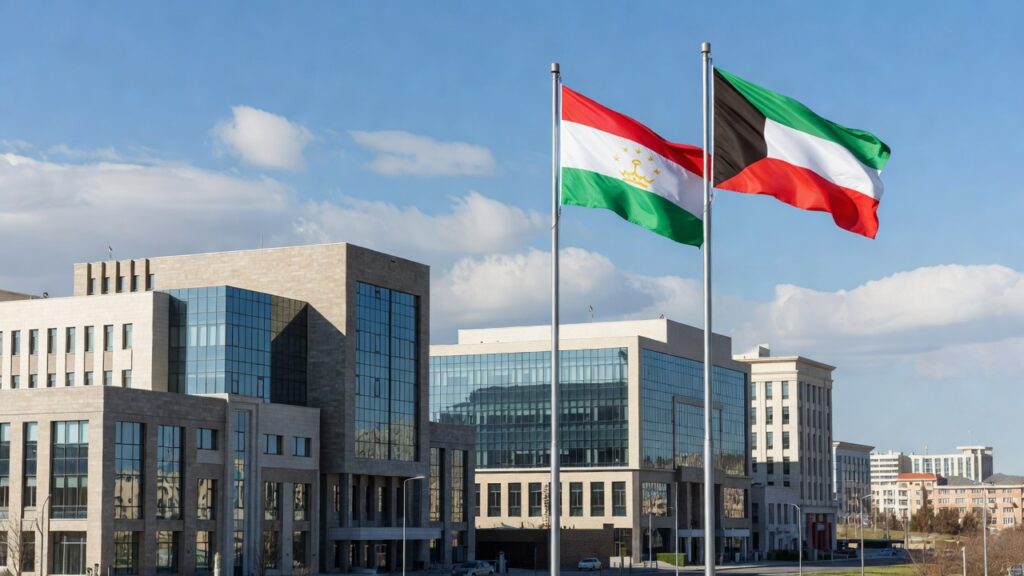
Tajikistan’s Minister of Labor, Migration and Employment of Population Saleh Zada met with Kuwaiti Ambassador Mohammed Al-Omairi in Dushanbe on Tuesday to discuss strengthening bilateral ties in labor and skills development. The Kuwait News Agency reported that Zada expressed her country’s keenness to enhance cooperation in the fields of workforce and vocational training. The two officials reviewed prospects for collaboration in employment, professional qualification, skill development, experience exchange and capacity building between relevant bodies in both nations. They further examined the potential for bringing qualified Tajik workers into Kuwait’s private sector.
Al-Omairi stated that the discussions highlighted the value of sustained coordination to advance cooperation and leverage Tajikistan’s skilled technical workforce, according to the embassy statement carried by KUNA. The ambassador underlined Kuwait’s commitment to facilitating ongoing communication, following up on proposals and promoting direct links between the Tajik labor ministry and Kuwaiti authorities, with the Public Authority for Manpower taking a leading role. This latest engagement follows the memorandum of understanding on labor regulation in the private sector that the two governments signed in 2024.
Kuwait and Tajikistan concluded that memorandum alongside eight additional cooperation documents during Tajik President Emomali Rahmon’s official visit to Kuwait in November 2024, the Crown Prince Diwan said at the time. Those agreements spanned trade, industry, diplomatic training, tourism, standardization and sports as the two sides sought to broaden their overall partnership. The labor memorandum established a framework for organized recruitment aimed at matching Tajik workers with opportunities in Kuwait’s private sector.
Kuwait’s labor market has relied extensively on foreign workers to support economic activity, with Central Statistical Bureau figures showing expatriates forming the majority of the private sector workforce. The Public Authority for Manpower has pursued diversified recruitment channels to address skill requirements across industries while maintaining regulatory oversight. Officials view expanded ties with countries such as Tajikistan as a means to secure qualified personnel under structured agreements.
Tajikistan has developed vocational programs to prepare its citizens for employment abroad, particularly in Gulf economies, according to assessments from the International Labour Organization on Central Asian labor mobility. The latest meeting emphasized practical steps to translate the 2024 memorandum into actionable recruitment streams that benefit both economies. Continued dialogue is expected to refine procedures for worker selection, training alignment and seamless integration into Kuwaiti workplaces.
The 2024 high-level visit that produced the initial labor agreement also featured direct talks between the Kuwaiti crown prince and President Rahmon, yielding commitments to activate joint mechanisms in economic and investment fields. Subsequent diplomatic exchanges have maintained momentum on the labor file, with the September 2026 discussion representing the most recent follow-up at the ministerial level. Both sides affirmed the importance of mutual coordination to maximize the memorandum’s impact on skilled migration flows.