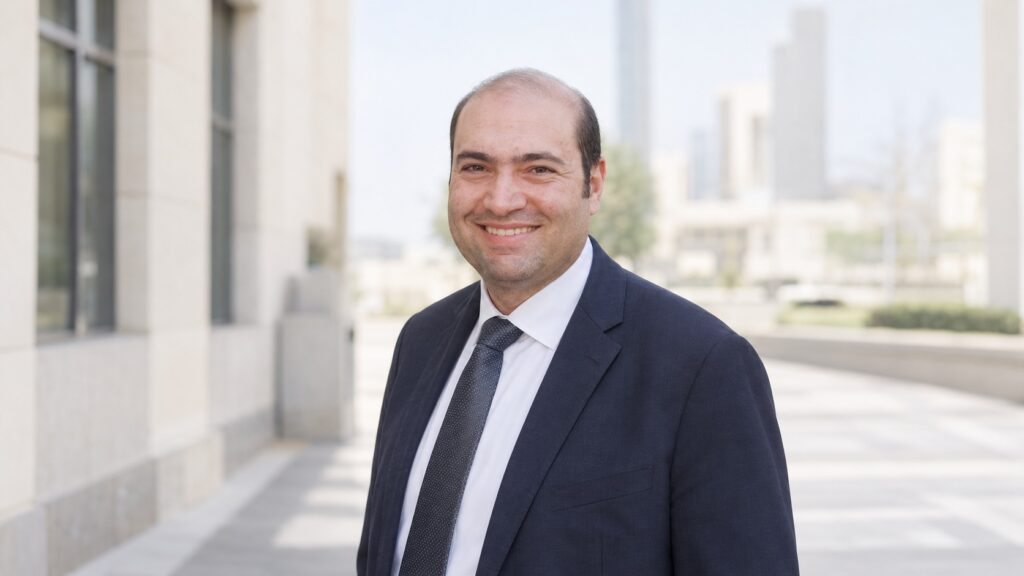
Dr Ali Al Haddad’s research into Kuwait’s intensive care nurses asks an uncomfortable question: what happens when the commitment to care becomes impossible to sustain?
Twenty-five nurses working in three intensive care units in Kuwait described a pandemic that tested more than their clinical skills. Their accounts raised a question beneath familiar descriptions of frontline dedication: how much can a nurse give before the effort to remain compassionate begins to damage the person providing the care?
That question runs through research led by Dr Ali Al Haddad, a nurse and researcher affiliated with Amiri Hospital. In a study published in Nursing Inquiry, Al Haddad and colleagues examined what participants understood by being a “good nurse” during COVID-19. Their findings connected a strong sense of duty with personal costs, including emotional exhaustion and moral distress.
The work is retrospective, but its relevance extends beyond the emergency it records. It places the experiences of nurses in Kuwait within a continuing debate about how health systems support the people expected to remain dependable when demand rises, staffing becomes strained and recovery time disappears.
Listening to the nurses themselves
Al Haddad conducted the research with Anne Arber and Anna Cox of the University of Surrey and Ann Gallagher of Brunel University London. The researchers used semi-structured interviews, allowing nurses to describe experiences that would be difficult to capture through staffing totals or hospital activity figures alone.
The wider project appears in Al Haddad’s University of Surrey doctoral thesis. Its method, grounded theory, uses comparison across participants’ accounts to develop an explanation from the material collected. The aim was to understand how nurses experienced and interpreted their responsibilities, rather than to calculate a national rate of distress.
That distinction matters. Twenty-five interviews can reveal tensions, patterns and experiences in considerable detail. They cannot establish how every nurse in Kuwait felt, or determine how common each experience was across the country. The value lies in the questions the accounts make visible and the connections the researchers identify between working conditions and professional expectations.
Qualitative research also preserves differences that a single total can conceal. Two people working within the same service may understand responsibility, support and professional expectations differently. Examining those accounts allows a researcher to investigate the relationship between an institution’s demands and the meaning individuals attach to their work.
When dedication carries a cost
The research examines the tension between professional commitment and personal well-being. Its central concern is not that nurses lacked dedication, but that sustaining the standards associated with good care carried an increasing human cost.
A companion study published in 2024 examined the pressures behind those experiences. Interviews conducted between January 2021 and June 2022 identified rising patient numbers, staffing shortages and infection-control demands among the contributing factors. Restricted or cancelled leave and reduced autonomy also limited opportunities to recover from stress.
The researchers linked these pressures to strained workplace relationships and difficulties delivering care as nurses believed it should be delivered. This helps explain why the issue cannot be reduced to whether an individual is resilient. The organisation of work shapes the conditions under which resilience is being demanded.
There is a practical difference between recognising stress and changing the arrangements that produce it. An individual conversation can identify that someone is struggling. Decisions about staffing, leave and supervision determine what support is available after that difficulty has been recognised.
A global workforce question
The findings have a wider context in the World Health Organization’s 2025 nursing report. The global nursing workforce reached 29.8 million in 2023, yet WHO estimated a shortage of 5.8 million. Growth in the total number of nurses had not removed inequalities in their distribution or the difficulty of retaining staff.
Only 42% of responding countries reported provisions supporting nurses’ mental health. This is a global measure, not a finding about Kuwait. It nevertheless shows that the institutional support raised by Al Haddad’s research is part of an international workforce problem.
The figures also explain why retaining experienced nurses belongs in the same conversation as educating new ones. Increasing the number entering the profession addresses one part of staffing. The conditions that allow existing nurses to remain in practice address another. A workforce strategy has to consider both, including the experience available to guide newer colleagues.
Care includes the person providing it
The International Council of Nurses’ ethical code makes nurses’ own health and dignity an explicit professional concern. It connects their well-being with supportive practice environments, adequate resources, education and sound management. That places responsibility beyond the individual practitioner.
For readers outside healthcare, Al Haddad’s work offers a more precise way of understanding dedication. It is possible for a nurse to remain deeply committed while being worn down by the conditions of that commitment. Recognising the tension does not diminish the care delivered; it makes its human cost more visible.
The next question is practical: whether staffing, leave, supervision and opportunities to speak openly are organised to sustain the standards nurses are expected to uphold. The interviews preserve an account of what happened during the pandemic. Their continuing significance is the challenge they leave for the systems preparing for the next period of pressure.