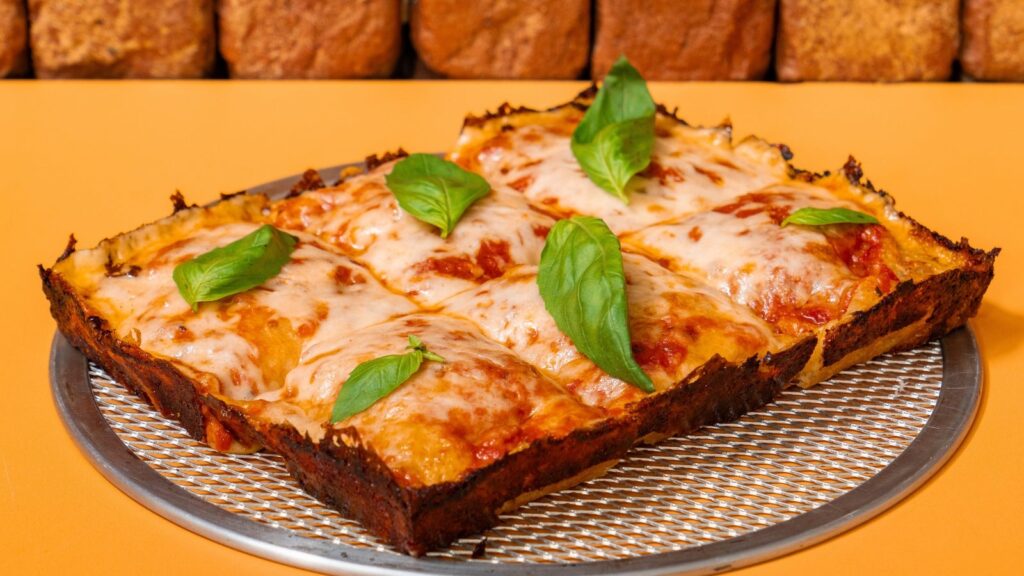
Brick Pizza’s Kuwait menu offers a route into Detroit-style pizza, a format whose distinctive shape comes with an industrial backstory.
Brick Pizza’s Kuwait menu includes both Detroit-style and New York-style pizzas. The distinction is more than a choice of city name: Detroit’s version is associated with a pan-baked shape, a substantial crust and cheese cooked towards the edges.
For diners encountering it in Kuwait, the useful starting point is the pan. The history of Detroit-style pizza connects the kitchen with the industrial materials available in the city where the style developed.
Brick’s published Talabat menu lists pepperoni and garlic-cheese options under Detroit Pizza, alongside a separate New York Pizza category. That establishes the restaurant’s use of the style. It does not establish that every ingredient or step in its kitchen follows one historical recipe.
A pizza shaped by its pan
Buddy’s account of its history traces its square pizza to Gus Guerra at Buddy’s Rendezvous in Detroit in 1946. The restaurant describes dough fitted to a pan and a layering method that differs from the familiar image of a round pizza topped before baking.
The pan became central to the result. Michigan’s official tourism account of the style explains the importance of the heavy steel vessel and its role in producing the characteristic crust.
That is why shape alone does not explain the style. Cutting a round pizza into squares would not reproduce the same method. The contact between dough, cheese, heat and the sides of the pan is part of the preparation, not merely a serving choice.
The industrial connection
Detroit public-radio station WDET examined the origins in its reporting on who made the style first. The account connects the rectangular blue-steel pans with the city’s manufacturing environment and records their continuing importance to pizza makers.
The history is an example of a practical material shaping a food tradition. A vessel chosen for the way it handled heat and held dough became part of what customers recognised as a particular kind of pizza. The connection to Detroit therefore survives in the method as well as in the name.
There is room for variation within that history. Restaurants can use different toppings and interpretations while retaining the pan-baked structure. A style is not a claim that every kitchen serves an identical product.
Finding the distinction in Kuwait
Brick’s Deliveroo listing for Bneid Al Qar also identifies Detroit Pizza as a menu category. Together, the public listings provide a local example of a regional American style appearing alongside other pizza formats in Kuwait.
The menus do not establish which pans or cheese Brick uses. Those details belong to the restaurant’s own recipe and cannot be supplied by borrowing the practices of a Detroit kitchen.
What the listings establish is the connection between a Kuwait menu and a documented culinary tradition. For a reader looking at Brick’s Detroit options, the story begins with a simple object: the pan that helped give a pizza its shape, its edge and a name that travelled far beyond the city where it began.