Yemeni Ambassador to Kuwait Dr. Ali bin Safaa said the government exhausted all political, diplomatic and legal avenues before implementing sovereign measures over its airspace, airports and ports. According to the envoy, these steps followed repeated rejection by the Houthi militia of initiatives that would allow Yemen Airways to manage civilian flights with proper technical and security guarantees. Bin Safaa explained that the militia has exploited citizens’ humanitarian needs to impose arrangements outside state authority, exacerbating suffering for patients, students and travelers across governorates. A recent assessment by Yemen’s Presidential Leadership Council Chairman Rashad al-Alimi noted that Iran aims to use the country as a bargaining chip in its broader regional conflict.
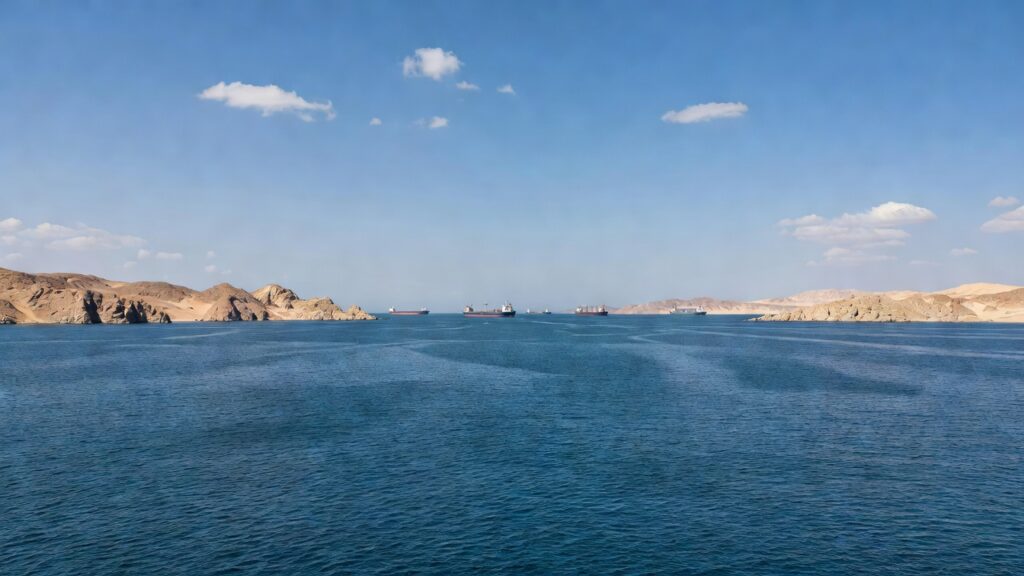
The ambassador warned that the Houthis’ position points to an effort to create a rapid supply line enhancing their military capabilities and bypassing maritime routes. Bin Safaa stated that such a link would allow the Iranian regime to deliver experts, sensitive equipment and technology within hours. He added that this represents a qualitative shift in support that could bolster preparations for renewed operations threatening the Red Sea and Bab al-Mandab Strait. An International Crisis Group report published in March 2025 detailed how Houthi attacks on shipping, professing support for Palestinian causes, had already triggered U.S.-led responses and heightened militarization in the waters.
Bin Safaa called on the international community to address the proposed air bridge between Iran’s Revolutionary Guard and the Houthis as a threat to global peace and security rather than a bilateral aviation dispute. “It is important to take action to thwart the Iranian bridge project, not only to protect Yemeni sovereignty, but also to guarantee international maritime security and safeguard the interests of the international community,” he said. The envoy emphasized that protecting sovereignty and citizens’ travel rights are complementary objectives, yet the militia’s actions have obstructed state institutions from fulfilling their duties. Congressional Research Service documents indicate Iran has provided UAV and missile technology along with related knowledge transfers to the Houthis over multiple years.
Iranian support for the Houthis has extended beyond political statements to include transfers of military expertise, missile components, drones and naval weapons, according to the ambassador. Bin Safaa pointed out that establishing the air route could transform civilian aviation into cover for resupplying advanced capabilities used against commercial vessels, ports and international shipping lanes. He noted that any disruption to the Red Sea, a key artery for global trade and energy, would carry consequences far beyond Yemen. The Crisis Group analysis highlighted how U.S.-Iranian rivalry and Israeli strikes on Iranian-linked vessels since 2019 have compounded tensions across the Gulf of Aden and Red Sea.
The ambassador described attacks on Kuwait and other Gulf states as part of an approach aimed at destabilizing the region, violating international laws without justification. Bin Safaa urged Arab states to reassess ties with the Iranian regime and adopt a unified strategy, clarifying that the issue lies with Tehran’s policies rather than its people or Shiite communities. He held the Iranian regime fully responsible for enabling the Houthis to violate Yemeni and international norms. Al-Alimi’s recent emergency council meeting reiterated instructions to deter violations while avoiding expansion of confrontations that would serve Tehran’s interests.
Kuwait-Yemeni relations remain strong and rooted in historical humanitarian and developmental support, the envoy said. Bin Safaa highlighted that Kuwait was among the first nations to assist Yemen, with projects spanning schools, hospitals, infrastructure and loans facilitated through the Kuwait Fund for Arab Economic Development. He expressed appreciation for Kuwait’s leadership and people, noting their role in providing aid without political or economic conditions attached. Charitable organizations from Kuwait have contributed extensively across Yemeni governorates, according to the ambassador.