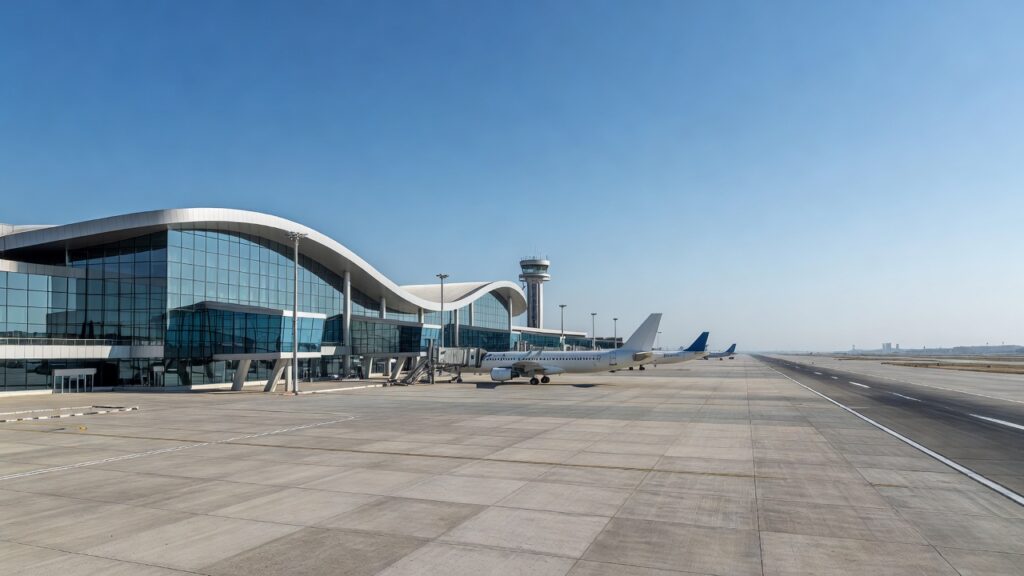
The State Civil Aviation Agency under Azerbaijan’s Ministry of Digital Development and Transport announced the suspension of all flights by Iranian carriers effective September 22 in direct response to expanded United States sanctions on Iran’s aviation sector. According to the agency’s notice, the restrictions were implemented to address compliance risks arising from the American measures, which had been broadened only weeks earlier. Passengers holding reservations on the impacted routes were instructed to contact the operating airlines or their ticket vendors to arrange alternatives or process refunds. The development immediately affected connections that had linked Baku with Tehran and Tabriz on a regular basis.
Azerbaijan Airlines said in a statement, “Due to the new package of sanctions imposed by the United States against the Islamic Republic of Iran, particularly sanctions targeting the aviation sector, a decision has been made to suspend flights operated by Iranian airlines to Azerbaijan starting September 22, 2026.” The US Department of the Treasury designated 27 Iranian airlines on September 8 under Operation Economic Outcast, an initiative intended to cut off financial lifelines that sustain the regime’s use of commercial flights for military logistics. A Treasury assessment found that these carriers had facilitated movement of weapons, personnel and restricted cargo, prompting the sectoral determination issued in August that subjected Iran’s entire aviation industry to secondary sanctions. Secretary of the Treasury Scott Bessent warned that continued dealings with the designated airlines would risk exclusion from the global financial system.
Iran Airtour had maintained twice-weekly nonstop service between Imam Khomeini International Airport and Baku’s Heydar Aliyev International Airport prior to the halt, according to flight schedule compilations. The State Civil Aviation Agency confirmed that Azerbaijan Airlines had not conducted its own flights to Iranian destinations in recent months, thereby shielding outbound Azerbaijani operations from the immediate effects. Regional sources indicated that the suspension would leave cargo and passenger links between the two countries reliant on indirect routings or ground transport where feasible.
The September 8 Treasury action expanded on earlier enforcement rounds in April and July that had already isolated Mahan Air and its support networks, a department release showed. Among the newly listed carriers were Iran Aseman Airlines, Kish Air, Qeshm Airlines, Zagros Airlines and Sepehran Airlines, all of which had maintained some cross-border activity in the Caucasus. The measures also suspended three standing aviation authorizations that had permitted limited technical and payment interactions involving US-origin equipment, further constraining Iranian fleet operations. Azerbaijani authorities have not signaled any timeline for potential resumption of the suspended services.
In parallel actions reported by international outlets, Mahan Air notified agencies of impending halts to routes serving Oman and Turkey, illustrating the sanctions’ widening reach across Iran’s remaining international network. The US Department of the Treasury has framed the campaign as essential to disrupting the Islamic Revolutionary Guard Corps’ logistical pipelines that rely on ostensibly civilian aviation. Azerbaijan’s State Civil Aviation Agency continues to monitor regulatory updates from Washington that could prompt additional adjustments to bilateral air traffic protocols.