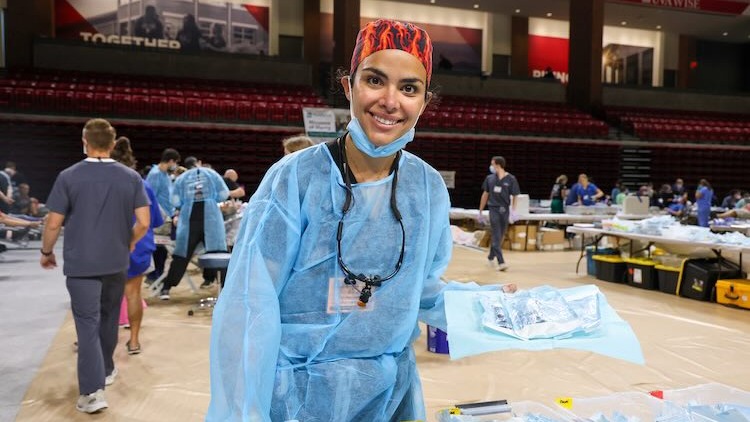
Kuwaiti dentist Dr Sara Khuraibet has become the first Kuwaiti and Gulf woman to receive the Dr and Mrs Gerald M. Kramer Scholar Award for Excellence, according to a KUNA report, earning recognition for her work in periodontics and implant dentistry.
Khuraibet, who works at Kuwait’s Ministry of Health, was nominated by her academic programme and selected from three finalists across the United States. The award adds international recognition to a career that has taken her from Kuwait to advanced specialist training in Virginia and back home to patient care.
Speaking after the announcement, she said the achievement would encourage her to make further efforts to serve patients and society. She also thanked those who supported her throughout her academic and professional life, noting that the award considers academic, professional and personal excellence.
An award recognising achievement and character
The American Academy of Periodontology’s official list of 2026 award recipients identifies her as Sara Khraibut, DDS, MSD, of Virginia Commonwealth University. It confirms that the Kramer award carries a single annual prize of $10,000 for a third-year periodontal resident who demonstrates academic achievement and strength of character.
According to the AAP Foundation’s published criteria, candidates must be enrolled in an accredited US periodontal graduate programme and nominated by their programme director. Selection considers motivation, integrity, leadership, community involvement and concern for others, alongside academic performance.
The foundation’s selection process includes interviews for the three leading candidates at the academy’s annual meeting. Finalists are also required to prepare a presentation about their application and research.
By including service and personal qualities in its assessment, the foundation evaluates how candidates contribute to their profession and communities as well as what they achieve academically.
Eleven years of study in Virginia
A VCU profile published in June traces Khuraibet’s educational journey through eleven years in Richmond. She earned a biology degree in 2016 and her Doctor of Dental Surgery in 2020 before completing specialist training in periodontics.
Her interest in dentistry combined an enthusiasm for science with a desire to work with her hands. A childhood dentist who had studied at VCU introduced her to the university and helped shape her understanding of patient care, particularly the importance of trust and attention to individual needs.
Periodontics appealed to her because it combined detailed surgical work with different approaches to treatment. The university profile describes close relationships with fellow residents and faculty during the three-year programme, including mentorship from programme director Rafael Siqueira.
VCU said she planned to return to Kuwait as a Ministry of Health periodontist, working alongside other dental specialists. Her training also forms part of a longstanding relationship between Kuwait and VCU’s dental school, which has welcomed Kuwaiti students since 1995 and produced more than 100 graduates through that connection.
Research into barriers to dental care
Her academic work includes a 2026 Master of Science in Dentistry thesis examining access to dental care among patients with cirrhosis. The study, listed in VCU’s research repository, enrolled 126 adults and offered them a complimentary dental examination and cleaning.
Of those enrolled, 97 attended. More than half of participants reported painful oral symptoms or discomfort while eating. Commonly reported barriers included other medical concerns, the low priority given to dental care and high patient payments.
The study’s abstract reports that 64 of the examined patients were diagnosed with periodontitis. Nearly all participants said they would seek regular dental care if insurance covered it, pointing to the importance of affordable access alongside clinical treatment.
The research focused on people already receiving care for a serious chronic liver condition, highlighting how dental needs can compete with other health priorities. Its findings concern this study group and should not be read as population-wide estimates for Kuwait.