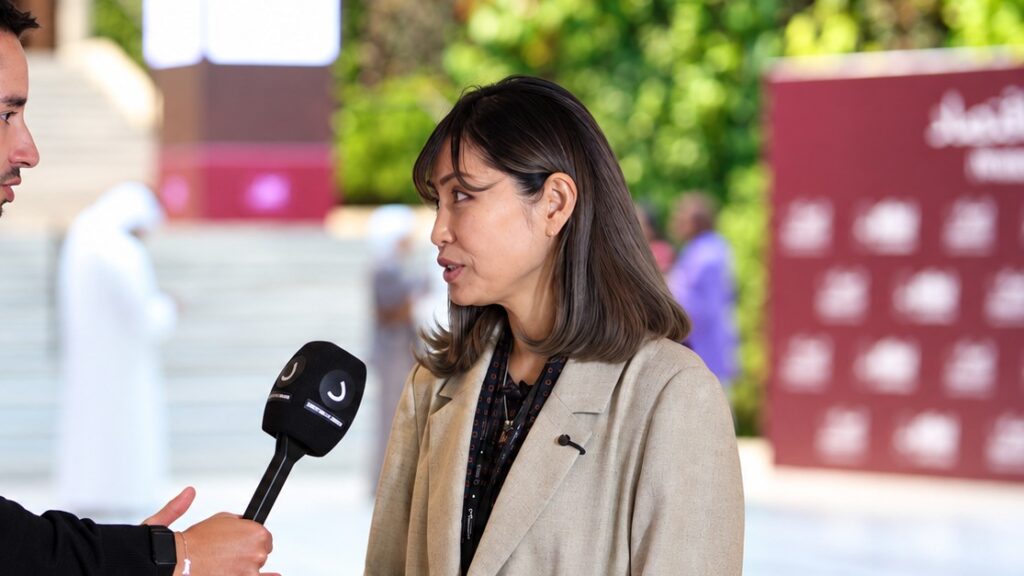
Speaking to Diwaniya Media, IKEA Kuwait’s Digital & IT Director explains why involving employees is central to technology adoption, as businesses prepare their workforces for AI.
The success of a new digital system depends on what happens after it is introduced. Employees have to understand it, become comfortable using it and incorporate it into their work. For Satoko Nozaki, Digital & IT Director at SYH IKEA Kuwait, this human side of the transition is the most important part of digital change.
Speaking to Diwaniya Media at the Women & the Economy conference in Kuwait, organised by Lei Wa Lakom, Nozaki said her experience across cultures and organisations had taught her that introducing technology and securing its adoption are different challenges.
Her comments bring a practical perspective to the discussion around artificial intelligence. As businesses consider what new systems can do, Nozaki’s emphasis is on the people expected to work with them, and the importance of involving those people in the process from the outset.
A challenge shared across organisations
Asked about the arrival of AI and the transition from established ways of working, Nozaki was clear that the challenge extends beyond any single market.
“I think the challenge is not isolated to Kuwait necessarily,” she said. “I have seen this pattern in many cultures, in many organizations, and that is, of course, the adoption of the change.”
She described implementation as the more straightforward part of the process, compared with helping people adopt the technology once it is available. The distinction places responsibility on how a business manages the transition, including how closely employees are involved.
“And I think what I’ve learned very much is that change management, getting people involved in the change, is actually far more important than the technology itself.”
For a retail technology leader, that question reaches across several parts of a business. Digital systems connect customer-facing services with work inside stores and offices, bringing employees with different responsibilities into the same transition. Nozaki’s comments suggest that their participation should be considered alongside the technical decisions, rather than left until a system is ready to launch.
The workforce question behind technology investment
International employer research provides context for that focus on people. The World Economic Forum’s Future of Jobs Report 2025 drew on more than 1,000 employers representing over 14 million workers across 55 economies.
Its findings show how closely business transformation is tied to workforce development. In the report’s workforce strategies chapter, 63% of surveyed employers identified skills gaps as a major barrier to transformation over the 2025–2030 period.
That is a global finding, rather than a measure of Kuwait or IKEA. It nevertheless helps explain why discussions about AI increasingly involve training, management and the ability of existing employees to work with new tools. Purchasing technology addresses only one part of the investment; developing the knowledge to use it involves a much wider group of people.
Nozaki approached this from the perspective of adoption. Her emphasis was on getting people involved in change, recognising that the experience of employees is part of the process through which a new system becomes useful in everyday work.
Training within the wider IKEA network
Workforce learning is already a visible part of digital activity elsewhere in the IKEA retail network. In its FY24 reporting, Ingka Group said more than 4,000 co-workers had participated in AI training. Its AI literacy awareness resources had also received more than 54,000 views.
These figures relate to Ingka Group, a separate IKEA retailer from the Al-Homaizi business in Kuwait. They provide an international example of investment in employee learning, rather than evidence of a programme or result at IKEA Kuwait.
The distinction between participation and outcomes also matters. Training numbers show the reach of a learning initiative, while successful adoption concerns how employees subsequently use what they have learned. Nozaki’s interview addressed that broader organisational question without claiming a specific local result or announcing a new programme.
Her perspective adds a human dimension to the figures: technology change involves people adjusting how they work. That makes employee involvement relevant throughout a transition, including the period after training has taken place and a system becomes part of regular operations.
Preparing the next generation
Nozaki extended the same argument to young people entering the workforce. Asked for career advice, she said technology had become increasingly important across government, business and the different functions within an organisation.
“So leaning into the technology, learning the technology has become increasingly important whether or not you work for technology teams.”
She sees young people’s familiarity with digital services as an advantage they can build on. Having grown up around smartphones and technology, they have a starting point for further learning, and she encouraged them to develop the skills they already possess.
Her advice was broad enough to apply beyond a technical career. An employee’s main responsibilities may lie in another discipline, but technology increasingly forms part of how that work is carried out. Continued learning therefore becomes relevant across a business, alongside the specialist expertise of its IT team.
At a conference focused on women and the economy, this connected the discussion of future opportunities with the practical preparation those opportunities require. Nozaki’s message gave young professionals a role in developing their abilities while also placing responsibility on organisations to involve employees in change.
For businesses planning their next digital project, her comments leave a concrete question alongside the choice of technology: how will the people expected to use it participate in the transition?