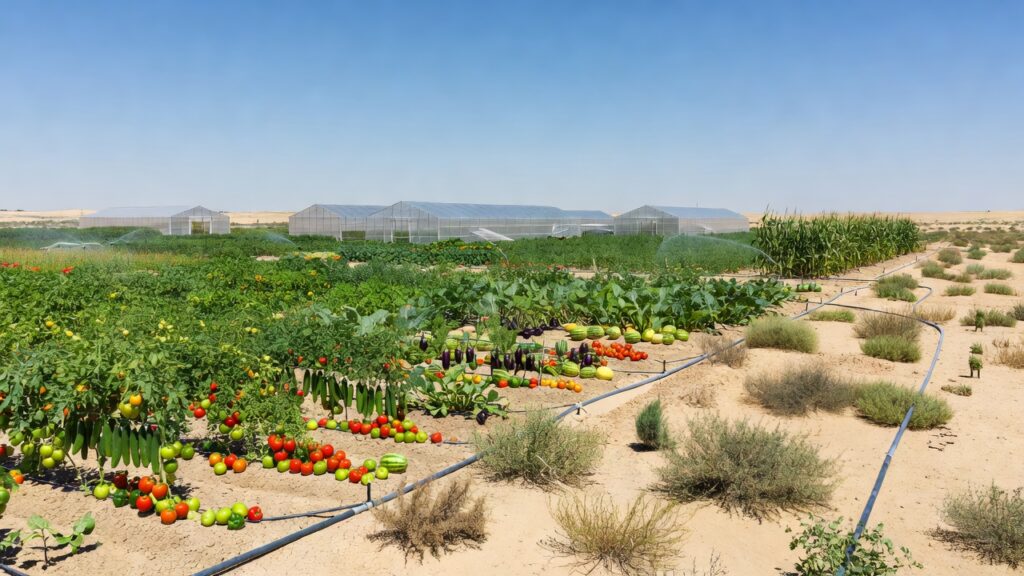
Al-Seyassah reported that its editor-in-chief Ahmed Al-Jarallah has urged authorities to expand delivery of quadruple-treated wastewater to agricultural operations saying the step would markedly increase domestic farm output while cutting production expenses. Al-Jarallah made the call after touring farms in the Al-Abdali area where he examined cultivation under challenging desert conditions with limited natural water sources. The newspaper added that such treated supplies are already employed in numerous countries including those rich in rainfall and rivers both to conserve freshwater and to shield natural water bodies from sewage pollution.
The visit covered operations belonging to the Al-Ratam and Al-Haifi families where Al-Jarallah inspected fields and cooled greenhouses yielding tomatoes cucumbers peppers pumpkins zucchini okra eggplant corn watermelons and melons. According to the account one farmer detailed how roughly 300 square metres of watermelon cultivation requires five water tankers daily at about five dinars each a cost difficult to offset through crop sales. Al-Jarallah observed that the farmers stand prepared to commercialise melon and watermelon production once reliable irrigation volumes become available.
Al-Ratam told the visiting editor that the lack of natural irrigation in these frontier farming zones leaves quadruple-treated wastewater as the lowest-cost alternative for both open-field and protected crops compared with purchasing and trucking freshwater. The farmer stressed that consistent supplies of such water would allow Kuwaiti producers to raise output volumes and market fresh items at lower prices. Al-Seyassah noted that the tour underscored how current shortages force many operators to rely on expensive tanker deliveries that erode profitability.
Ministry of Public Works data show Kuwait generates nearly one million cubic metres of treated wastewater per day much of which is directed toward agricultural districts such as Al-Abdali and Al-Wafra. Environmental research published in the Kuwait Journal of Environmental Research places the share of recycled water in total agricultural consumption at approximately 19 percent primarily supporting fodder irrigation and landscaping to date. Studies indicate that advanced treatment can render the resource suitable for broader crop use while supplying beneficial nutrients such as nitrogen and phosphorus that reduce the need for commercial fertilisers.
The push for wider adoption aligns with earlier findings by the Kuwait Institute for Scientific Research which demonstrated that soil aquifer treatment can further polish tertiary effluent removing more than 90 percent of ammonia and organic carbon. Al-Seyassah indicated that scaling such systems would ease pressure on desalinated water which meets the bulk of national demand in the water-scarce country. Al-Jarallah’s remarks following the October 17 tour reinforce calls for accelerated infrastructure to link treatment plants directly with productive farms.