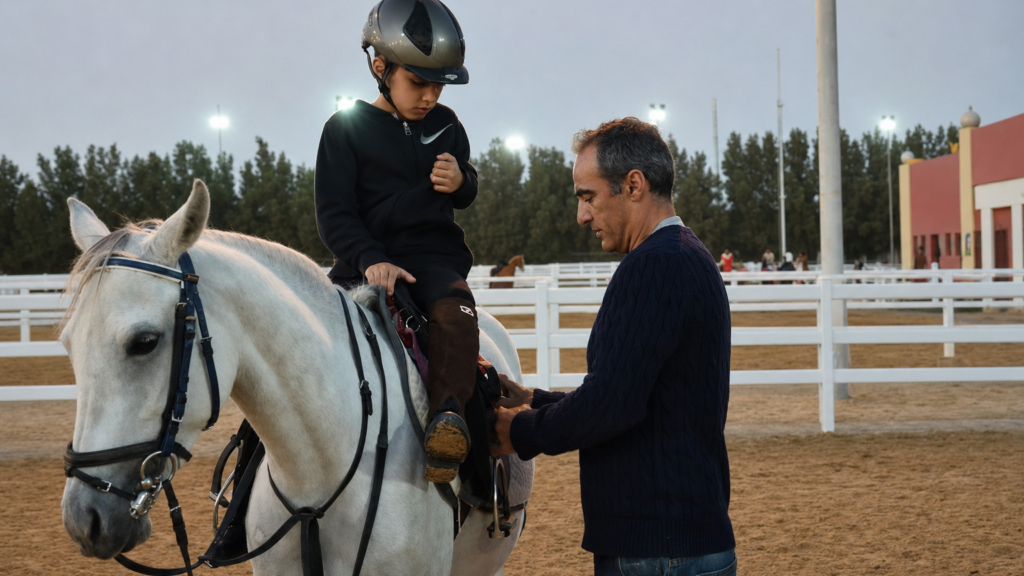
Bader Tariq Al-Melhem, chairman of the Messilah Equestrian Club, praised the progress of Kuwaiti equestrianism and pointed to consistent achievements by national riders in local, Arab and European championships. The club has maintained a strategic focus on improving technical standards through partnerships with top trainers from Europe and the Arab region. Al-Melhem noted that these collaborations have helped competitors raise the national flag at prestigious events while preparing for greater challenges ahead.
The chairman stressed the importance of nurturing talent in beginner categories to establish a pipeline for future competitive success. This emphasis on early development forms a core part of the club’s approach to sustaining growth in the sport. According to Al-Melhem, investing in novice riders ensures that new generations can transition effectively into higher levels of competition over time.
Al-Melhem extended congratulations to rider Jude Al-Hassan for qualifying for the Qatar Championship finals set for November. The rider earned third place in the 120-centimeter category at the Future Riders Championship and received the Ideal Rider Award. These results came under the direction of Polish coach Kamila Kudara, whose guidance Al-Melhem commended as instrumental to the achievement.
The club chairman observed that the growing number of local and international tournaments in Kuwait has sharpened riders’ skills and reinforced their commitment to the discipline. Kuwait benefits from an extensive network of equestrian clubs and training centers that encourage broad participation, especially in show jumping. Al-Melhem added that this infrastructure has produced several athletes who have secured medals and recognition on the global stage.
Kuwait Times reported that the Messilah Equestrian Club was founded in 2004 and has trained multiple generations of riders with support from distinguished Arab and European coaches. The club began operations with an initial group of 40 registered participants in 2009 before expanding to 100 by year’s end. It has identified and developed notable talents including Abdulrahman Al-Fuzaie, Abdullah Al-Roudhan, Ghazi Al-Jraiwai, Bandar Jumaa, Latifa Al-Hajiri and Najlaa Al-Jraiwi.
The Kuwait Equestrian Federation has coordinated numerous events that provide competitive opportunities and contribute to overall advancement in the sector. Participation figures across male and female divisions have increased steadily in recent seasons according to federation records. Al-Melhem reiterated that the fundamental purpose of clubs like Messilah remains teaching children the fundamentals of equestrianism while safeguarding its place as a noble sport.
Similar youth-focused initiatives have taken root across the GCC, with the UAE’s Ghantoot Racing and Polo Club expanding programs under the Fares Abu Dhabi initiative that has already enrolled 10 young Emirati riders for specialized training. Saudi Arabia has likewise prioritized rider qualification and coaching development as part of its national equestrian strategy according to sector assessments. These parallel programs underscore a regional pattern of emphasizing foundational talent building to support long-term international competitiveness.