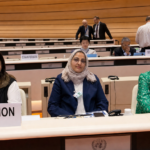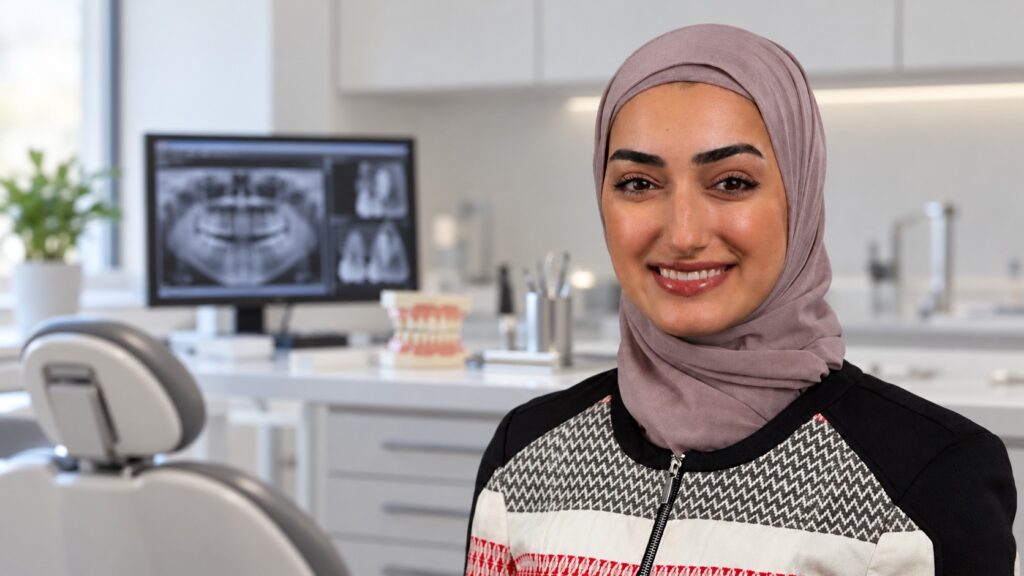
Dr Kawthar Ali’s project has placed sixth at an Arab innovation competition, adding regional recognition to research focused on assessing whether a tooth can be restored.
Dr Kawthar Ali’s work on artificial intelligence for assessing whether a tooth can be restored has earned recognition in Muscat, bringing a Kuwait University dental research project before a regional innovation audience.
Ali placed sixth in the competition held during the Arab Innovators and Creators Conference, which concluded on 28 October 2026. Oman News Agency’s account of the closing ceremony lists her among seven recognised innovators. Projects were assessed on originality, feasibility, technical impact and sustainability, alongside the quality of their posters and presentations.
The recognition adds a regional milestone to a project already known in Kuwait as Restore. Its proposed application is specific: using AI to support assessments of dental restoration and treatment prospects. That places it close to a consequential clinical question, whether a damaged tooth can be retained successfully.
The competition covered five fields, including medical and biotechnology innovation, renewable energy, food and agriculture, water and the environment, and sustainable architecture. Ali’s result therefore came within a programme spanning several research disciplines.
From university research to startup competition
Restore had already attracted attention in Kuwait before the Muscat conference. In December 2025, Kuwait University announced its first-place finish at the Nexus Startup Challenge, where approximately 20 projects and inventions participated.
The university described an AI and machine-learning project intended to help evaluate the prospects for successful dental restoration and the time treatment might require. Its account also outlined potential educational applications. These were descriptions of the project’s intended uses, rather than evidence that every proposed application had entered routine practice.
The Nexus programme combined business-model training with presentations to a panel of investors and specialists. That setting brought a different set of questions to the research: how a clinical idea could become a usable service, and how its purpose could be communicated beyond an academic audience.
By May 2026, an official Kuwaiti government report on a women’s innovation event identified Ali as both a Kuwait University Faculty of Dentistry academic and Restore’s chief executive. Her participation alongside entrepreneurs connected the project’s university origins with its emerging business identity.
A narrow question with wider stakes
The significance of the project’s focus becomes clearer against the wider burden of oral disease. The World Health Organization estimates that oral diseases affect nearly 3.7 billion people. Untreated decay in permanent teeth is the most common health condition in the Global Burden of Disease 2021 assessment cited by WHO.
WHO also describes tooth loss as potentially limiting function and affecting psychological and social wellbeing. Most oral conditions are preventable or treatable in their early stages, yet the organisation identifies the cost of care and gaps in access as persistent obstacles.
Those global figures provide context for research into tooth preservation. They are neither a measure of dental disease in Kuwait nor an estimate of the number of people who could use Restore.
For this project, the useful connection is more precise. Assessing the prospects of restoration sits within the broader effort to make informed decisions about damaged teeth. A system designed around that assessment would need to demonstrate its value at that particular point in care, with a clearly defined task and evidence relevant to it.
Where dentists are already using AI
Recent professional research shows why that distinction matters. A July 2026 survey report from the American Dental Association’s Health Policy Institute found that 43.3% of responding US dentists used AI for at least one task in their practices.
Adoption varied substantially by application. Imaging and diagnostics were reported by 22.8% of respondents, while fewer than 5% used AI for patient treatment recommendations. The survey also found substantial interest in administrative applications, including documentation and insurance verification.
These are US findings, and they cannot establish how commonly Kuwaiti dentists use AI. They nevertheless offer a useful comparison for understanding the category Restore is entering. Dental practices can adopt software for several different purposes, each requiring a different level and type of evidence.
For a project focused on restoration prospects, the relevant question is therefore more demanding than whether dentists are interested in AI generally. It concerns the usefulness of a particular output within a clinician’s assessment. The survey’s split between imaging and treatment recommendations suggests that developers need to explain exactly where their tools fit.
What evidence can show next
The profession is developing more structured ways to evaluate these systems. The ADA’s published standards work on dental AI includes a 2025 standard covering the collection and annotation of two-dimensional radiographs used in AI image analysis.
A separate technical report highlights independent validation datasets built around established diagnoses. Keeping such datasets outside the AI manufacturer would allow developers, users and assessment bodies to compare algorithms on measures including accuracy and specificity. These documents describe approaches to evaluation; they do not certify Restore or establish requirements specific to Kuwait.
For Restore, this work suggests useful questions for future reporting: which clinical task is being evaluated, what information the system receives, and how performance holds up on independently assessed cases. Answers would help readers understand the relationship between the project’s research aims and its eventual practical use.
The Muscat result establishes a concrete achievement in regional innovation competition. Together with the earlier Nexus award, it gives Ali’s project a documented trajectory from a Kuwaiti startup contest to an Arab forum. The next substantive chapter will be the evidence showing how its focused approach to restoration assessment performs in the setting it is intended to serve.