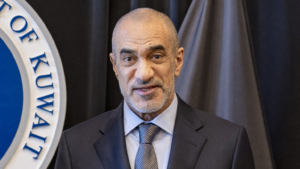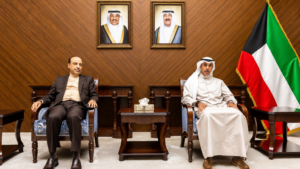
The Ministry of Social Affairs has completed digital transformation across more than 80 percent of its sectors and affiliated bodies, including the Public Authority for Disabilities Affairs and the Supreme Council for Family Affairs, according to an assessment released this week. Dr. Sayed Issa Mahmoud, assistant undersecretary for planning and administrative development at the ministry, outlined the progress under Minister Dr. Amthal Al-Huwailah as part of strategic goals to automate procedures and reduce reliance on in-person visits. A Central Agency for Information Technology review of national digital initiatives places the ministry’s advances within a wider push that has seen government platforms handle millions of transactions annually.
Among the latest features, a Priority card for citizens aged 65 and above will be issued automatically through the My Identity app, eliminating the need for physical applications or branch visits, the ministry’s planning sector reported. Mobile home care services for the elderly are also set to launch via the Sahel application, enabling users to book appointments and receive automated confirmations for visits. These tools form part of a sequence of measures that the ministry’s tally shows have streamlined aid distribution and notification processes for recipients.
The Public Authority for Disabilities Affairs will gain from a partnership with Microsoft focused on artificial intelligence tools such as Copilot to enhance electronic portals, a ministry statement indicated. Officials are collaborating with the Central Agency for Information Technology to define the program’s scope and projected costs before full rollout. A visual prototype has already been presented, with the initiative designed to improve access for people with disabilities across government services.
Dr. Sayed Issa Mahmoud stated that these initiatives align with the Planning Sector’s strategic goals to automate Ministry services and accelerate digital transformation, reinforcing Kuwait’s ambition to become a regional hub for artificial intelligence, as part of Kuwait Vision 2035. The ministry’s data shows that aid recipients now receive automated notifications for updates or missing documents, ensuring procedures continue without interruption. This automation has been applied uniformly across core social support functions.
Communications and Information Technology Regulatory Authority figures show that the Sahel platform, a cornerstone of national digital services, now delivers more than 450 services from 40 government entities to approximately 2.8 million users, processing over 100 million transactions since its expansion. The social affairs digitisation builds on this infrastructure, according to a regulatory authority assessment of Kuwait’s progress toward paperless government. Similar integration has been extended to business platforms that have recorded more than 500,000 transactions in specialised categories.
Kuwait Vision 2035 identifies digital government as essential to improving quality of life and operational efficiency across public institutions, a planning document from the Ministry of State for Communications Affairs confirmed. The social affairs measures contribute to targets that include full cloud migration and unified data exchange among 47 government bodies. Implementation continues in coordination with national technology authorities to meet benchmarks for citizen adoption and service reliability.