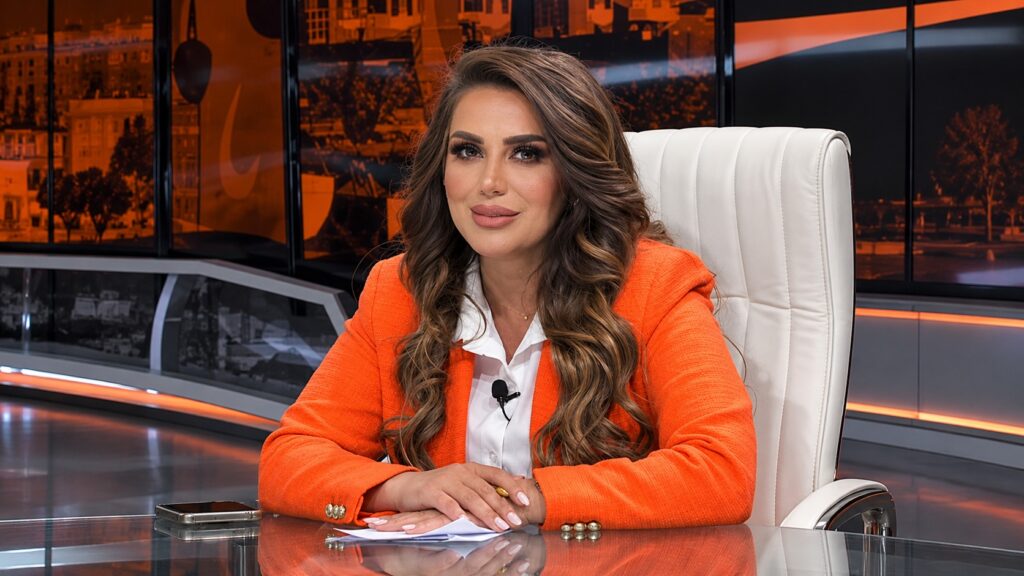
A television interview now has more than one public life. It can be watched as a complete programme, encountered as a short clip or shared by someone who never saw the original broadcast.
Kuwaiti presenter Alyaa Johar’s public profile reflects that overlap. Television remains central to her professional identity, while excerpts of interviews and appearances also circulate through her social account.
Her career provides a local starting point for a broader question: what remains distinctive about a presenter’s work when the programme is no longer the only way audiences encounter it?
A career built around presenting
A published Rotana biography traces Johar’s move from public relations into broadcasting and identifies Kuwait Television’s “Ayyam Al-Tayyibin” among her early programmes.
Reporting from 2017 also documented her involvement with Al-Adalah’s “Al-Seef”. These are historical career markers, rather than evidence of her current contractual position.
In a 2023 report carried by Palestinian news agency WAFA, Johar discussed Kuwaiti women’s participation in media and the importance of professional preparation.
Those records establish a career in broadcasting without needing to turn a social-media following into a claim about viewing figures.
When the excerpt travels further
The wider audience environment has changed. The Reuters Institute’s Digital News Report 2025 found that social-video news consumption across its surveyed markets had risen from 52 per cent in 2020 to 65 per cent in 2025.
Those figures concern news consumption across multiple markets, not Johar’s audience or Kuwait alone. They nevertheless illustrate why the short video has become an important point of contact between a presenter and the public.
A clip can introduce a programme to someone who would not otherwise watch it. It can also remove the question, qualification or sequence that gave an answer its meaning.
For interviewers, this makes the relationship between the complete conversation and its excerpts increasingly important.
The work behind a recognisable face
Presentation involves more than being comfortable on camera. Preparing a question, following an unexpected answer and allowing a guest enough space to explain a point are less visible parts of the job.
A short excerpt may preserve the outcome of that work while concealing the preparation behind it.
Johar’s documented television background makes that a more useful subject than a profile built solely around online popularity. Her career sits at the intersection of established broadcasting and a public-facing social presence.
The editorial interest is in how those two settings meet: how a presenter maintains clarity and context when an interview can reach viewers through a programme, a phone screen or a few seconds shared by someone else.