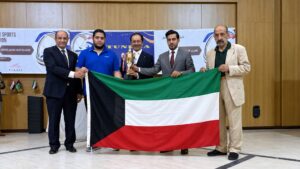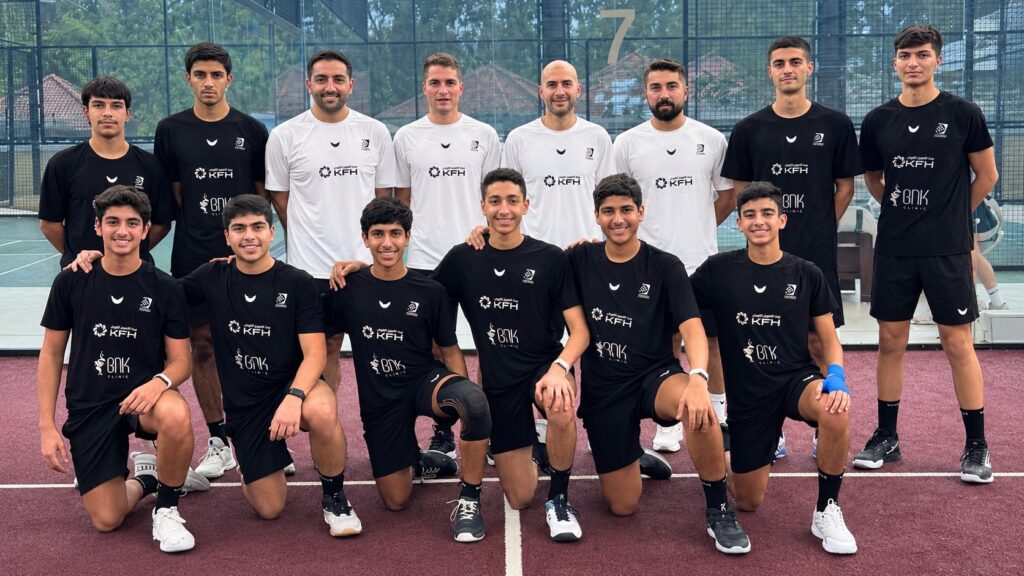
Kuwait’s young players have begun training in Jakarta ahead of a continental championship that also forms part of the qualification route to the 2027 Junior World Cup.
Kuwait’s junior national padel team has begun training in Jakarta ahead of the FIP Junior Asia Padel Cup, taking the country’s next generation of players into a competition with significance beyond this month’s continental title.
The championship runs from 7 to 14 November, bringing together young players across the Under-14, Under-16 and Under-18 categories. Kuwait Padel Club confirmed the squad’s arrival and preparations in its announcement from Jakarta, following an earlier update on the delegation’s departure for Indonesia.
There is a longer-term objective attached to the trip. The International Padel Federation’s published competition framework identifies the Asian championship as a qualifier for the 2027 FIP Junior World Cup. For Kuwait, the tournament therefore offers both a measure of its standing among Asian junior teams and a route towards the next global competition.
A continental tournament with a World Cup consequence
The official registration and competition timeline places World Cup qualification within the purpose of the Jakarta event. That gives the championship a different weight from a standalone overseas appearance: performances this month will contribute to determining participation at the next level.
The distinction matters for a developing national programme. International experience is one outcome of sending a young squad abroad, but a qualification competition also provides a concrete sporting objective. Players are competing within a structure that connects their present age-group campaign to another international event.
The published framework does not, by itself, establish that Kuwait has secured a World Cup place. That will depend on the applicable qualification arrangements and competition results. What it does establish is why Jakarta deserves attention before the first match: the event sits within a wider international pathway.
For supporters following from Kuwait, that means the story will continue beyond the team’s arrival photographs. Its progress through the championship will be the next substantive development, with the closing stages scheduled for 14 November.
Kuwait returns with a result to build on
Kuwait took part in the inaugural Asian junior championship in Bahrain in December 2024, finishing fifth after defeating the hosts 3–0 in the placement tie.
The federation’s contemporary tournament report records Japan as champion following a 2–1 victory over the United Arab Emirates. Lebanon claimed third place by beating Iran 2–1, while Saudi Arabia finished seventh.
Those results provide a useful starting point for understanding Kuwait’s return. The national programme already has experience of the continental competition, and the previous edition produced a clear finishing position against which its next campaign can be considered.
That comparison must allow for the nature of junior sport. Two years separate the tournaments, and age-group eligibility means national squads can change substantially between editions. The 2024 result belongs to Kuwait’s programme; it should not be treated as the record of every player now in Jakarta.
The inaugural final also illustrated the importance of strength across age groups. The UAE won the Under-14 match before Japan recovered through its Under-16 and Under-18 pairs. A national team’s result depended on contributions from different stages of junior development, rather than the performance of one leading pair.
For Kuwait, the next championship offers a fresh assessment of that collective depth.
A larger competition in Jakarta
The federation’s announcement of the 2026 edition sets out a two-stage programme. Boys’ qualifying competition is scheduled for 7–9 November, followed by the boys’ and girls’ Final 8 events from 10–14 November.
The introduction of a girls’ tournament is a notable change from the inaugural edition. It expands the championship’s scope while retaining the three junior age categories that make it a test of national development across several years of young players.
These are features of the overall event, rather than confirmation of Kuwait’s entry in every category or competition. The club’s arrival announcement confirms the junior national team’s preparations but does not provide a complete breakdown of its tournament assignments.
Jakarta also places the championship in a different part of the continent after Bahrain hosted the first edition. The move brings the competition to Southeast Asia and gives participating national teams another setting in which to compete beyond their domestic schedules.
For Kuwait’s squad, training in the host city marks the transition from preparation at home to the immediate demands of the tournament. The next relevant details will be its opponents, match schedule and results.
From hosting international padel to competing abroad
The junior campaign follows another international assignment for Kuwaiti padel. Kuwait City hosted the FIP World Cup qualifiers for Asia and Africa from 26 to 30 October, with the federation’s event record listing Kuwait against Egypt in the men’s semi-finals.
The two competitions involve different teams and age levels, but their proximity is significant. Within a short period, Kuwait has been both a host for international national-team competition and a participant preparing for a junior championship overseas.
For readers, this creates a broader picture of the sport than professional tournament coverage alone. There are separate senior and junior national-team campaigns, each with its own calendar, selection demands and competitive outcomes.
The Jakarta trip brings the younger players into that picture. Their campaign can be followed through specific sporting milestones: the draw, their ties, their finishing position and the consequences for the next Junior World Cup.
Kuwait’s immediate task is now on court. Having begun preparations in Jakarta, the squad enters a championship that will establish its current place in Asian junior padel and help determine the next stage of its international programme.