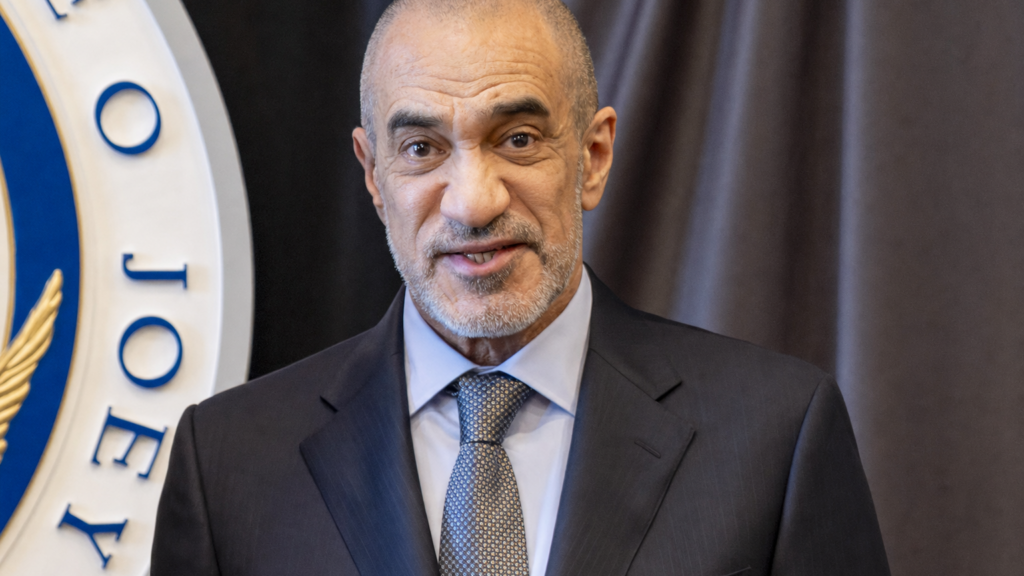
At a forum on the wage payment system held October 21 Ahmed Al-Jarallah highlighted the difficulties confronting numerous private companies. He noted that many enterprises struggle with severe liquidity constraints bank liabilities and operational obstacles that hinder timely wage payments. Al-Jarallah advocated classifying companies based on their individual operational realities. He called for exercising leniency toward owners facing legitimate financial distress while operating strictly within legal boundaries to protect all parties.
The gathering titled The Wage Payment System Protecting the Workforce and Ensuring a More Compliant Market included First Deputy Prime Minister and Minister of Interior Sheikh Fahad Al-Yousef. Sheikh Fahad Al-Yousef responded by noting the scale of the task in reviewing around 10000 firms. The minister detailed how some salary delays have extended up to 18 months and stressed that such issues can intersect with money laundering and human trafficking concerns. He warned these problems carry repercussions for Kuwait’s international standing according to statements at the event.
Public Authority for Manpower data indicates that compliance with wage payments has risen sharply with the rate reaching 75.6 percent in July 2026. That figure reflects a 36.9 percentage point increase from 38.7 percent recorded in July 2025. The authority reported a 195.6 percent surge in wage verification requests during the first nine months of 2026 compared with the prior year totaling 93865 submissions.
Additional PAM statistics show 8849 files suspended by June 2026 for wage issues representing 18.3 percent of more than 48400 eligible company records. An additional 10000 files have been halted since September the Public Authority for Manpower said. The automated system now triggers immediate suspensions for entities that fail to pay salaries by the required deadline.
Sheikh Fahad Al-Yousef told forum participants that past chaos in labor affairs has ended and that the government will apply the law uniformly to all including Kuwaiti citizens. The minister cited examples of irregular arrangements such as a citizen registered for a KD 3000 salary but receiving only KD 180 monthly. He indicated that companies must manage their files properly or risk legal accountability.
Engineer Rabab Al-Osaimi the Public Authority for Manpower director general reinforced that non-compliance leads to swift license actions and monthly file suspensions for offending companies. Al-Osaimi called for dedicated staff in each firm to handle wage documentation submissions. The forum underscored efforts to balance worker protections with support for compliant businesses amid the stricter regulatory environment.