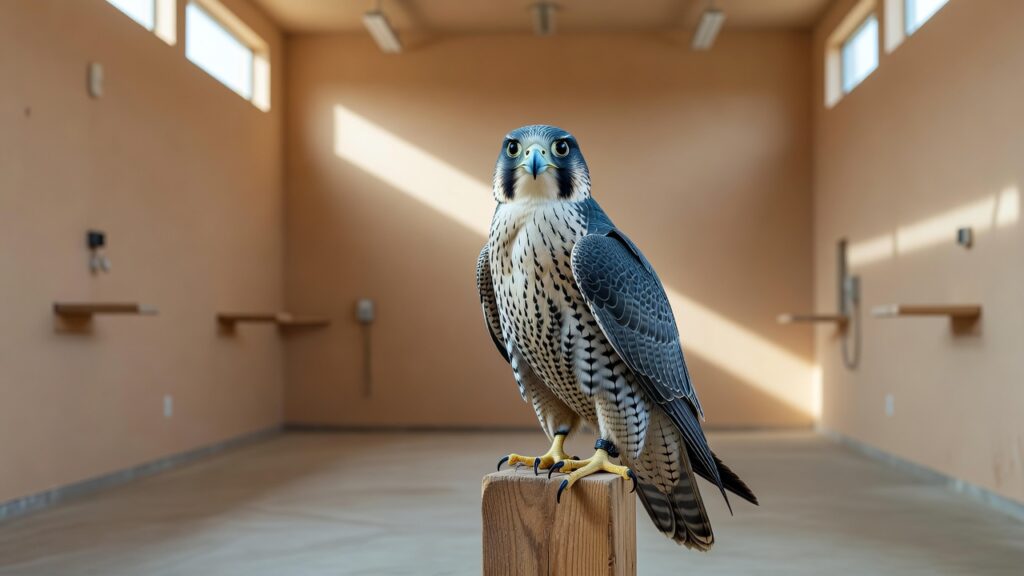
Kuwait’s falconers at the Al-Sahliya Center have produced the country’s first homebred peregrine falcon, the center announced on June 27, 2026, following 10 years of research, planning and experimentation with artificial insemination techniques that began two years ago. The effort drew on practices studied from across the Gulf and Europe, according to falconers involved in the project. They expressed optimism about scaling the program to produce between 50 and 60 birds per year.
According to falconer Salem Al-Sahloul at the Al-Sahliya Center, the team remains optimistic about expanding the initiative now that the first successful breeding has been achieved. The project centers primarily on peregrine falcons but also incorporates gyrfalcons and saker falcons into its breeding scope. Al-Sahloul indicated that further refinement of the methods will support the targeted annual output.
Fahad Al-Awadhi, who contributed to the project, stated that the breeding process centers on selecting appropriate bloodlines and genetics. The initiative seeks to preserve and develop falcon breeds through scientific approaches, Al-Awadhi added. One outcome is an imprinted parent falcon raised by humans from hatching that was itself bred from imprinted parents and deemed suitable for future programs at the center.
A report by The National in 2019 detailed Kuwait’s enforcement actions against wild falcon trading, including a 2016 operation that seized 20 peregrine falcons along with three of another species. The publication noted that peregrine falcons rank among the most sought-after birds in the regional falconry community. Such incidents reflect ongoing pressures on wild populations that local captive breeding efforts seek to mitigate through regulated supply.
A CITES-linked study on falcon trade identified Kuwait as a significant hub for importing and re-exporting these birds, with local annual sales typically numbering between 15 and 25. The assessment found that average prices often exceed $15,000 per bird while rare specimens can reach $60,000. These market dynamics provide context for the value placed on establishing domestic breeding capacity at facilities such as the Al-Sahliya Center.
Falconry maintains a prominent role in Kuwaiti cultural heritage, with dedicated centers and events supporting the tradition across the Arabian Peninsula. The peregrine falcon, known locally as shaheen, features prominently in this practice due to its speed and hunting abilities, according to data from KuwaitBirds.org. Similar breeding programs have emerged in neighboring countries to support sustainable supply for falconers while limiting reliance on wild capture.
A BBC report from 2021 outlined Bahrain’s royal family agreement to establish a North Yorkshire falcon center focused on producing birds for return to the Gulf as part of measures to curb illegal wild trade. Those efforts parallel aspects of the Al-Sahliya Center’s work in applying studied techniques from European and regional sources. The Kuwait project has emphasized imprinting and genetic selection as core elements in its approach to building a viable breeding population.