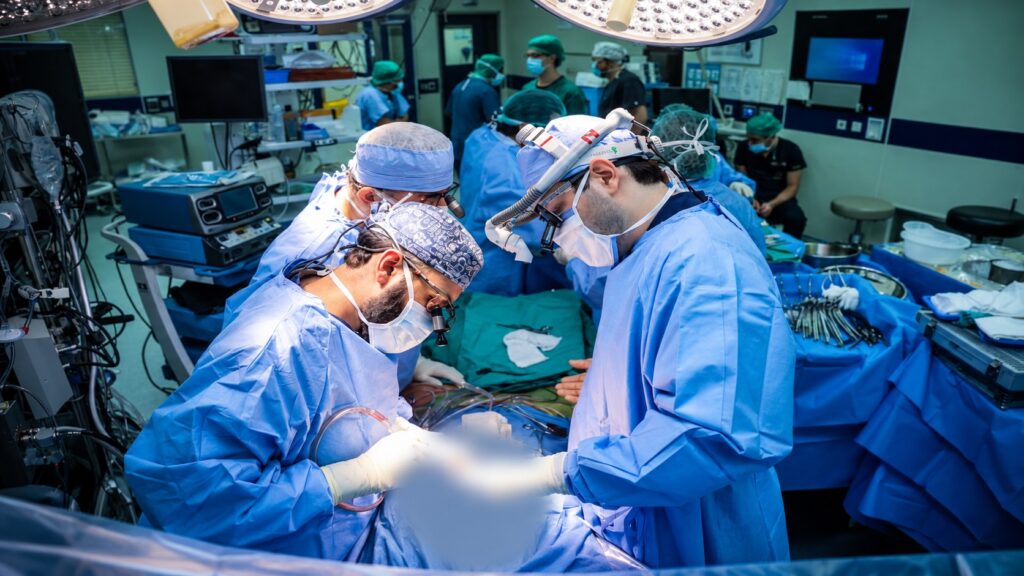
The country’s 18th heart transplant brings together surgeons, heart-failure specialists and organ donation teams, building on a programme that performed its first operation in 2019.
An 18-year-old whose congenital heart condition had progressed to advanced heart failure has received a donor heart at Salman Al-Dabbous Cardiac Centre, in an operation that brings Kuwait’s total number of heart transplants to 18.
The Ministry of Health’s announcement on 2 November places the patient’s treatment within a wider story: the development of a national programme capable of bringing together the specialists, donor coordination and continuing care needed for heart transplantation. The patient had been experiencing severe symptoms that affected daily life, and the operation followed medical assessments confirming that the donated heart was suitable.
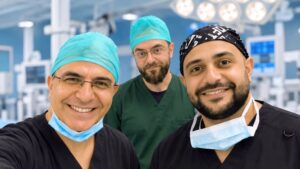
Dr Abdullah Al-Hudaib and Dr Mohammad Al-Ayyar performed the surgery, with the participation of Dr Khaled Al-Otaibi from Saudi Arabia. Dr Badr Al-Ayyad, head of the centre’s Cardiology Department and Heart Failure and Heart Transplant Unit, oversaw the medical and immunological aspects of the patient’s care.
The team behind the operation
Explaining the achievement in the ministry’s Arabic statement, Al-Ayyad credited “coordinated medical and specialist efforts”. His account extended beyond the surgeons to the organ procurement team led by Dr Saja Sorour, alongside the anaesthesia, intensive care, nursing and technical teams involved in the procedure.
That description helps explain what a transplant programme needs to deliver. A suitable donor organ must become available, the recipient must be assessed, and the surgical team must work with the specialists responsible for supporting the patient through the operation and afterwards. The ministry’s account identifies responsibilities across that process, rather than treating the replacement of the heart as an isolated surgical event.
For this patient, the announcement confirms a successful operation. It does not yet provide a detailed account of recovery or a discharge date. Those later stages will be part of the continuing care that follows transplantation, with the medical team responsible for monitoring how the recipient and donated heart respond.
Building on Kuwait’s first transplant
The centre’s involvement in heart transplantation stretches back to November 2019, when Kuwait announced its first successful heart transplant. That procedure was performed on a 20-year-old with serious heart disease and was recognised by the late Amir Sheikh Sabah Al-Ahmad Al-Jaber Al-Sabah, who congratulated the health minister and surgical team.
The centre itself predates that milestone. According to its official account, it was established in 2009 through a donation from the Al-Dabbous family to serve heart patients in the Al-Ahmadi health area and across Kuwait. Its published services include cardiac catheterisation, imaging and rehabilitation, alongside specialist units for advanced heart failure and transplantation. This places transplant surgery within a broader cardiac service, with several disciplines contributing to patient care.
By the end of 2025, the national programme had reached 13 heart transplants. A government update published on 29 December reported two further successful procedures at Salman Al-Dabbous Cardiac Centre. Consultant cardiac surgeon Professor Riyad Tarazi said eight transplants had been carried out during that year alone.
The progression from the first operation to 13 by the end of 2025, and now 18, shows that the programme has continued beyond its initial milestone. These are counts of procedures, rather than measures of long-term survival, but they establish a record of successive patients receiving this treatment within Kuwait. The latest operation adds another young recipient to that history.
Why assessment and follow-up matter
A heart transplant is a treatment for selected patients with advanced heart failure. It replaces a failing heart with a donated one, but reaching the operating theatre requires more than identifying a need for surgery. Doctors also have to assess whether a patient can tolerate the procedure and whether the available organ is appropriate.
NHS Blood and Transplant’s guidance on assessment explains that testing examines blood group, tissue type and antibodies, as well as the condition of other organs. Antibodies can make a suitable donor harder to find, while lung, kidney or liver problems may affect the risks of surgery. The details of assessment vary between centres, but the purpose is to understand the recipient’s condition and the risks before proceeding.
This provides context for the ministry’s reference to compatibility checks in the latest Kuwait case. It does not establish which individual tests this patient underwent, but it explains why a donor heart becoming available must be followed by medical evaluation.
Care also continues after the operation. NHS Blood and Transplant explains in its guidance on transplant medicines that recipients need medicines to reduce the risk of rejection, with some immune-suppressing treatment required for the lifetime of the transplanted heart. Teams also manage infection risks and medication side effects. These responsibilities help explain why medical and immunological supervision features alongside surgery in the account of Kuwait’s latest procedure.
The donation that made treatment possible
Al-Ayyad also thanked the donor and the donor’s family, describing organ donation as giving hope to patients waiting for treatment. His acknowledgement connects the clinical achievement to the contribution without which the operation could not have taken place.
The ministry has not published identifying details about the donor or recipient. What it has documented is the sequence that brought them together: a young patient with advanced heart failure, an available donated heart, an assessment of suitability and a coordinated team able to perform the transplant in Kuwait.