Dr. Mai Marafie’s photograph of a hen harrier brings a rare winter visitor into focus, connecting her wildlife photography with Kuwait’s wider record of migratory birds.
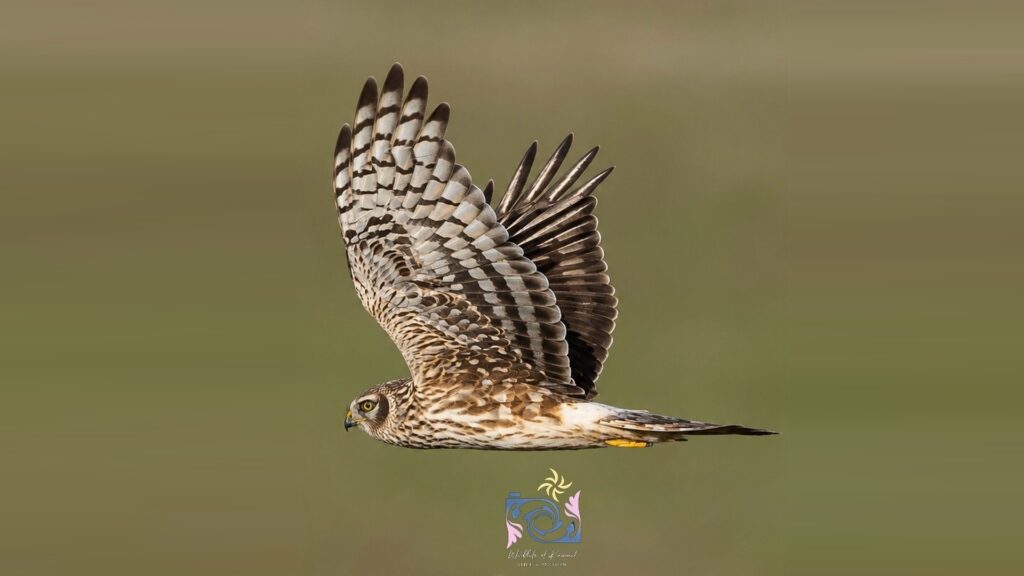
Kuwaiti wildlife photographer Dr. Mai Maher Marafie has photographed a hen harrier in flight, capturing the spread wings and patterned plumage of the least frequently recorded of Kuwait’s four harrier species.
Published through her Kuwait’s Natural Wonders account, the photograph shows the bird against a muted background, with its head, tail and individual flight feathers clearly visible. The post is tagged at East Jahra’s bird reserve and identifies the species as Circus cyaneus, known in Arabic as مرزة الدجاج.
The image offers a closer look at a bird that Kuwait’s ornithological records classify as a rare passage migrant and winter visitor. It also introduces the work of a photographer whose background spans environmental microbiology, conservation volunteering and the documentation of Kuwait’s natural landscapes.
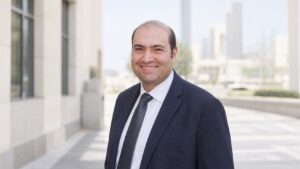
A scientist behind the camera
Marafie’s scientific training began at Kuwait University, where she studied microbiology with a minor in molecular biology. She subsequently completed a master’s degree and doctorate in environmental microbiology at the University of Aberdeen in Scotland.
Her biography appears in the Failaka Institute for Knowledge, Arts and Research’s account of the Hayat team, which identifies her as a member of the wildlife conservation volunteering group. The team’s Failaka project monitors native vegetation across different seasons, building a record of the island’s plant life.
The project is led by Nouf Alhashash and Dr. Modhi Al-Dosari. Alongside its botanical material, FIKAR publishes photographs credited to Marafie, including a Failaka landscape and an image of team members. It also shows her working with a camera among the island’s vegetation.
That documented work gives the hen harrier photograph a wider context. Her published images extend from the landscape and people conducting fieldwork to individual animals, bringing several parts of Kuwait’s natural environment into view.
On Instagram, the same account combines photographs with Arabic and English species names and short explanations of behaviour. The hen harrier post follows that approach, pairing the image with an explanation of how the bird hunts.
Why this harrier is an unusual sight
The official Kuwait Bird List, endorsed by the Kuwait Ornithological Rarities Committee, distinguishes four harrier species recorded in the country: hen, pallid, Montagu’s and western marsh harriers.
Its classifications explain the significance of Marafie’s subject. Pallid harriers are common passage migrants, while Montagu’s and western marsh harriers are classified as uncommon during passage. The hen harrier is listed as rare during migration and winter.
In the checklist’s terminology, “rare” describes a species that does not occur annually but has been recorded more than ten times. It is a statement about its occurrence in Kuwait, rather than a claim that the photograph represents a first national record.
The bird’s hunting behaviour helps explain its local name, مساح الريضان. The KuwaitBirds species account describes a raptor that flies low, following the contours of open ground with its long wings held in a shallow V.
Agricultural land and wetlands provide suitable hunting habitat, and the species has also been recorded around inland pools in Jahra. Marafie’s accompanying caption draws attention to the five separated, finger-like feathers at each wingtip, offering viewers a specific detail to examine in the photograph.
Kuwait’s place on the migration map
The significance of such sightings reaches beyond an individual species. Kuwait sits at the head of the Gulf, where migration routes connecting three continents intersect.
KuwaitBirds’ account of migration distinguishes long-distance travellers from regional migrants, some of which remain in Kuwait through winter. Birds moving between northern breeding grounds and warmer wintering areas encounter mountains, seas and desert along their journeys.
That geography makes suitable stopping and feeding places consequential. Different species follow different routes, and those movements can spread across broad fronts rather than a single narrow corridor. A bird photographed in Kuwait is therefore part of a much larger seasonal movement, although a photograph alone cannot establish where that particular individual began its journey.
The national checklist’s September 2026 update recorded 425 species across 73 families. That is a cumulative record of the country’s birdlife, encompassing different patterns of residence and visitation.
Kuwait’s habitats are equally varied. The local bird guide describes irrigated farmland, green spaces, freshwater pools, saltmarshes and tidal mudflats alongside desert and steppe. These environments provide different combinations of cover, food and water, helping explain why the country’s wildlife photography includes far more than desert species.
Bringing the details into view
Marafie’s hen harrier series moves between a view of the whole bird and closer framing of its feathers. The detail matters because the caption directs attention to features that a passing observer might otherwise miss.
Her account applies a similar format to other species. A purple sunbird post published on 19 November supplies the scientific name Cinnyris asiaticus alongside its English and Arabic names. Across the two posts, identification is part of the presentation, allowing readers to connect an unfamiliar bird with a named species.
There is also a practical conservation context to photographing winter visitors. KuwaitBirds’ guidance asks observers to avoid repeatedly disturbing birds, particularly after long flights, when being forced into the air consumes energy needed for feeding.
Marafie’s photograph gives viewers access to the hen harrier’s identifying details without needing to approach it themselves. The raised wings, barred feathers and focused head make a rarely encountered visitor visible at a scale that a brief sighting across open ground would seldom allow.