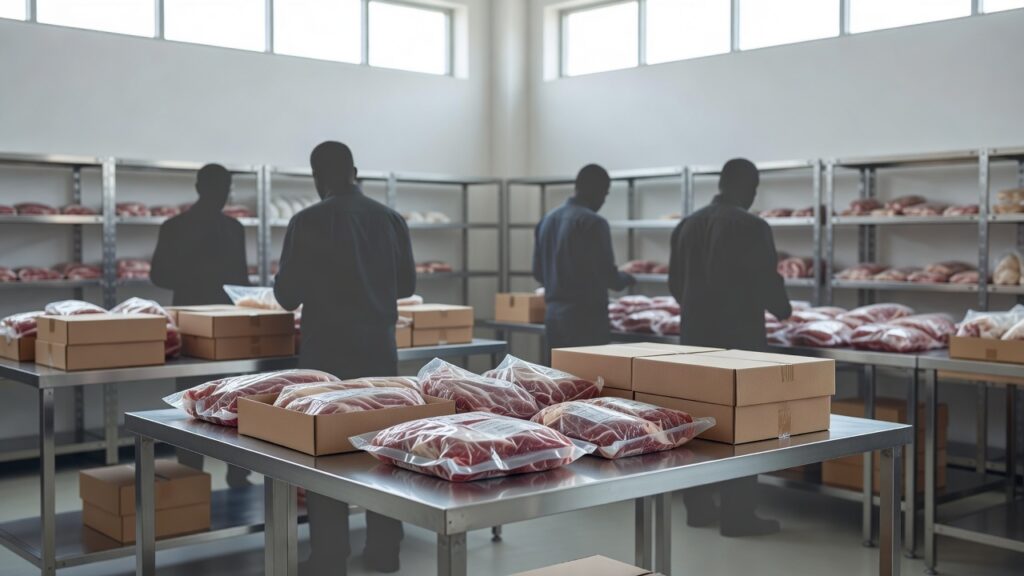
The Capital Governorate inspection department of the Public Authority for Food and Nutrition seized roughly 180 kilograms of beef and mutton products, including cow and sheep feet, determining they were unfit for human consumption. The authority reported that the meat exhibited visible changes in its natural color, appearance and smell with foul and abnormal odors present. Violators had tampered with the seals that indicate slaughter dates in what appeared to be an attempt to conceal the products’ actual condition and mislead consumers.
According to the authority, officials issued seizure reports against the responsible parties and prepared destruction reports for the confiscated meat while initiating legal action. The Public Authority for Food and Nutrition conducts regular inspections to enforce food safety standards and protect public health across various governorates. This incident highlights ongoing market monitoring required to prevent spoiled goods from reaching consumers.
The authority has carried out multiple similar campaigns in recent months with comparable results. Kuwait Times reported that an inspection in Farwaniya resulted in the destruction of 195 kilograms of unsafe meat as part of these intensified efforts. Such actions form part of a broader strategy to address food safety risks in commercial outlets.
Kuwaiti regulations stipulate severe penalties for violations involving rotten or improperly labeled food products. The authority has previously indicated that offenders may face fines reaching 100,000 Kuwaiti dinars and jail terms of up to six years. These measures serve to deter practices that could endanger consumers.
The Public Authority for Food and Nutrition also engages in educational campaigns to complement its enforcement work. In June 2026 the authority marked World Food Safety Day with activities focused on raising awareness among businesses and the public, Kuwait Times stated. These initiatives emphasize proper handling, storage and labeling to prevent spoilage and related violations.
Data from the Public Authority for Food and Nutrition places meat products among the most frequently cited items during inspections due to spoilage risks. The body has noted that consistent oversight helps maintain standards without affecting compliant businesses. Officials advise consumers to verify seals and expiration details before purchase to support these safety measures.