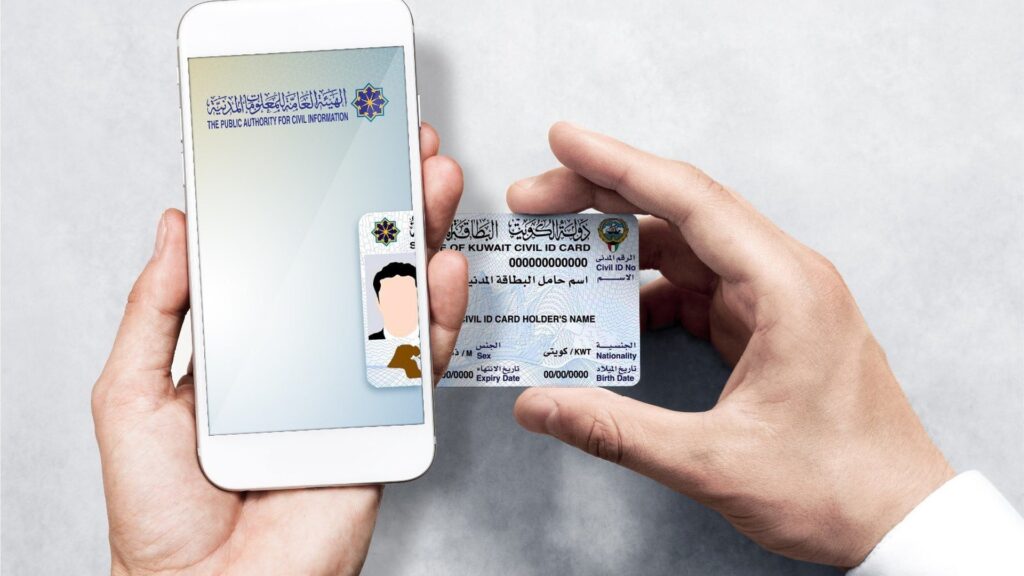
PACI is qualifying delivery companies as it prepares to restore doorstep delivery of ready Civil IDs, with the launch date and new fees still to be announced.
Kuwait is preparing to restore Civil ID home delivery, reopening the prospect of receiving a ready card without travelling to a Public Authority for Civil Information branch.
PACI has opened a qualification process for delivery companies, with the planned service intended for citizens and residents. The invitation was published in the official gazette, Kuwait Al-Youm, on 8 November. Companies must be licensed and registered in Kuwait for the relevant activities, hold valid commercial registrations and meet the required qualification conditions.
The move concerns the final stage of obtaining a physical Civil ID: getting an issued card into its holder’s hands. It would add another collection option alongside PACI’s branches. For now, however, the development is a step towards appointing service providers. The reported announcement does not set out a public launch date, a new delivery charge or instructions for residents to place orders.
A return to a service introduced in 2020
Home delivery has a history in Kuwait’s Civil ID system. PACI introduced the service in November 2020, when reducing visits to government offices also formed part of efforts to limit contact during the coronavirus pandemic.
Under the original arrangements, a specialist company handled deliveries. Customers could request the service online and follow the progress of their orders. PACI said ready cards would be delivered within two working days of being handed to the company, a timeframe that began after the card was issued and transferred for delivery.
The arrangements also specified how the card would change hands. It was to arrive in a sealed envelope bearing PACI’s logo. Where an old Civil ID had to be surrendered, the recipient was required to hand it to the delivery representative. Those without an old card were required to provide the necessary identification documents.
By early December 2020, PACI had reported delivering 40,000 cards, with deliveries running at approximately 2,500 a day. Those figures describe the early operation of the previous service, rather than the capacity or expected demand for the proposed return.
The former service charged KD2 for the first card and 250 fils for each additional card delivered to the same address. These are historical prices, not confirmed charges for the new arrangement. The service subsequently stopped after the delivery contract was not renewed, leaving the current qualification exercise to establish a new contractual basis for its return.
The collection stage of an online process
The proposed service would sit alongside procedures that already allow parts of a Civil ID transaction to be completed remotely. PACI’s renewal guidance for Kuwaiti citizens lists Sahel, its electronic services and automated telephone or SMS channels among the available routes, subject to the conditions of the transaction.
Completing a renewal and receiving the resulting card are separate stages. A successful application does not, by itself, establish that a physical card has been printed, allocated for collection or handed to a courier. The delivery initiative addresses distribution once a card is ready; it does not announce a new deadline for producing cards.
PACI continues to publish collection arrangements at its branches. Its South Surra headquarters lists morning and afternoon collection periods, while its South Sabahiya and Jahra branches also provide collection sessions. These remain the published in-person routes while the proposed delivery service moves through company qualification.
That distinction matters for residents following the announcement. The invitation currently concerns businesses seeking to provide the service. It is not an instruction for individual cardholders to submit a delivery request, nor does it replace the collection information attached to an existing transaction.
Physical cards alongside Kuwait Mobile ID
The planned return also comes within a system that provides a digital form of identification. Kuwait Mobile ID, known as Hawiyti, is issued by PACI and supports identity verification, access to electronic services and, through the appropriate registration channels, digital signatures.
PACI’s official Mobile ID guidance says the application provides a legally recognised digital identity that can replace the physical Civil ID. Its document wallet can also hold other government credentials, including driving licences and children’s Civil IDs.
The application and the proposed courier service therefore serve different purposes. Mobile ID supplies a digital credential, while home delivery would provide a way to receive the physical card. PACI’s guidance illustrates the distinction: a card preview in the application can exist before printing, and an empty serial-number field indicates that the physical card has not yet been printed.
Restoring delivery would consequently add a distribution channel to the existing combination of online transactions, digital identification and branch collection. The announcement does not introduce a replacement for Hawiyti or change the status of the digital identity it provides.
The details still to come
The next public-facing details will determine how residents can use the service: when requests open, which companies will deliver cards, what customers will pay and how handover will be arranged.
The earlier scheme provides a record of how delivery previously operated, but its prices, turnaround times and ordering procedure cannot automatically be applied to the proposed return. Those terms will need to be confirmed for the new service.
For citizens and residents, the practical change will arrive when PACI publishes a booking route and launch arrangements. Until then, the confirmed development is that the authority has begun qualifying companies to bring Civil ID delivery back.