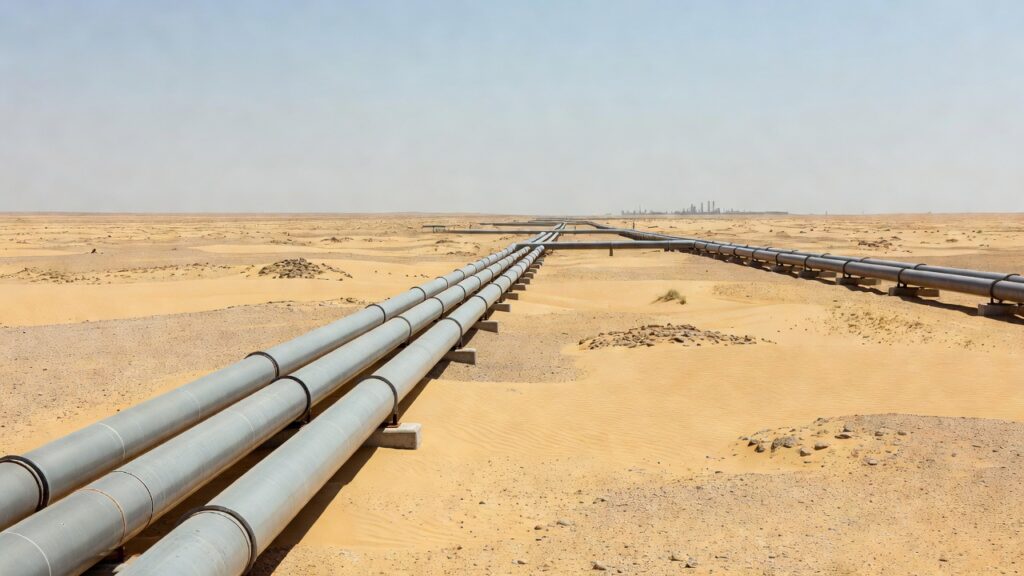
The request is intended to consolidate what has become a competitive bidding process and to make room for smaller players that maintain relationships with KPC, the sources said. This development follows initial talks held earlier in the year with a broad group of international infrastructure investors. The transaction would see KPC lease its pipeline assets to a new entity in which the winning consortium would take a minority stake before leasing them back to the state firm.
Blackstone is among those still in contention, marking what would be the private equity firm’s initial entry into Gulf oil infrastructure investments, the sources noted. Other parties that have progressed include BlackRock’s Global Infrastructure Partners unit, Brookfield Asset Management, EIG Global Energy Partners, KKR and Apollo Global Management. Australian bank Macquarie is understood to have withdrawn from the process.
Kuwait’s economy remains heavily dependent on hydrocarbons, with the energy sector accounting for more than half of gross domestic product and over 90 percent of government revenue according to the U.S. State Department’s 2024 Investment Climate Statement. The proceeds from the pipeline stake sale are expected to fund the country’s broader economic diversification efforts and support domestic investment programs. Kuwait launched its New Kuwait Vision 2040 to reduce reliance on oil revenues and promote private sector growth.
The pipeline sale process was initiated by KPC in February 2026 just as geopolitical tensions escalated in the Middle East with the U.S.-Israeli war on Iran, according to multiple reports. Kuwait has engaged JPMorgan Chase and Centerview Partners as advisors on the transaction, which was initially sized between $5 billion and $7 billion but has seen the target raised in recent months. A related $6 billion debt financing package is currently being assembled to back the deal.
The approach closely follows Saudi Aramco’s completion of an $11 billion lease and leaseback agreement for its Jafurah gas processing facilities in October 2025, an Aramco statement said. In that deal a consortium led by Global Infrastructure Partners took a 49 percent stake in a new joint venture while Aramco retained 51 percent and operational control under a 20-year lease arrangement. Abu Dhabi’s ADNOC has pursued comparable infrastructure partnerships with global investors in recent years.
Neither KPC nor any of the named investment firms commented on the matter when contacted by Reuters. The sale forms part of a regional trend among Gulf national oil companies to attract foreign capital into midstream energy assets. Details on the final structure and timeline for a potential announcement remain subject to ongoing discussions.