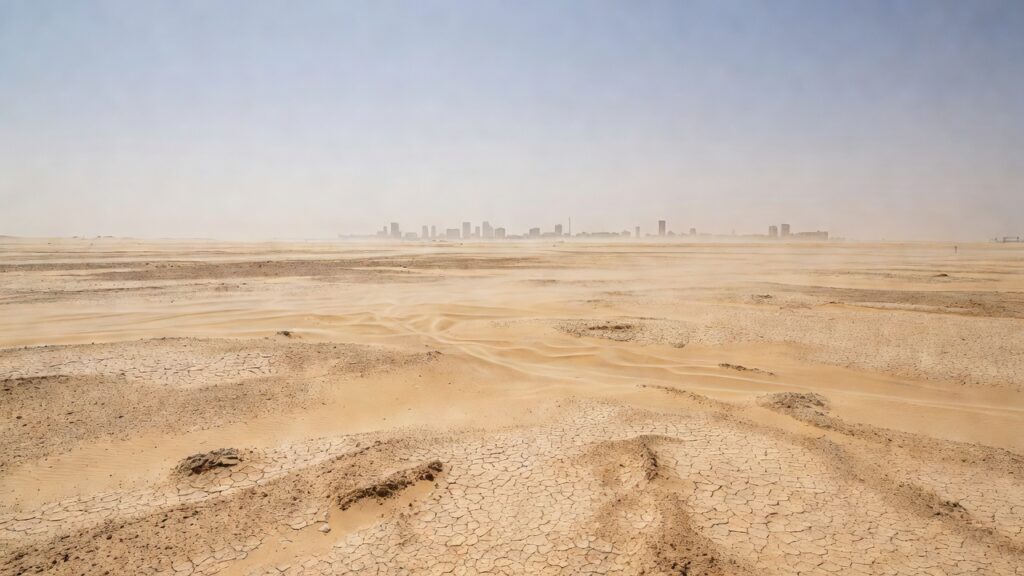
The Kuwait Meteorological Center has forecast maximum daytime temperatures of 48 to 50 degrees Celsius for Thursday and Friday before a slight decline to 46 to 48 degrees on Saturday as an extension of the Indian monsoon low influences conditions across the country. Northwesterly winds are expected to blow between 15 and 45 kilometers per hour on Thursday before moderating to between 10 and 35 kilometers per hour on Friday and 8 to 35 kilometers per hour on Saturday according to the center. The forecast also indicates a chance of rising dust over open areas that could reduce visibility while overnight lows remain near 35 degrees Celsius offering limited respite from the heat.
According to the center’s forecast published on its official website the extreme conditions stem from prevailing weather systems that have already produced record heat earlier this year. Minimum temperatures will provide little cooling overnight while humidity levels are projected to range between 12 and 65 percent depending on the day. The center has explicitly advised the public to exercise caution in open spaces to avoid heat stress during the peak hours.
The Kuwait Meteorological Department recorded a maximum temperature of 50 degrees Celsius on May 29 2026 which at the time marked the hottest day of the year so far. Historical data maintained by the department shows that summer highs in Kuwait routinely approach or exceed this threshold making the country one of the hottest inhabited locations globally during peak months. Similar extreme events have prompted repeated public awareness efforts in recent summers as temperatures continue to test records.
Regional meteorological services across the Gulf have issued comparable alerts in recent days as the same weather patterns drive elevated heat in neighboring states. The center’s assessment aligns with monthly outlooks that place average August highs near 46 degrees Celsius with occasional spikes well beyond that level. Such forecasts highlight the ongoing challenges desert climates face when low pressure systems draw in hotter air from surrounding areas.
Health authorities routinely stress the importance of staying hydrated avoiding strenuous outdoor activity during midday hours and using air-conditioned spaces whenever possible when temperatures reach these extremes. The combination of intense heat and airborne dust can worsen respiratory conditions especially among children the elderly and individuals with chronic illnesses. Residents should monitor updates from the Meteorological Center as conditions may shift with the progression of the monsoon low.
Power demand typically surges during such heatwaves as households and businesses increase reliance on cooling equipment a pattern documented in prior seasons by national utility operators. The center will continue tracking developments and issue further statements if dust levels rise or temperatures deviate from current projections. Officials have reiterated that preparation and adherence to safety guidelines remain essential for minimizing disruptions over the coming days.