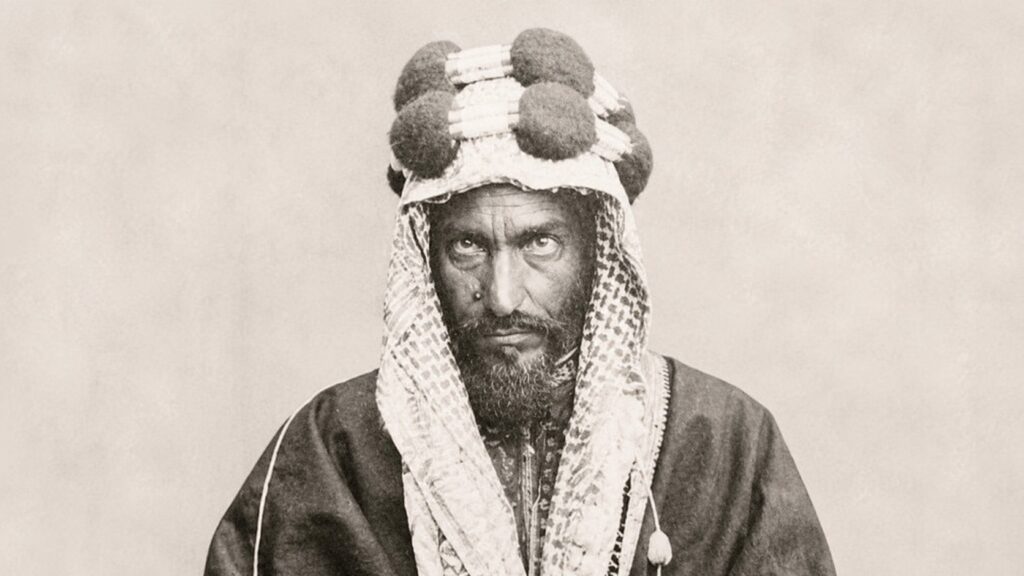
The Municipal Council has accepted a Kuwait Finance House donation for a planned museum centred on Imam Abdulrahman bin Faisal Al Saud and his son, King Abdulaziz, placing their Kuwait years within the history of the old souq.
Mubarakiyah is set to gain a museum devoted to a chapter of Saudi history that unfolded in Kuwait, after the Municipal Council approved acceptance of a Kuwait Finance House donation for the project.
The decision on 16 November concerns the Imam Abdulrahman bin Faisal Al Saud Museum and its surrounding area. The planned development will recall the years the Imam and his son Abdulaziz, the future founder of Saudi Arabia, lived in Kuwait, with a building that recreates the design of the Imam’s home.
Its subject gives the project a distinctly local purpose. The story begins with a family living in Kuwait before returning to Riyadh, connecting the history of the Saudi state to people and places in Kuwait’s old commercial centre.
The Saudi family’s years in Kuwait
Imam Abdulrahman bin Faisal was the last ruler of the Second Saudi State. He left Riyadh with his family following the upheaval that ended that state in 1891, eventually establishing a home in Kuwait.
Kuwait offered connections that mattered to the family’s circumstances. It had established relationships with Najdi merchants and welcomed people who had left Riyadh and the surrounding region. Those networks also allowed the Imam to follow developments in Najd while considering a return.
The account of King Abdulaziz’s early life places the family’s settlement in Kuwait in 1893 and describes his residence there as lasting nine years. During that period, he followed events through traders and scholars visiting Kuwait and gained political experience while living alongside his father.
Abdulaziz’s recapture of Riyadh in 1902 marked the next decisive stage. Imam Abdulrahman subsequently returned from Kuwait and pledged allegiance to his son, who would go on to establish the modern kingdom.
Naming the museum after the father keeps both generations within the story. It brings attention to the Imam’s own position and decisions, alongside the better-known career of the son who became Saudi Arabia’s first king.
A house museum within Mubarakiyah
The proposed site covers approximately 4,490 square metres in Qibla’s fourth commercial block, near Al-Bahr Mosque and the Central Gold Market. Its location places the project within the historic market district associated with the Imam’s residence.
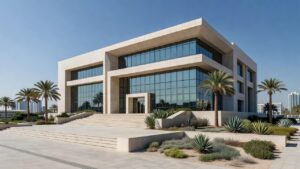
The project brief published by Dar Al-Shaheen Consultants describes a main building based on the original design of the Imam’s house, accompanied by supporting museums, commercial buildings, a basement and a café. The project therefore extends beyond a single exhibition room or commemorative plaque.
The planned house museum will recreate the design of the residence, giving the historical account a physical setting. Its supporting buildings and facilities are part of the same 4,490-square-metre development.
The combination of museum spaces and commercial premises also reflects the setting. The development is planned inside a market district, with its historical narrative linked to the surrounding area. The house provides the architectural reference, while the wider site provides space for the museum’s supporting functions.
How the project reached this stage
The museum was already in development before the latest donation decision. On 9 March 2025, Kuwait Municipality announced a contract for the project, signed by its then acting director general, Manal Al-Asfour. The announcement described a one-year period for design studies.
That earlier municipal announcement set out the site’s scale, its principal components and its purpose: presenting the history shared by Kuwait and Saudi Arabia through the Imam’s residence in Mubarakiyah. Dar Al-Shaheen’s own account confirms its involvement in the design contract.
The November 2026 decision adds the Municipal Council’s acceptance of KFH’s donation. It also retains requirements relating to the relevant authorities’ approvals and compliance with the project’s approved building and design provisions.
These are different stages of the same development. The design period described in 2025 was not a public opening date, and the latest announcement does not provide one. It establishes the donation approval and the conditions governing implementation.
KFH’s wider involvement in the souq
The museum donation adds another strand to KFH’s involvement in Mubarakiyah, where the bank has also been supporting the rebuilding of the fire-damaged market area. That reconstruction is a separate project with its own contract and budget.
In March 2024, KFH signed a reconstruction contract with Alghanim International and Kuwait Municipality. At that time, the bank described a programme covering approximately 17 damaged buildings, together with work on neighbouring structures, at an estimated cost of KD8 million. The KD8 million estimate covered that reconstruction programme.
KFH’s 2025 sustainability report subsequently recorded progress on the main structures, architectural restoration and core infrastructure in the fire-affected area. It also described work on internal systems and improvements to ventilation and cooling in external corridors.
The reconstruction programme concerns the buildings and infrastructure that support the market’s daily use. The museum has a different focus: documenting the people and events associated with the district. Both form part of KFH’s involvement in the area, with the museum donation now receiving Municipal Council approval.
From an approved project to a public museum
The project is to proceed under Kuwait Municipality’s supervision, in coordination with the Ministry of Foreign Affairs, the National Council for Culture, Arts and Letters and the other relevant authorities. An implementation timetable and detailed exhibition programme remain the next information needed to explain when and how visitors will experience it.
The subject is already specific: a home in Mubarakiyah and the lives of a father and son whose years in Kuwait preceded Abdulaziz’s return to Riyadh. The accepted donation supports a project intended to make that chapter of the two countries’ history visible within the district where it unfolded.