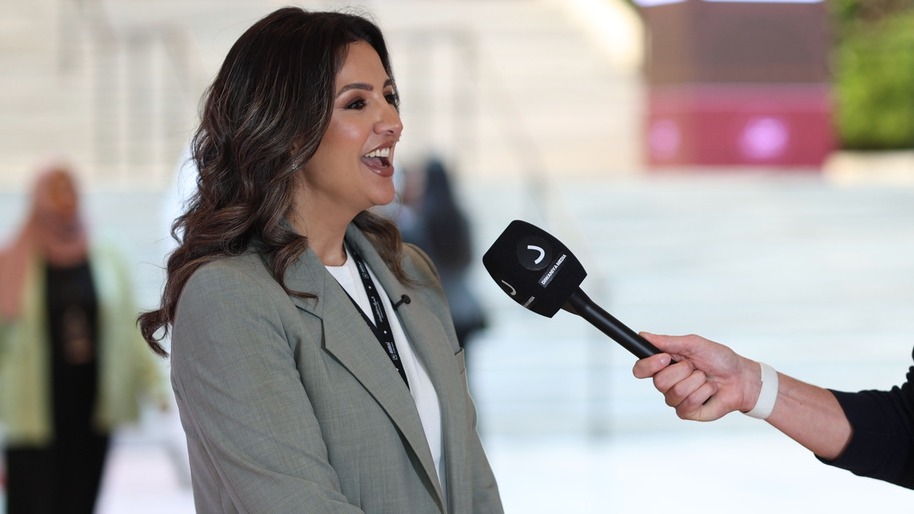
The Lei Wa Lakom founder wants the conversations in Kuwait to help shape practical initiatives, with better evidence guiding where the work begins.
For Taiba Al-Humaidhi, the work following Kuwait’s Women & the Economy conference begins with a question: what should the gathering help people understand more clearly?
Asked by Diwaniya Media what success would look like six months after the event, the founder of Lei Wa Lakom answered: “Having better questions that we need to answer.”
Speaking in Kuwait on 17 October, Al-Humaidhi said she wanted better access to data to help identify starting points for initiatives supporting women in the workforce and the wider community.
Her answer gives the conference a purpose that extends into the months ahead. Bringing people together can introduce experiences and perspectives. The next task is to determine which questions require further investigation and how the resulting evidence should inform action.
Identifying where initiatives should begin
“The biggest struggle I’ve had is data, and measuring where to start from,” Al-Humaidhi said. “That’s what we’ve been doing for two years now.”
She was describing the information needed for her own work and the difficulty of deciding where to focus. Her comments were not an assessment of the availability of every form of data in Kuwait.
The distinction matters because women’s economic participation encompasses different stages and circumstances. Entering a first job, developing professional experience, starting a business and taking on leadership responsibilities each involve their own decisions.
An initiative therefore needs a sufficiently clear understanding of whom it intends to reach and what it seeks to address. A broad ambition can bring people together, while a defined starting point makes the subsequent work more specific.
Al-Humaidhi said better information would allow her to collaborate with others on initiatives that help people grow and address problems they face.
She did not announce a fixed programme in the interview. Instead, she described the process she wanted to strengthen: understanding needs before deciding what the response should be.
Building on an established community
Lei Wa Lakom’s official account of its work says the organisation has supported women in Kuwait, particularly young people, since 2021 through practical learning, conversations and community activities.
That background helps explain the connection between the conference and Al-Humaidhi’s wider objectives. The gathering brings together people whose experiences may inform work already taking place.
Business-education organisation AACSB’s 2025 profile of Al-Humaidhi describes Lei Wa Lakom’s work in mentorship and financial education, including collaboration with the Kuwait Women’s Economic Empowerment Platform.
These activities provide several points of contact with women at different stages of their professional and personal lives. They also create questions about which forms of support are relevant to which participants.
The interview indicates that Al-Humaidhi wants to become more precise about those questions. Her six-month ambition centres on improving the understanding that guides future initiatives.
That makes the follow-up substantive: what did the conversations reveal, which issues merit a closer look, and who needs to be involved in the response?
Why implementation deserves attention
International research also distinguishes between broad commitments and the mechanisms through which economic opportunities become accessible.
The World Bank’s Women, Business and the Law 2026 report covers 190 economies and examines legal frameworks, supporting systems and perceptions of enforcement across areas of women’s economic participation.
The report records 113 positive legal reforms across 68 economies over the preceding two years. Its framework also considers the policies and services that help translate formal provisions into practice.
Those are international findings, rather than conclusions about this conference or Lei Wa Lakom. Their relevance is methodological: progress can be examined through several dimensions, and each requires appropriate evidence.
Community initiatives operate at a different scale, but face a related evaluation question. Delivering an activity, reaching participants and influencing an outcome are separate things to measure.
A discussion may identify an issue. A workshop may address a learning objective. A longer-term initiative may seek to influence professional development. Understanding which result is intended helps determine what information should be collected.
Al-Humaidhi’s emphasis on establishing a starting point fits that practical concern.
Turning conversations into priorities
The founder said her motivation for organising the conference came partly from her own experiences at other gatherings.
“I wanted to bring people together,” she said. “I’ve been to a lot of conferences. Some of them were the places where I got some of my best ideas.”
She wanted participants to encounter people who could inspire them and introduce different perspectives. For that reason, she said, meeting in person was important.
Those conversations can contribute to the next stage without being treated as a substitute for wider research. An individual experience may identify a useful question, while further evidence can help establish its scope and significance.
That creates a practical relationship between community engagement and data. Listening helps determine what to investigate. Investigation can then inform the design of an initiative and the way its results are assessed.
Al-Humaidhi also emphasised working alongside others who share her objectives. Her description leaves room for the conference to contribute both ideas and relationships to that process.
The interview did not establish a timetable for new programmes or claim outcomes that had already been achieved. It set out an intention to use better understanding as the foundation for subsequent work.
Six months after the conference, her own answer offers a clear basis for a follow-up: which questions became sharper, what evidence was gathered and how did it influence the initiatives that followed?