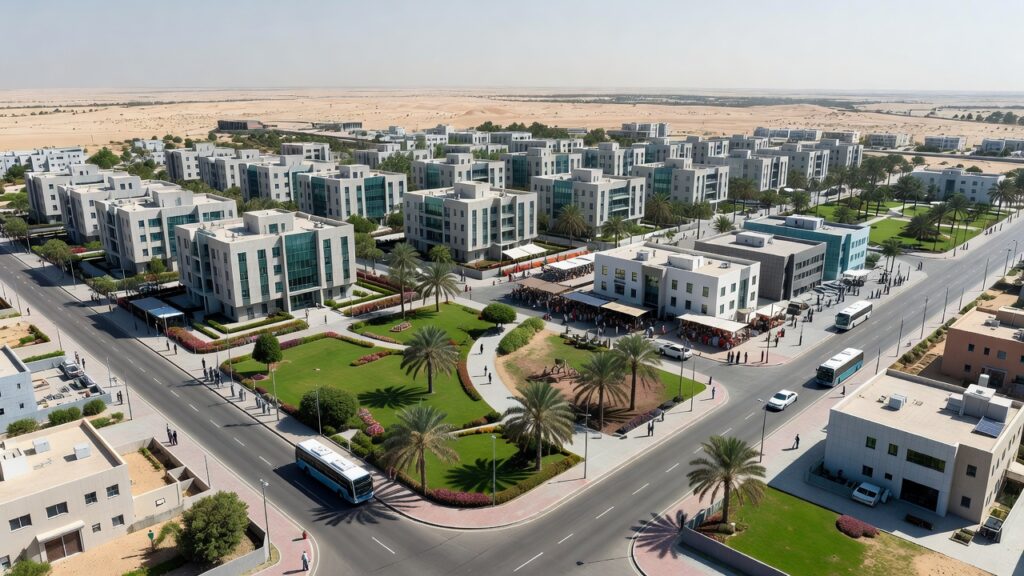
Hamoud Aqla Al-Enezi, head of the National Integrity Center and a former Municipal Council member, described workers’ cities as one of the most important sustainable solutions for addressing informal housing and regulating expatriate worker conditions. Al-Enezi said the cities must form part of an integrated system for managing the labor sector rather than merely serving as housing facilities. He noted that sites had been allocated by the Municipal Council during his term and that a regulatory framework already exists. Success depends on shifting from housing management to labor system management using unified databases for monitoring workers, their professions, employers, workplaces and residences, according to Al-Enezi.
Al-Enezi called for private sector participation in developing, managing and operating the cities while obligating government contractors to provide suitable housing for their workers. Kuwait’s labor market surpassed 3 million workers by the end of 2025, government figures show, with expatriates comprising the clear majority and frequently housed in informal settlements. The Ministry of Interior has conducted recent security campaigns targeting such areas including Jleeb Al-Shuyoukh to curb violations. Kuwait City Municipality announced measures in 2025 to better regulate housing there and prevent overcrowding and fires.
Real estate researcher Abdulrahman Al-Hussainan argued that the government should adopt the workers’ cities project as a comprehensive economic and investment model capable of generating revenue while aligning with efforts to regulate the labor market and eliminate informal housing. Al-Hussainan pointed to experiences in Qatar, the United Arab Emirates and Saudi Arabia where similar cities include healthcare facilities, markets, banking services and recreational areas. He suggested that Kuwaiti entities such as the Public Institution for Social Security and the General Secretariat of Awqaf could partner in the development to create sustainable revenues through rentals and service fees. Security measures alone are not sufficient and organized urban alternatives are required, Al-Hussainan stated.
Ghadeer Abdul Mohsen Makki Jumaa, head of the Developmental Entrepreneurship Association, said establishing the cities represents a sustainable urban solution that aligns with the New Kuwait 2035 vision and regulations from the Public Authority for Manpower. Jumaa stressed that the developments must be treated as integrated environments encompassing urban planning, services, health and environmental standards rather than simple residences. The association head called for providing tailored services to residents, ensuring compliance and monitoring to prevent the emergence of new illegal settlements. Coordination among all relevant authorities and linking to official databases for worker addresses are essential to the project’s success, according to Jumaa.
The experts emphasized that the proposed cities must incorporate public health protections, fire safety standards, transportation links and essential services under professional management. Such requirements extend beyond basic accommodation to create functional communities that support both worker welfare and regulatory oversight. The approach draws on lessons from comparable Gulf models where dedicated labor housing has reduced pressures on general residential zones.
Implementation would involve multiple government bodies working in concert with the Public Authority for Manpower to set and enforce standards for the new facilities. Private investment alongside partnerships with institutions like the Public Institution for Social Security could help fund construction and ongoing operations. The resulting developments are expected to provide official addresses for workers while feeding data into centralized monitoring systems.