The Kuwaiti historian has shared first prize for Monsoon Voyagers, a book that reconstructs Gulf trading life through a captain’s logbook and the records of merchant families.
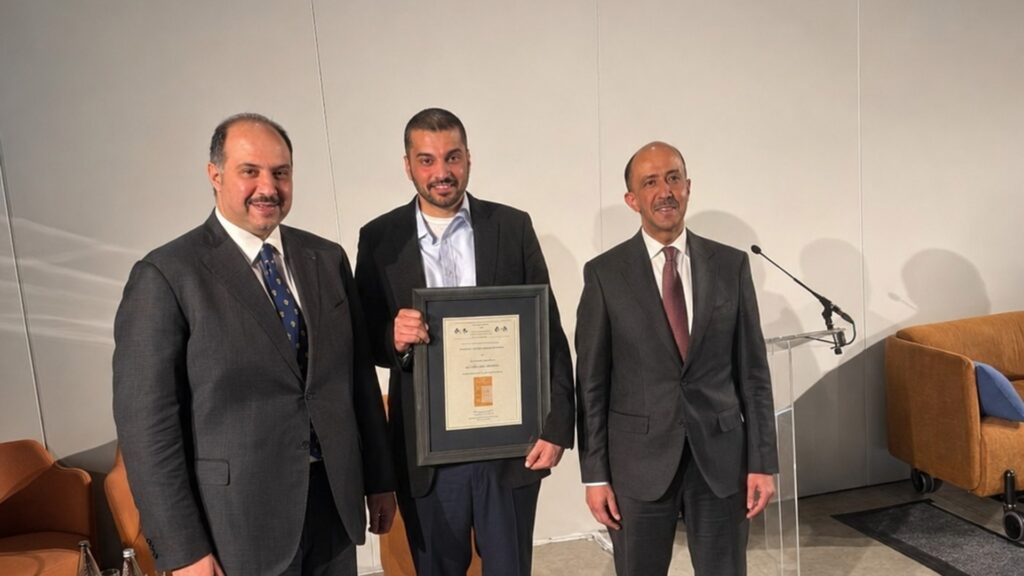
Kuwaiti historian Fahad Ahmad Bishara has shared first prize at the Sheikh Abdullah Al-Mubarak Al-Sabah book awards in London for a history of the Gulf told through a single dhow’s journey across the Indian Ocean.
The award for Monsoon Voyagers: An Indian Ocean History was announced at SOAS University of London on 16 November. Bishara shared the top honour with Mohammad Sadegh Ansari, whose winning book examines music and the production of knowledge in medieval Baghdad and beyond, according to KUNA’s account of the ceremony.
For readers in Kuwait, the story behind Bishara’s book begins with a familiar vessel and an unusually detailed record of working life. The dhow Al-A‘waj, known in English as the Crooked, becomes a way to follow the people, paperwork and commercial decisions that connected Kuwait with ports far beyond the Gulf.
A voyage from Kuwait, reconstructed on paper
Published by the University of California Press in October 2025, Monsoon Voyagers follows the Crooked’s travels in 1924–1925. Its central materials include the captain’s logbook, alongside correspondence and business records preserved across several port cities. These documents allow Bishara to move between events aboard the vessel and the merchant networks supporting its journey.
The publisher’s description and contents trace a route through Kuwait, the Shatt al-Arab, the Gulf, the Sea of Oman, Karachi, Kathiawar, Bombay, Malabar, Muscat and Bahrain. Chapters on these places are interspersed with discussions of debts, freight, letters, transfers, maps and accounts.
That organisation brings the administrative side of seafaring into view. A voyage involved decisions about payments, cargo and communication as well as navigation. The book follows those connections into a period when Gulf merchants used banks, steamships, railways and telegraphs to conduct business across a wider region. Kuwait’s maritime history emerges through the movement of people and records between these places.
What a captain needed to know
The logbook belonged to the nakhoda, or captain, Abdulmajeed Al-Failakawi. A review in Law and History Review describes a collection containing financial entries, conversion tables, calendars, maps and legal papers. It also identifies writing by another captain, Manur Al-Khariji, Al-Failakawi’s father-in-law, within the same documentary material.
These were practical records used to navigate different systems of measurement, payment and obligation. Taken together, they suggest how much knowledge had to travel with a vessel. A captain needed information that remained useful after leaving port, when a question about a transaction or a calculation could no longer be settled by contacting someone ashore.
The scholarly review also identifies records connected to Kuwaiti merchants Muhammad al-Matrook and Muhammad al-Sudairawi among the materials informing the book. Bringing such papers together lets the history follow a transaction beyond the ship itself, into the offices and relationships through which cargo was bought, financed and sold. The resulting view includes merchants, brokers, investors and families alongside sailors.
In his Asian Review of Books assessment, James Herndon describes the Crooked as a vessel with a capacity of 225 tons and a crew of 30. He highlights the different responsibilities of the captain, first mate, navigators, carpenters and other crew members, each contributing specialised knowledge to the voyage.
Herndon also draws attention to the commercial judgements behind ordinary cargoes. Selling dates required knowledge of varieties, demand and ripeness at the expected time of arrival. Return cargoes brought further choices about wheat and flour. These examples give the voyage an economic detail that a list of destinations alone cannot provide: what travelled mattered, but so did when it arrived and who could sell it.
The family papers behind a wider history
Bishara’s connection to this material is also personal. In an afikra interview released on 9 November, he discussed finding his grandfather’s dhow logbooks in a friend’s family trunk. The conversation covered family memories of trade, the role of credit, navigation and the intellectual lives of Kuwaiti captains.
That account points to the private settings in which parts of maritime history survived. Papers kept by families can record working relationships and routine decisions that are difficult to reconstruct from official summaries alone. In this case, Bishara’s research draws on the archives of Kuwaiti merchants and dhow captains to connect individual lives with broader histories of commerce.
An associate professor specialising in Indian Ocean history at the University of Virginia, Bishara previously wrote A Sea of Debt, published in 2017. That study examined law and economic life in the western Indian Ocean between 1780 and 1950, including Arab and Indian settlement and commerce in East Africa.
His research has also addressed pearl merchants, maritime legal writing and the movement of documents across the ocean. Monsoon Voyagers gives that wider field of inquiry a tightly defined narrative focus: one vessel and the evidence surrounding its journey.
From the London award to the next discussion
The British-Kuwait Friendship Society Book Prize was established through an endowment from the Abdullah Al-Mubarak Al-Sabah Foundation. It recognises scholarship on the Middle East and attracts approximately 50 nominations from around 20 publishers annually. Its total annual prize fund is £20,000.
Speaking after the ceremony, Bishara emphasised the importance of documenting Kuwait’s historical sea voyages and their contribution to trade and cultural exchange across the Indian Ocean, KUNA reported. The award recognises a book in which those connections are reconstructed through the records of the people who maintained them.
The next scheduled discussion of the book is an online Harvard event on 18 November. Hosted through the university’s Center for Middle Eastern Studies with partner programmes, it will take place on Zoom from noon to 1.30pm Eastern Standard Time, with advance registration required.