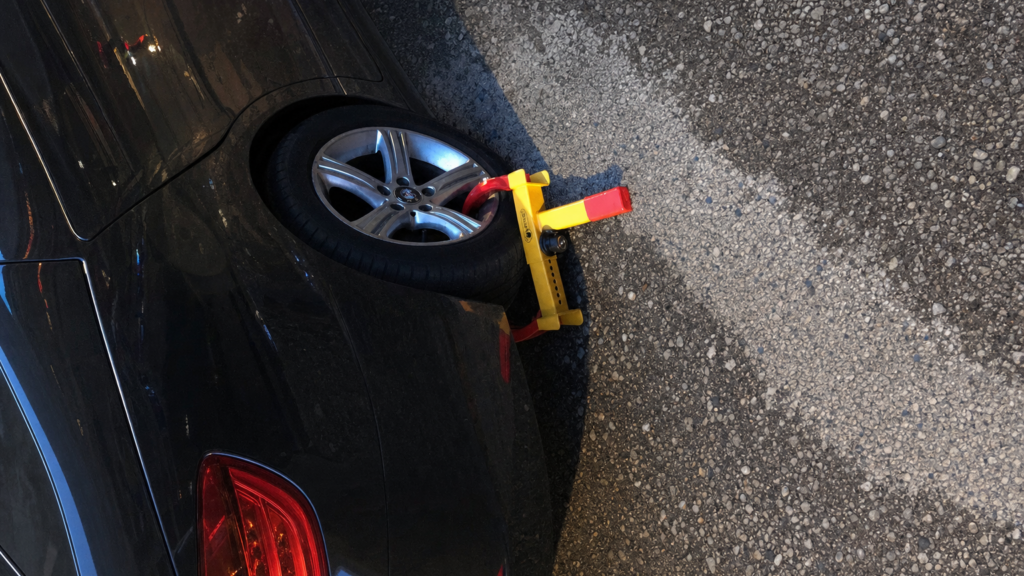
The General Department of Traffic requires vehicle owners to settle the relevant parking violation fine before a wheel clamp can be officially removed from their car. According to the Ministry of Interior’s e-services portal, fines must be paid online via the dedicated violations payment page or through the Sahel application by entering the civil ID number or vehicle plate details and completing the K-Net transaction. The ministry’s instructions note that the system requires at least 15 minutes to update records after payment, during which time users should avoid attempting duplicate transactions.
Following payment confirmation, the vehicle owner must proceed to a designated General Department of Traffic branch with the payment receipt, civil identification, and vehicle registration documents to obtain a release order. The authority’s guidelines specify that only authorized personnel may remove the clamp, and drivers are barred from attempting to dislodge the device themselves. Ministerial Decree No. 570 of 1996, which regulates wheel clamp usage, forms the basis for these enforcement actions and remains integrated into current traffic operations.
The 2025 amendments to Kuwait’s traffic law under Decree-Law No. 5 strengthened penalties for illegal parking, setting settlement amounts at 150 dinars for violations including parking in spaces designated for people with disabilities. A KUNA report on the decree’s issuance detailed how such updates aim to enhance road safety and reduce disruptions caused by improper vehicle placement. Figures from the General Department of Traffic show that parking-related infractions constitute a consistent share of total recorded violations each year.
Drivers facing multiple outstanding fines should clear all payable items through the ministry portal prior to requesting clamp removal, as the system links the device directly to the unpaid parking breach. The General Department of Traffic assessment found that unresolved violations can delay vehicle license renewals and lead to further administrative blocks. Inquiries about fine status can be made by selecting the appropriate beneficiary category on the official website or within the Sahel app.
Cases classified as non-payable online, often tied to more severe breaches, require an in-person visit to the Violations Investigation Department for resolution before any clamp release can occur. The ministry’s online resources distinguish between payable and non-payable categories to direct motorists accordingly. Such in-person procedures align with the broader framework established in the updated traffic regulations that took effect in 2025.
Kuwait’s vehicle fleet has expanded significantly in recent years, according to Public Authority for Civil Information statistics, amplifying the volume of daily enforcement actions including wheel clamping for repeat or high-risk parking offenses. The General Department of Traffic maintains several branches across governorates equipped to handle release requests following fine settlement. Motorists can access real-time violation checks through the ministry’s dedicated digital platforms to streamline compliance.