The Al-Ojeiri Scientific Center has declared midsummer will commence on July 16 coinciding with the second Gemini period that lasts 13 days. This shift brings a gradual decline in daylight hours alongside an increase in the sun’s intensity according to the center’s assessment. The announcement also details celestial events including a conjunction of the moon and Saturn on July 16 followed by the moon and Venus on July 17.
July concludes with a full moon on the 29th known internationally as the Buck Moon the center reported. These astronomical markers arrive as Kuwait transitions deeper into the hottest phase of the year. The center’s longstanding observations have guided such seasonal forecasts for decades.
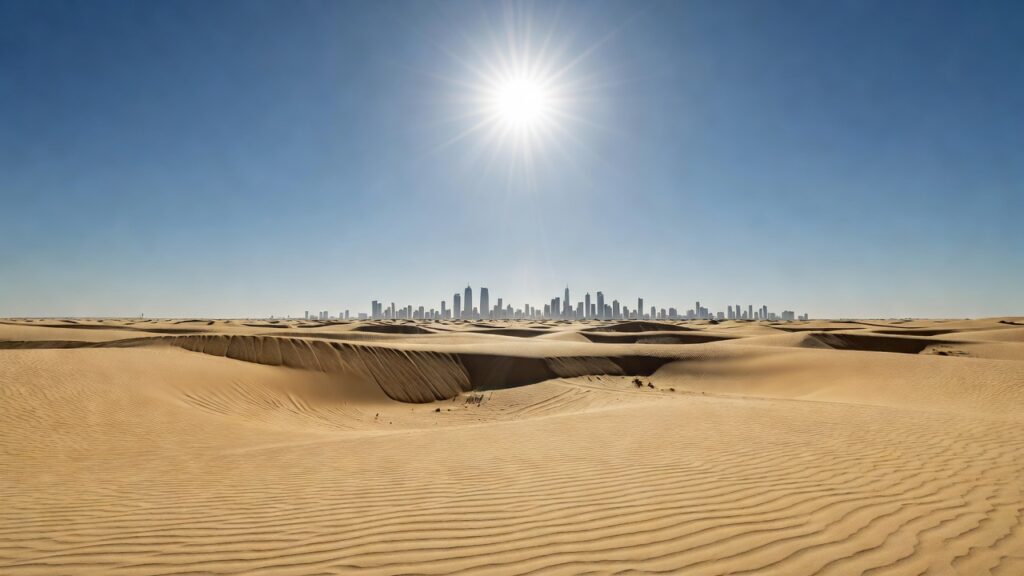
Kuwait Meteorological Department data places average maximum temperatures during summer between 42 and 46 degrees Celsius with July standing as the peak month. A department assessment found that readings frequently surpass 50 degrees Celsius in inland areas during intense periods. Historical patterns show nighttime lows often remain above 30 degrees Celsius compounding discomfort across the country.
Civil defence authorities have warned residents to limit outdoor exposure during peak afternoon hours as the midsummer heat builds. Officials recommend staying hydrated and checking on elderly individuals and those with health conditions according to guidance from the meteorological department. Such precautions become critical when southerly winds combine with extreme temperatures to elevate perceived heat levels.
The Al-Ojeiri Scientific Center serves as a primary reference for astronomical and seasonal information in Kuwait with its updates drawn from extended monitoring of solar and planetary cycles. Its July 12 statement aligns with broader patterns that have defined the local climate for years. Similar forecasts in previous seasons have helped authorities and the public anticipate the demands of peak summer conditions.