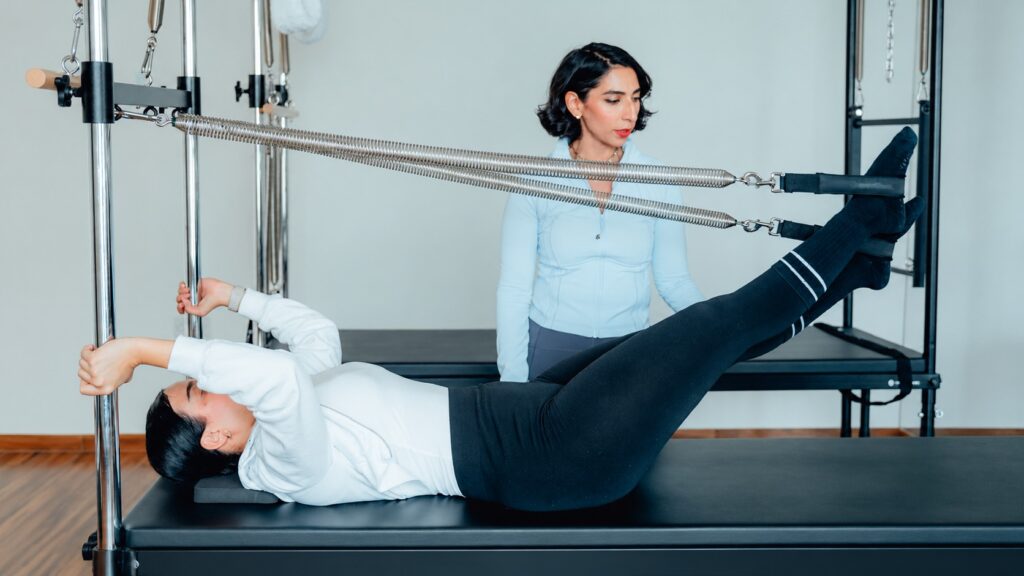
Founded in 2010 under the Women’s Cultural and Social Society, Julles connects Pilates with a longer Kuwaiti story of women creating spaces to learn, work and look after their wellbeing.
The history of a Pilates studio might seem an unlikely place to find a chapter in Kuwait’s women’s movement. Yet Julles began under the umbrella of an organisation whose work in women’s education and public life stretches back more than six decades.
According to the Women’s Cultural and Social Society’s account of the project, member Khadija Al-Harmi founded Julles in 2010. The Society describes its role as supporting an initiative that brought together physical wellbeing, specialist education and professional development.
Sixteen years later, that connection offers a distinctive way to understand the studio. Alongside the familiar story of Pilates classes is another about the institutions that help women develop skills, change careers and build communities around their everyday needs.
A studio within a longer history
The Women’s Cultural and Social Society was officially recognised on 3 February 1963. Founded by Kuwaiti women, it made education and awareness central to its work, including literacy programmes that helped women develop their capabilities and participate more fully in society.
Its remit now encompasses advocacy, research, community programmes and support for women’s participation in public and economic life. Within that history, a space dedicated to movement sits alongside a longstanding interest in women’s ability to learn and act independently.
The connection does not mean that attending an exercise class is the same as participating in a civic organisation. It shows how an established institution can accommodate different forms of support as women’s lives and interests change.
A literacy programme, a professional course and a fitness studio serve different needs. What connects them is the provision of a place where women can acquire knowledge and put it into practice. Julles adds physical wellbeing to that wider institutional story, with its founder bringing her own experience of professional reinvention.
The founder who changed direction
In her public account of her career, Al-Harmi describes returning to Kuwait after eight years in London and taking a job in telecommunications. She later left corporate employment and began developing a career in fitness.
That transition required study. She recalls travelling to London with her young family during the summer to attend courses in aerobics, circuit training, spinning and other disciplines, before teaching part-time at a gym in Kuwait.
Her interest in Pilates followed her own experience of injury. Al-Harmi says she sought specialist advice abroad and subsequently travelled to Dubai for instructor training, leaving her three-month-old daughter with her husband while she completed the course.
She describes beginning with friends and family before her teaching reached a wider audience. These are her recollections rather than independently assessed medical outcomes, but they establish the personal experience behind her professional direction.
They also reveal the practical demands of changing careers: training had to fit around travel and family arrangements. The move into fitness involved sustained learning long before it became the basis of a studio.
The classroom behind the workout
The Society identifies professional education as an established part of Julles’ work. It describes the studio as a Merrithew host training centre offering certification programmes and advanced instruction, connecting its exercise classes with a route into teaching.
That educational dimension is easily missed when Pilates is viewed mainly through photographs of reformers and carefully arranged studios. Instructor preparation involves work that takes place outside the class a customer sees.
Merrithew’s STOTT PILATES Intensive Reformer course, for example, specifies 125 hours across instruction, supervised teaching, observation, physical review and practice teaching. Fifty hours are allocated to instruction and supervised teaching, while the remaining requirements include at least 10 hours of observation, 40 hours of physical review and 25 hours of practice teaching.
Students must submit their practice logs before the final examination. Learning the movements is therefore accompanied by watching experienced teachers and practising how to guide other people.
For women considering instruction as a profession, this distinction is consequential. Enjoying Pilates can be the starting point, but a teaching qualification requires time, assessment and opportunities to practise. A local training setting changes the logistics of that commitment, particularly for someone balancing study with an existing job or family responsibilities.
A familiar name in a much bigger conversation
Pilates now commands substantial international attention. The 2025 ClassPass Look Back Report ranked it as the platform’s most-booked workout globally for a third consecutive year, with reservations increasing by 66% compared with 2024.
Those figures measure bookings on ClassPass, rather than Kuwait’s fitness market. They nevertheless provide context for the renewed attention surrounding a practice that Julles has been teaching for years.
The studio’s own description places emphasis on the time around the workout, too. On the Julles website, Al-Harmi describes women arriving early or staying after a session for coffee, tea or conversation. It is the studio’s account of its community, rather than a measured finding about social wellbeing, but it helps explain the kind of environment she intends to create.
Seen together, these details give Julles a place in two histories: the international popularity of Pilates and the local history of women organising spaces around their needs. Its connection to the Society makes the second particularly relevant in Kuwait.
A woman can enter such a space to attend a class, return to learn more about movement or pursue the longer course of becoming an instructor. Within the Society’s wider work, Julles brings those different forms of participation into the same setting.