An uncommon operation at Al-Adan Hospital brought together reconstructive expertise and the patient’s own tissue. The Ministry of Health says she left hospital in good condition on the third day after surgery.
A Kuwaiti woman in her twenties has left Al-Adan Hospital after surgeons used her appendix to repair a narrowed section of the tube carrying urine from her right kidney to her bladder. The operation gave a familiar organ an unusual purpose: helping restore the passage through which urine needs to flow.
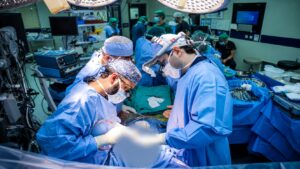
In its announcement of the procedure, Kuwait’s Ministry of Health said the patient had a complex narrowing in the lower part of her right ureter. The team carried out the reconstruction through laparoscopic surgery, and she was discharged in good condition on the third day. The ministry described the technique as advanced and limited in use internationally.
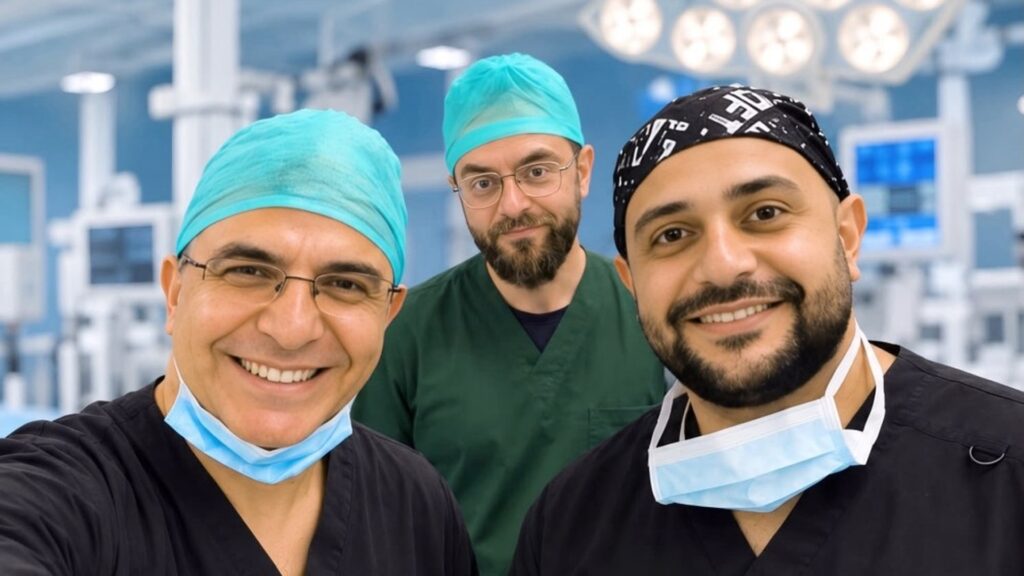
The procedure was led by consultant urological surgeon Dr Ahmed Harraz and Dr Faisal Hadi Al-Hajri, assisted by Dr Ali Al-Momen. It was supported by Dr Ibtisam Al-Bader, head of the surgery department, and Dr Abdulrahman Al-Kandari, head of the urology unit. Their task involved using the patient’s own tissue to address a difficult narrowing within her urinary tract.
Why a narrowed ureter matters
The ureters are the two tubes that carry urine from the kidneys to the bladder. A narrowing, known medically as a stricture, can interrupt that flow even when the kidney is still producing urine. The site of the problem therefore matters: treating the tube can be an important part of protecting the organ that drains into it.
Cleveland Clinic’s explanation of urinary obstruction identifies scarring in the ureters as one possible cause of blockage. When urine cannot drain properly, it can back up towards the kidney, causing swelling known as hydronephrosis. Persistent obstruction can damage kidney function, which is why restoring drainage is a central concern in treatment.
The Al-Adan announcement did not specify what originally caused this patient’s narrowing. It did identify its location and complexity, the features that help explain why the case required a reconstructive operation. The aim of this type of surgery is to create a usable passage through the affected area while preserving the surrounding urinary system.
Giving the appendix a different job
The appendix is more commonly associated with appendicitis and emergency removal than with urinary surgery. In selected patients, however, it can provide tissue for reconstruction. Its position on the right side of the abdomen and its own blood supply help explain why surgeons have explored its use in repairs to the right ureter.
Published descriptions of appendiceal onlay ureteroplasty explain the principle: tissue from the appendix is used as a patch to widen a narrowed section of ureter. This allows the surgeon to retain part of the existing tube while adding tissue to improve its internal passage. Maintaining blood supply to the repair is an important part of that approach.
The appendix is not suitable for every reconstruction. Its size, condition and ability to reach the affected area influence whether it can be used. The location and extent of the ureteral narrowing also shape the surgical plan. These considerations make the procedure a tailored option for selected cases, rather than a standard replacement for other forms of urinary reconstruction.
The experience behind the repair
Harraz’s clinical background includes urinary reconstruction alongside cancer surgery and kidney transplantation. His Arab Association of Urology congress biography identifies him as a consultant in Kuwait and a professor of urology at Mansoura University in Egypt. It lists bladder cancer, urinary diversion and renal transplantation among his areas of practice, together with training in laparoscopic and robotic surgery. The biography also records more than 100 peer-reviewed publications, reflecting the research component of his clinical career.
Al-Hajri also has a documented background in reconstructive urology. In a 2018 account of his visit to Salmaniya Medical Complex, Bahrain’s Ministry of Health reported that he performed six operations for severe narrowing of the urethra and gave a scientific lecture to doctors. The urethra is a different part of the urinary tract, carrying urine out of the bladder, but the visit records his earlier work repairing narrowed urinary passages.
At Al-Adan, the ministry credited a team spanning the surgeons who performed the procedure and the department and unit leadership supporting it. That attribution gives the case a wider institutional context while keeping the individual roles clear. The announcement identifies Al-Momen as assisting in the operation, alongside Harraz and Al-Hajri’s leadership.
What recovery means beyond discharge
International research helps place the procedure in context. A 2025 study in the World Journal of Urology reviewed 16 patients treated with laparoscopic appendix-based reconstruction for right-sided ureteral strictures. Six received an onlay repair and ten had a different technique using the appendix as a connecting segment. The researchers reported an overall success rate of 93.8%, with average follow-up of 14.9 months.
Those findings concern a small group treated elsewhere, using two techniques, and do not establish the long-term outcome for the patient in Kuwait. They do show why assessment continues beyond an operation and hospital discharge. The relevant question is whether the reconstructed passage remains open and supports drainage over time.
For the woman treated at Al-Adan, the confirmed milestone is her discharge in good condition on day three. Longer-term findings have not been published in the announcement. The next measure of the repair will be how well it continues to serve its purpose: allowing urine to pass from her right kidney to her bladder.