In a statement to Al-Seyassah newspaper, Archbishop Oshin Gual Vartanian, the Armenian Prelate for Kuwait and neighboring countries, extended congratulations to Amir Sheikh Mishal Al-Ahmad Al-Jaber Al-Sabah, Crown Prince Sheikh Sabah Khaled Al-Hamad Al-Sabah, the government and the people. Vartanian described the re-election as more than a diplomatic victory but an international recognition of Kuwait’s historical contributions to humanitarian and relief efforts along with its foreign policy based on wisdom, moderation and support for the oppressed. He added that the Armenian Church, present in Kuwait for decades, witnesses daily the respect, appreciation and freedom granted to the Armenian community in practicing its religious rites amid Kuwaiti values of coexistence, tolerance and human dignity irrespective of religion or ethnicity.
Vartanian stated that the principles of justice, human dignity and brotherhood promoted by the Human Rights Council mirror the foundational values upon which Kuwait was established. The archbishop expressed confidence that Kuwait would sustain its constructive role in defending afflicted populations, advancing dialogue and protecting human rights without discrimination or selectivity through its new term. He closed with prayers that Kuwait, its leadership and its people remain secure and prosperous as an oasis of peace, a beacon for humanity and a crossroads for religions and cultures.
Kuwait secured 173 votes in the UN General Assembly election held on October 13, placing it second among the 15 nations chosen for the 2027-2029 term, according to Ambassador Tareq Al-Banai, Kuwait’s Permanent Representative to the United Nations. Al-Banai told KUNA that the outcome represented a renewal of international confidence in Kuwait’s foreign policy centered on moderation, balance, dialogue, respect for international law and adherence to the UN Charter. The vote followed national and diplomatic efforts by the Ministry of Foreign Affairs and Kuwait’s missions abroad to highlight the country’s priorities and commitments.
The re-election continues Kuwait’s engagement with the 47-member council after previous terms from 2011 to 2014 and the current cycle ending in 2026, a UN summary indicated. United Nations Resident Coordinator in Kuwait Ghada Eltahir told Kuwait Times that the result reflected global trust in Kuwait and offered a fresh platform to support the multilateral system as the UN neared its 81st anniversary. Eltahir pointed to Kuwait’s recent legislative measures strengthening women’s, family and children’s rights, including an increase in the minimum marriage age to 18.
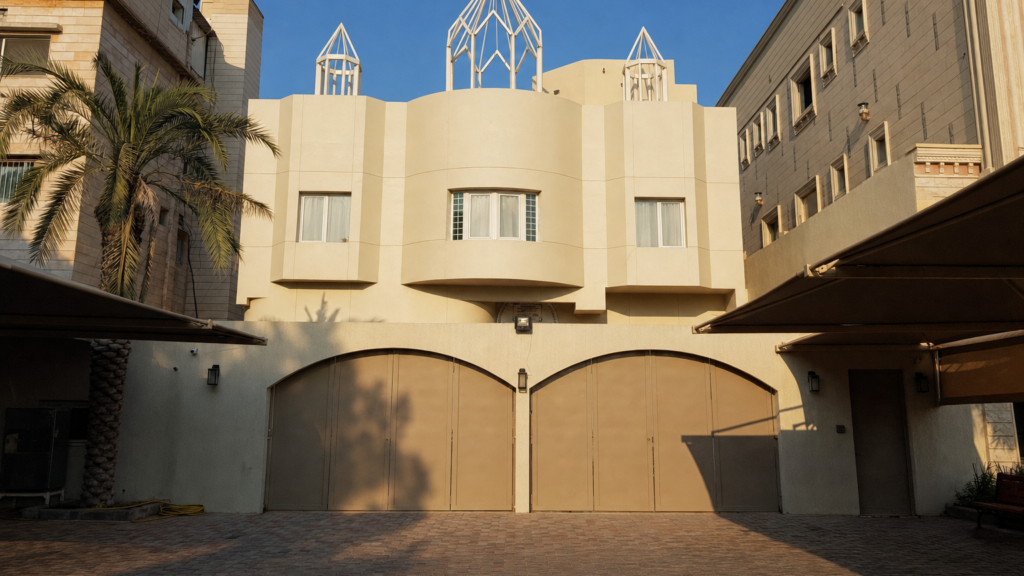
The Armenian community in Kuwait originated in the 1950s with arrivals primarily from Iran, Syria and Lebanon seeking economic opportunities, according to the Armenian Prelacy’s historical records. Its population peaked near 12,000 in the mid-1980s before dropping sharply during the 1990 Iraqi invasion, after which it recovered to current estimates of approximately 4,000, the diaspora ministry of Armenia reported. The community operates St. Vartan Church, consecrated in 2017 by Catholicos Aram I during a visit that included a meeting with the late Amir Sheikh Sabah Al-Ahmad Al-Jaber Al-Sabah, alongside a school that has served hundreds of students across kindergarten through secondary levels.
Vartanian’s remarks align with longstanding positive ties between the Armenian Prelacy and Kuwaiti authorities that have enabled the community to maintain its institutions while contributing to national development, the prelacy’s archives noted. The October election filled Asia-Pacific seats on the council alongside Jordan, which received 171 votes, as part of a slate that also included Brazil, Germany, Nigeria and Nepal under the principle of equitable geographic distribution. Kuwait’s Permanent Mission to the UN highlighted that the result affirmed the country’s commitment to human rights principles that it has championed through both its council membership and broader international engagements.